Restoring the Harvest: How a 1919 Thresher Builds NH Community
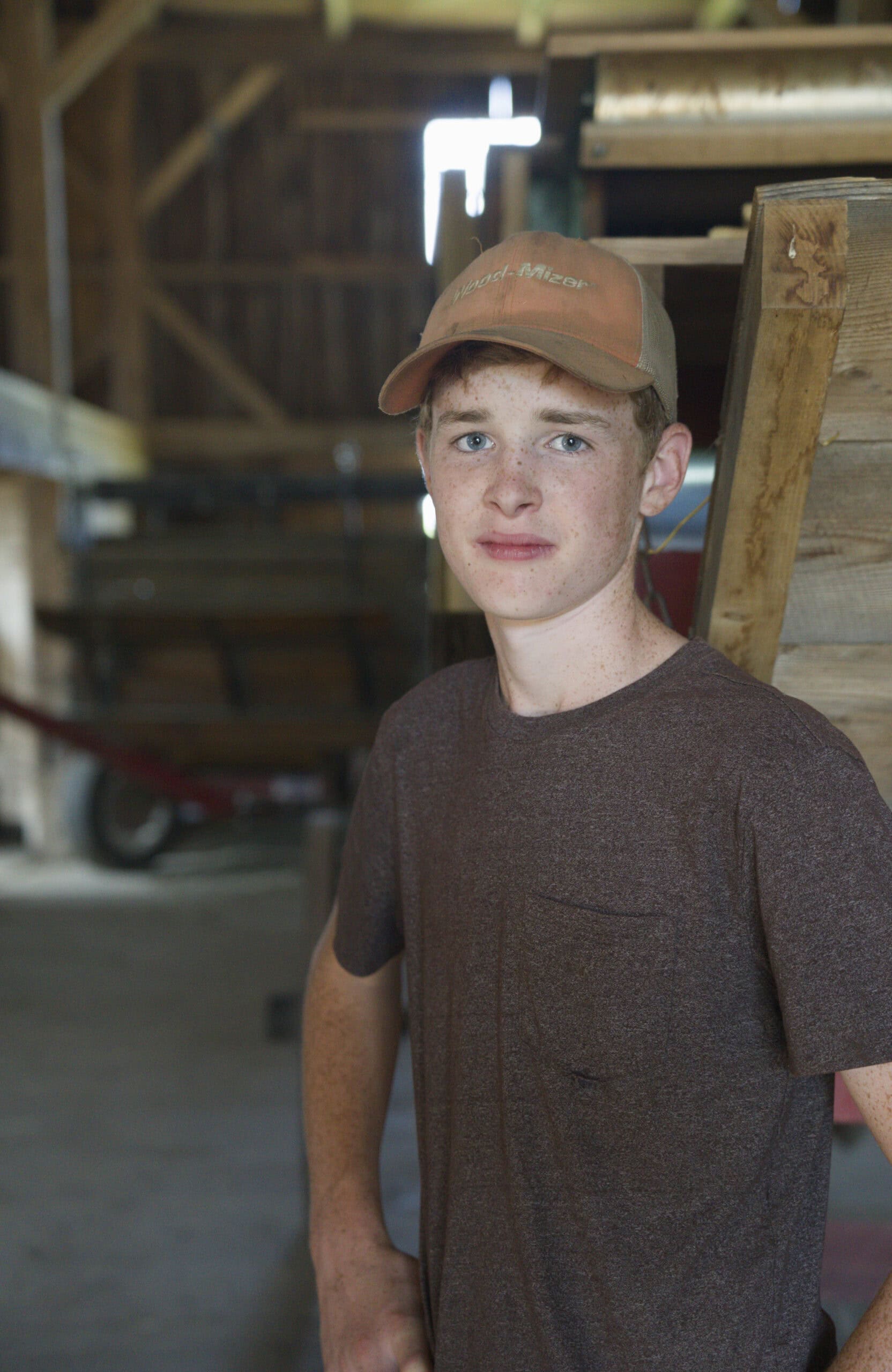
Fourteen-Year-Old Calvin Matras revives a NH tradition
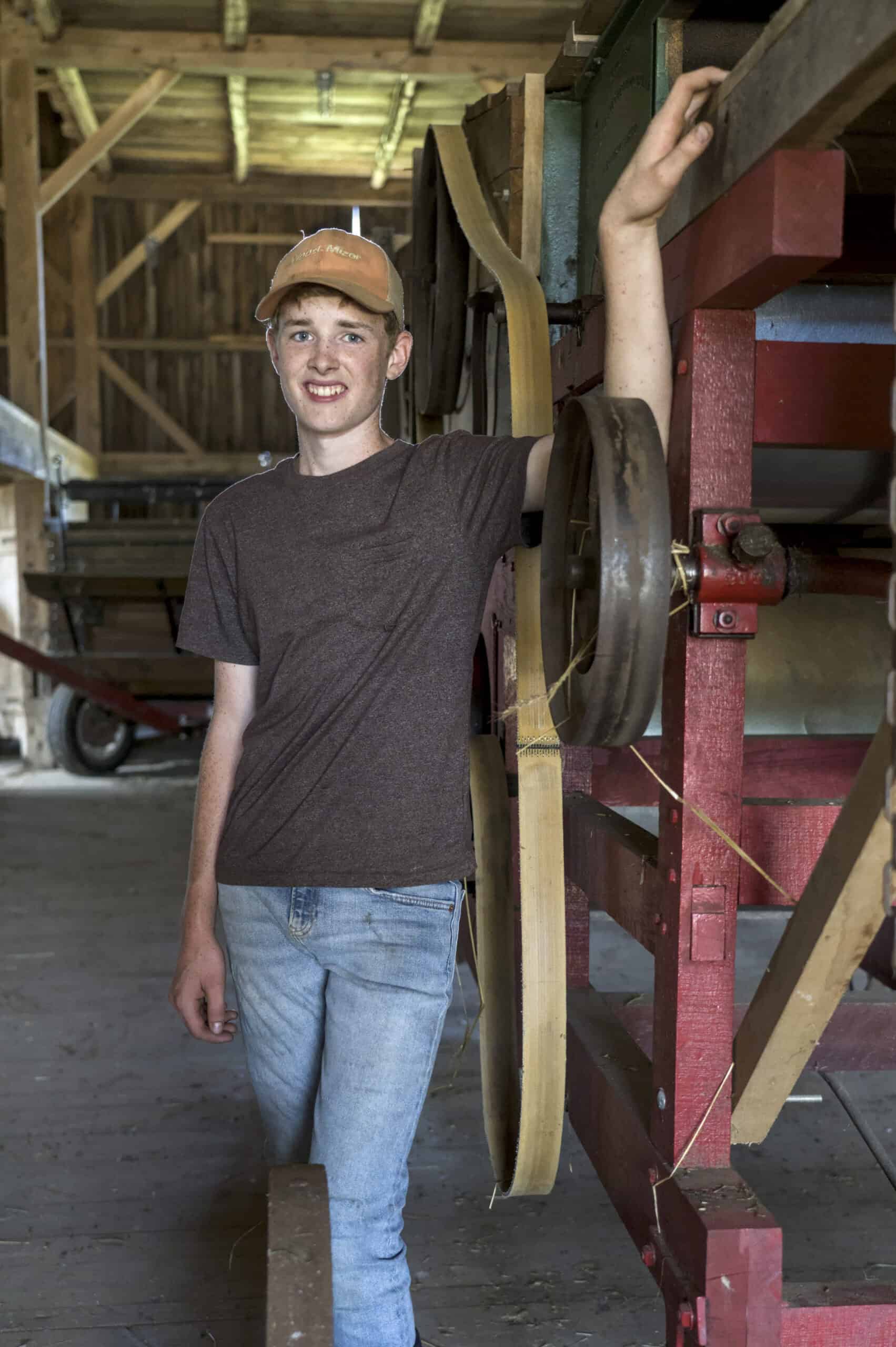
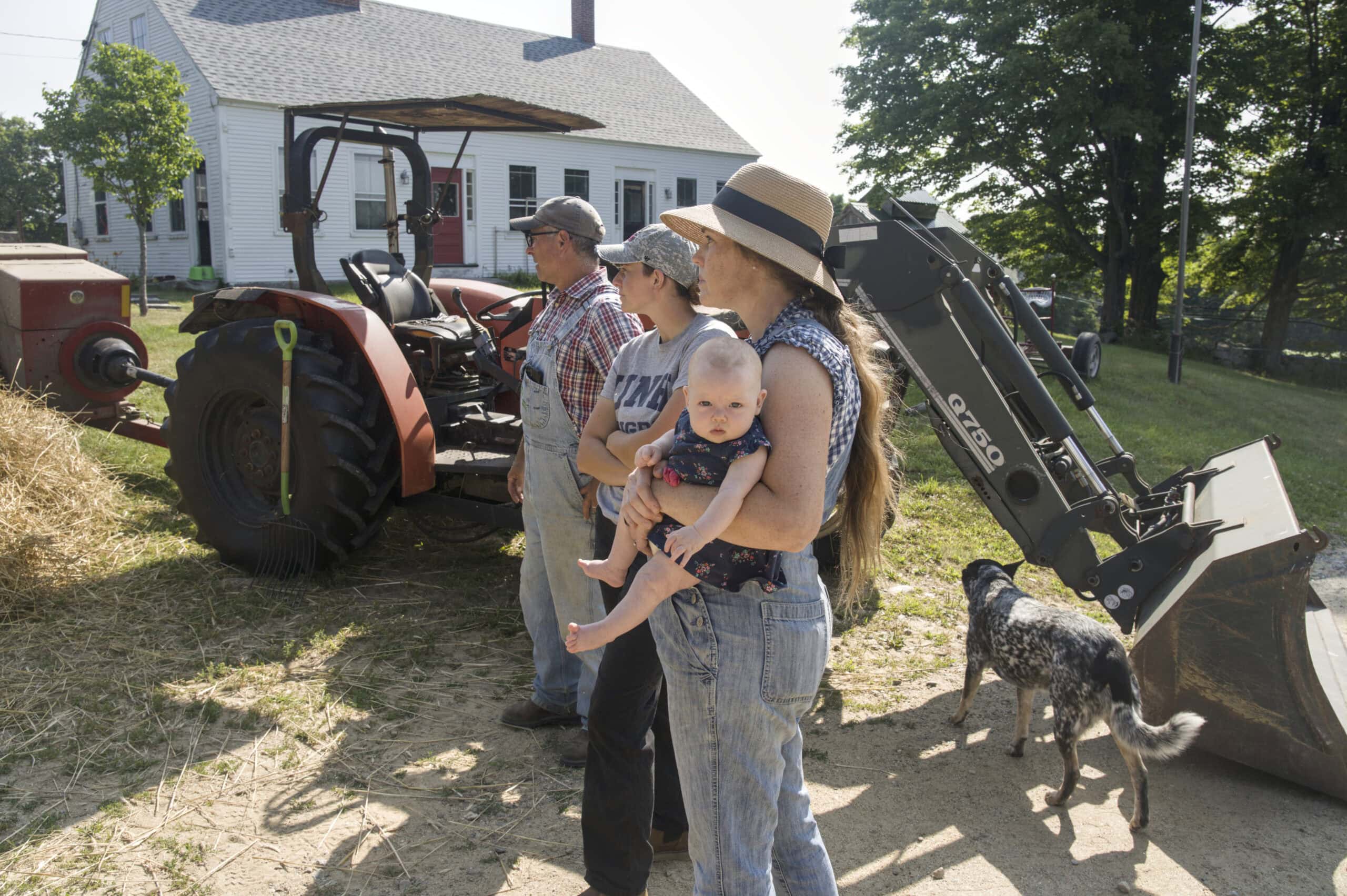
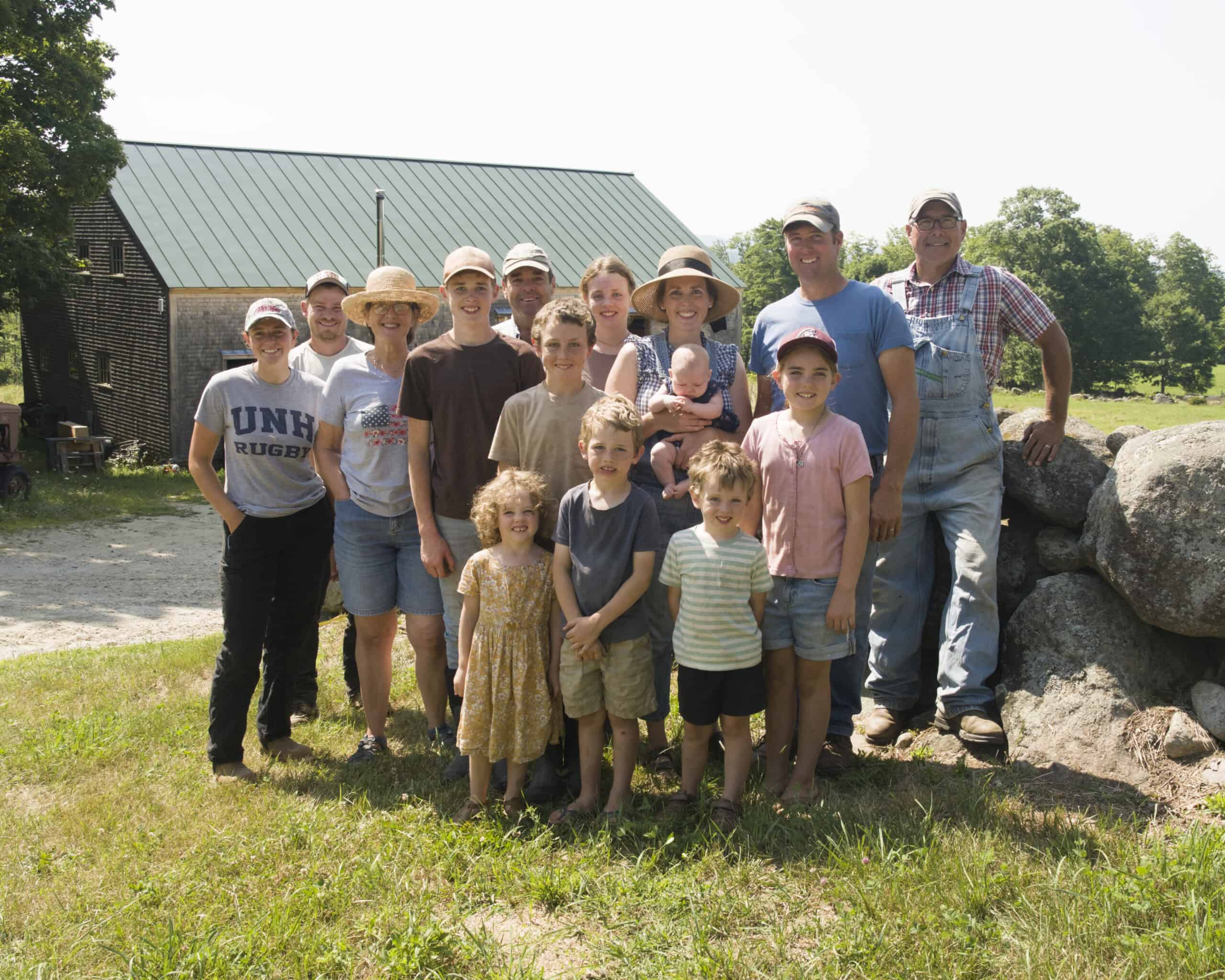
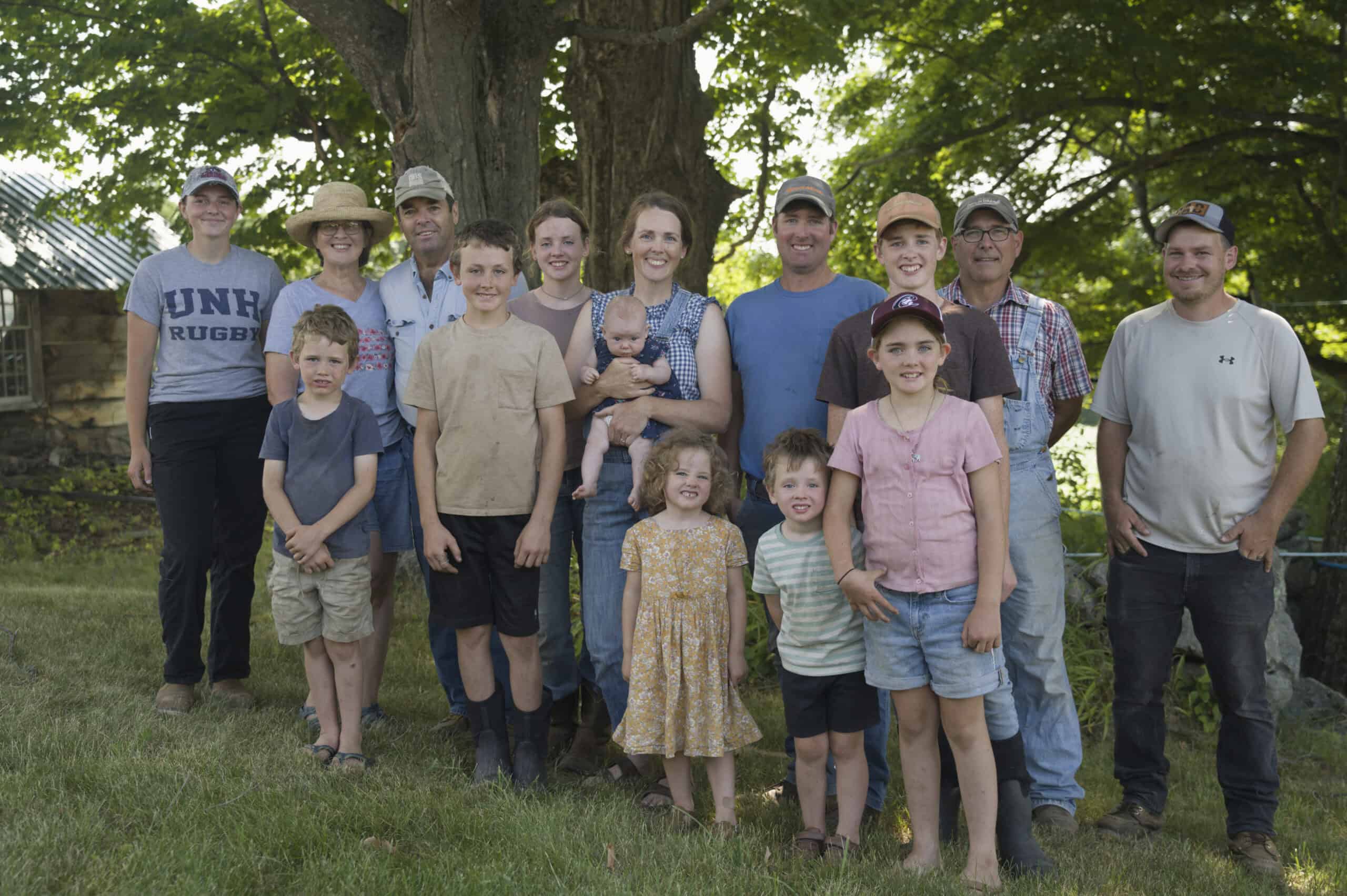
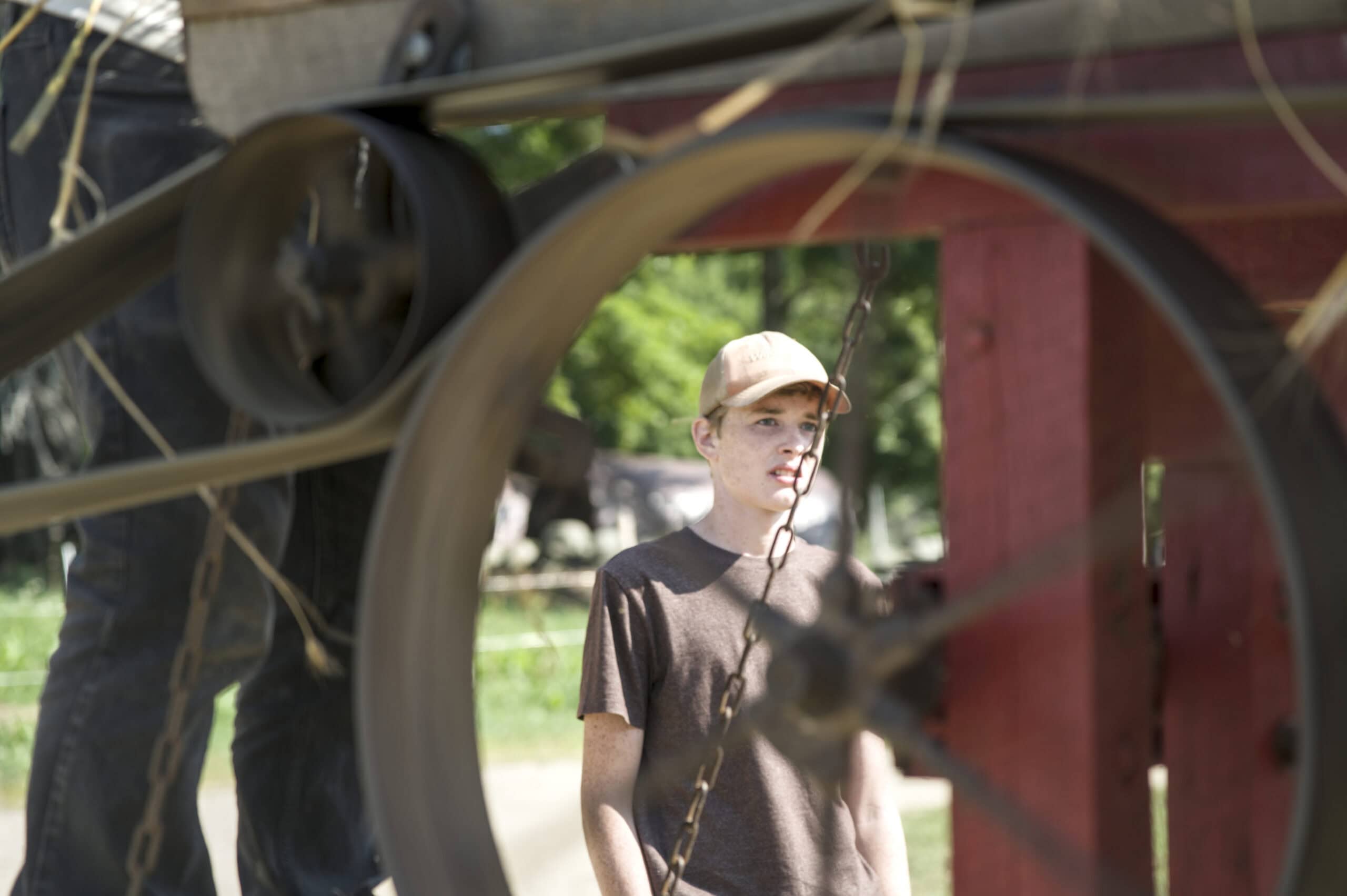
On a clear midsummer morning in Loudon, New Hampshire, the air at Sanborn Mills Farm filled with the lively cadence of a family at work. Jesse and Jessica Matras pulled up to the Merrill House in a van and a truck—the van carrying their children: Hazel, Silas, Evelyn, Reuben, Alice, Royal, Vera, and Calvin; the truck loaded with half of fourteen-year-old Calvin’s inaugural crop of Turkey Red wheat.
The grain, a hard red heirloom variety with Ukrainian roots, represented an act of pure follow-through. A year prior, during a grain binding demonstration, Sanborn Mills’ Farm Manager Ray Ramsey handed the boy a single gallon bucket of seed. “I honestly didn’t think he’d plant it,” Ramsey admits.
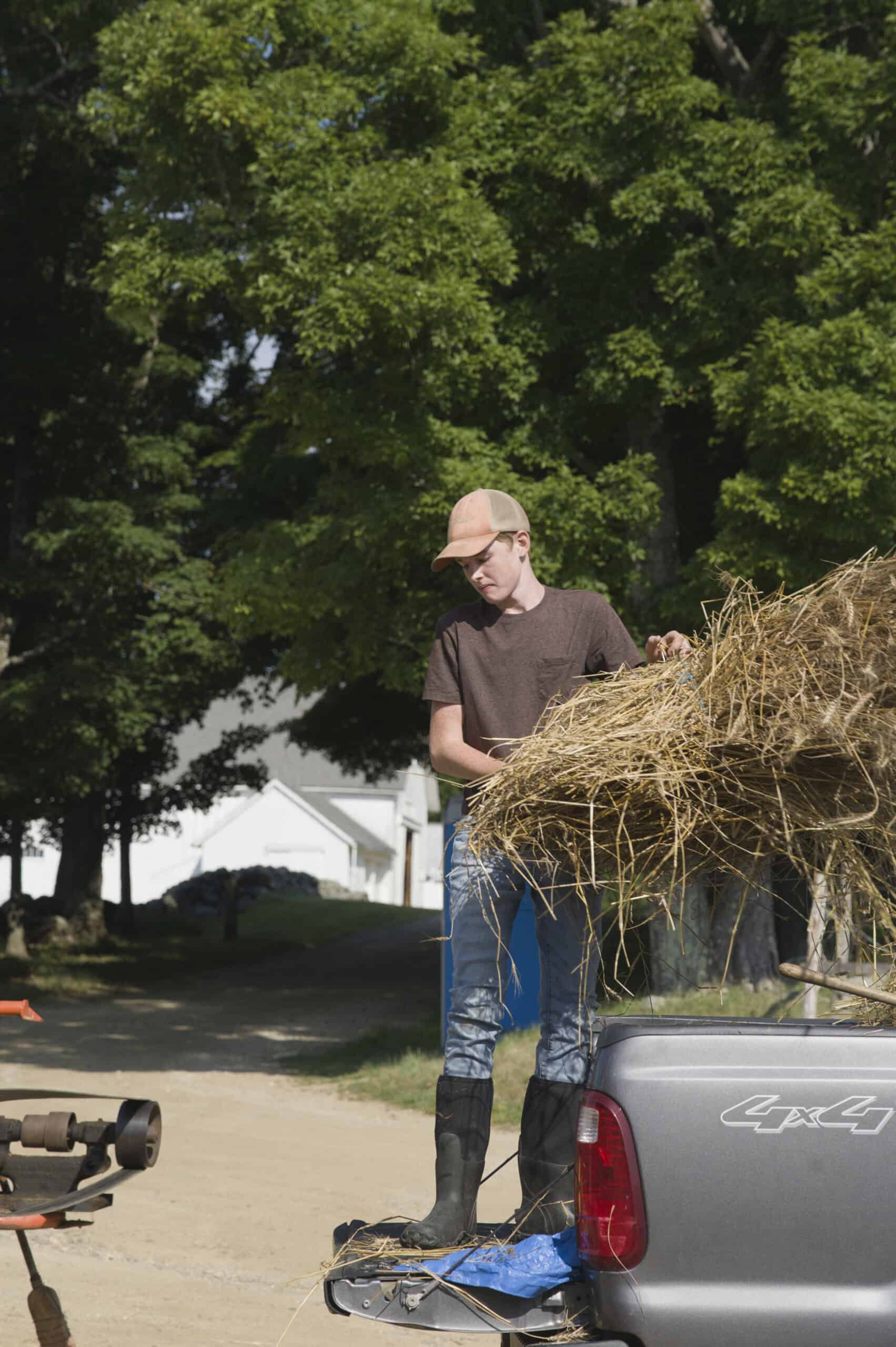
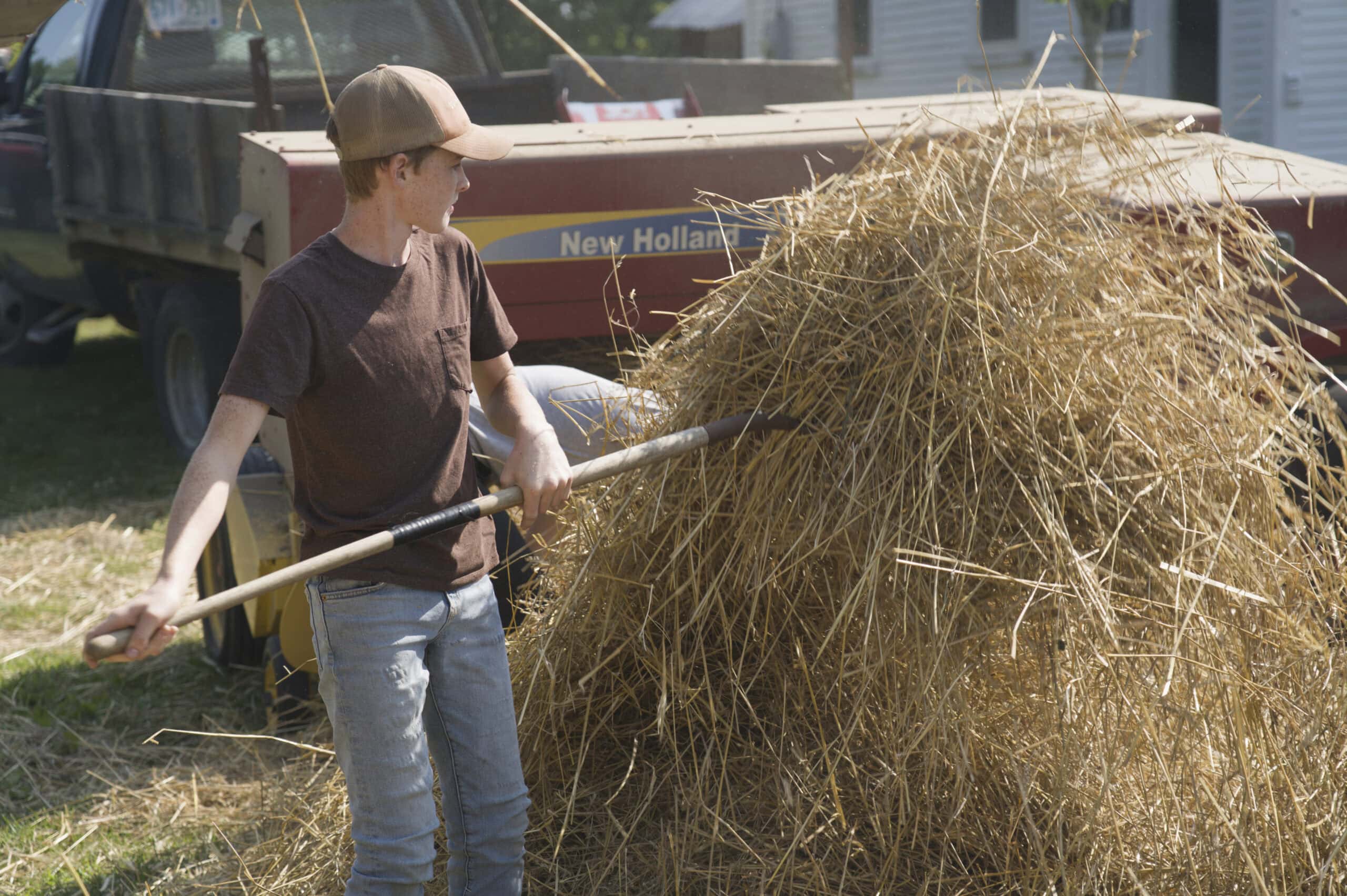
Calvin took the seed to his family’s nearby farm, planted it, and tended it. When harvest arrived, Calvin conscripted his family to help. They gathered four hand sickles and got to work—not from a romantic or stoic desire to do everything manually, but out of sheer practical necessity: his crop was laid down, making it impossible to harvest with the horse mower. Hearing about an upcoming threshing demonstration at Sanborn Mills Farm, Calvin saw an opportunity to learn from the farm team and gather expert pointers for processing his wheat. One can imagine his excitement—and his family’s relief—when Ramsey offered to put the farm’s historic machinery to work, transforming an exhausting manual chore into an efficient, communal celebration.
Get Involved
Your contribution will be used to keep the cost of Sanborn Mills Farm’s workshops low, so that more people can come away from their experience with the sense of accomplishment that result from working with one’s hands.
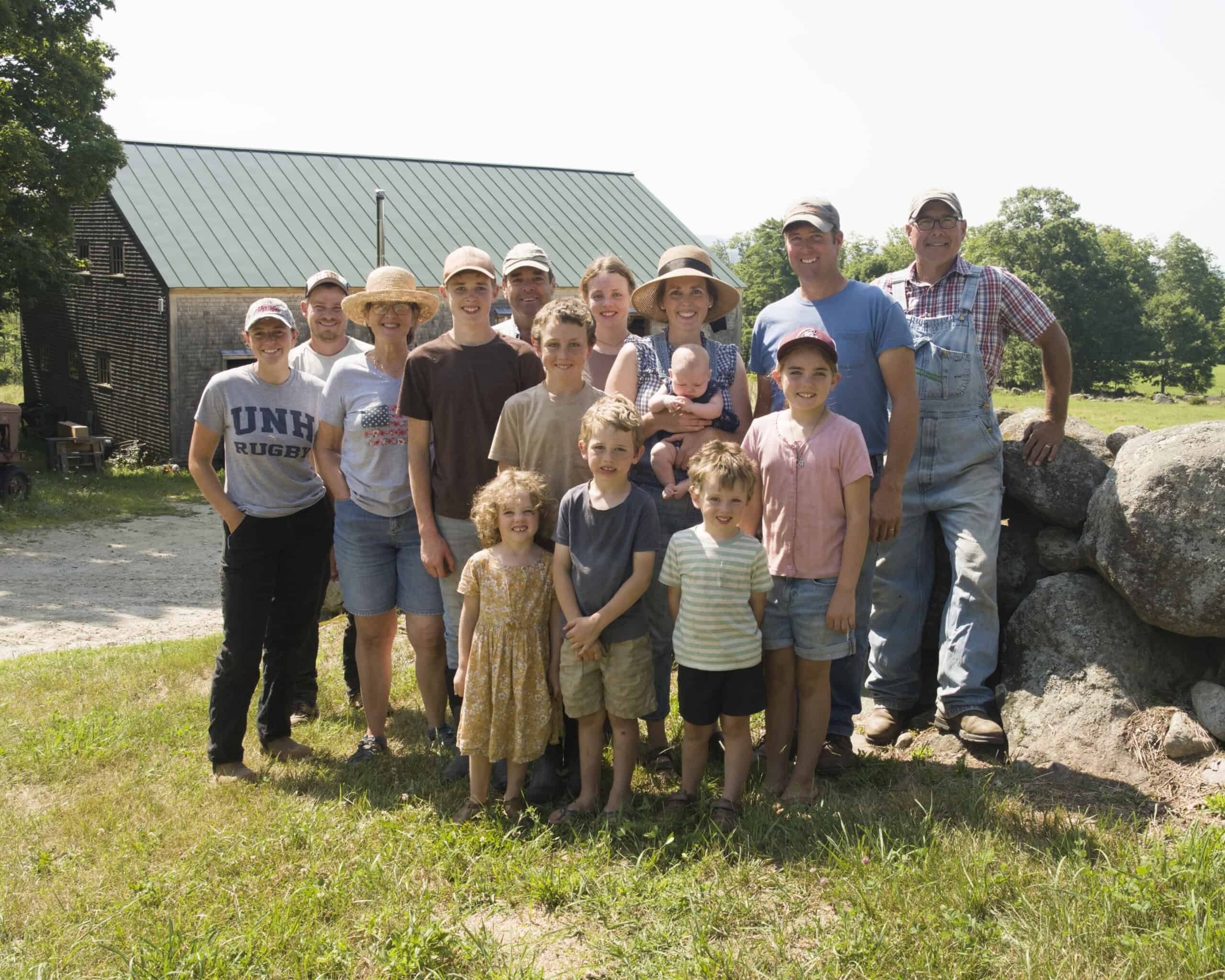
Four Generations on New Hampshire Soil
Jessica’s family has worked a dairy farm near Sanborn Mills for four generations, practicing an ethos of hard work that is deeply personal. Though the dairy herd has since been sold off, Jesse and Jessica turned their focus to cultivating a family garden—one started the year they were married—bringing each child into the soil as soon as they were steady on their feet.
Harvesting corn or tending rows remains a shared family effort. Each member of the Matras clan is encouraged to plant and tend their own small crops as soon as they are ready. For Calvin’s younger brother Silas, that creative spark found an outlet in woodworking and woodturning; for Calvin, it belonged entirely to the soil.
When Calvin brought home the bucket of Turkey Red wheat—a distinct departure from the family’s usual garden staples like dry beans—his parents bought him a textbook on grain cultivation, encouraging him to master the skills needed to succeed.
“Calvin is a hard worker,” Jesse says, watching his son handle the bundles of grain. “Real stick-to-itiveness.”
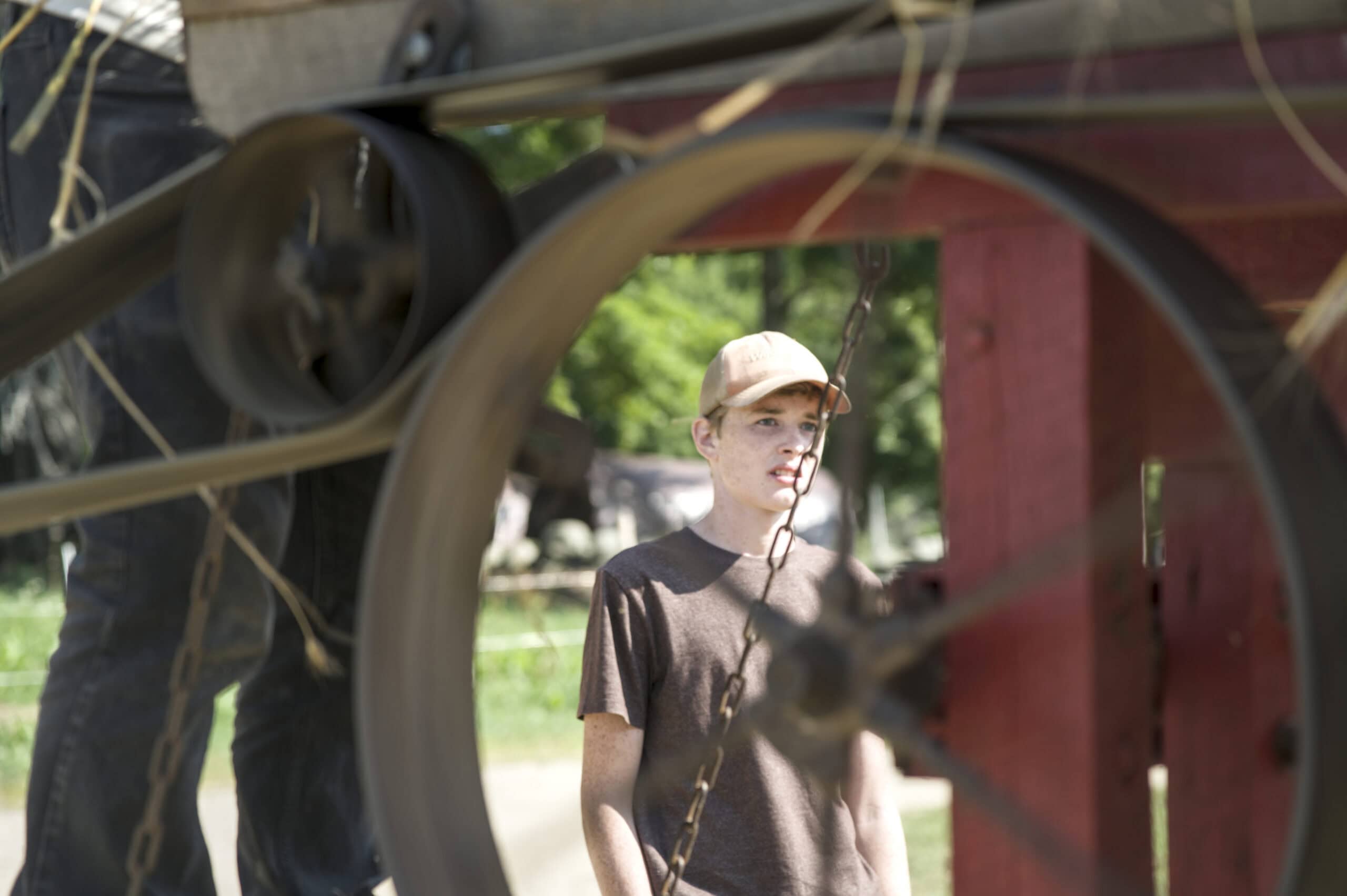
That work ethic proved identical in the field and at the study desk. Calvin pored over the cultivation text, learning from the generations of growers who had come before. Despite having no prior grain experience in the family—save for a tiny experimental plot Jessica had planted once—Calvin approached his new crop with confidence and poise.
Some lessons, however, cannot be gleaned from books. Though the wheat heads were modest in size—a gamble inherent to growing heritage grains—the yield was undeniable. When asked what the crop had taught him, the fourteen-year-old offered a brief, pragmatic farmer’s truth: “More manure.”
His affinity for agriculture is already second nature; at home, Calvin trains a pair of Holstein oxen, steers that follow his footsteps and move to the gentle cadence of his voice. His dream is disarmingly simple: to raise his own food and farm his own land. Having long grown vegetables, he views wheat and dry beans as the natural next step.
Returning the harvested grain to the very ground where the seed originated felt like closing a sacred loop—a quiet revival of the old New England tradition of neighborly co-ops and shared machinery.
His grandparents watch this devotion unfold with quiet satisfaction. “He does lots of interesting things,” his grandmother reflects, looking out across the yard where the children move between the timber-framed barns. “We’re so blessed, being able to look out the window and see the family working together.” Just days before the threshing, Calvin had helped haul roughly a thousand bales of hay (perhaps a grandmother’s optimistic count!) on the family farm. His grandfather’s assessment remains foundational: “They get an interest and they run with it. They don’t know that they can’t do it.”
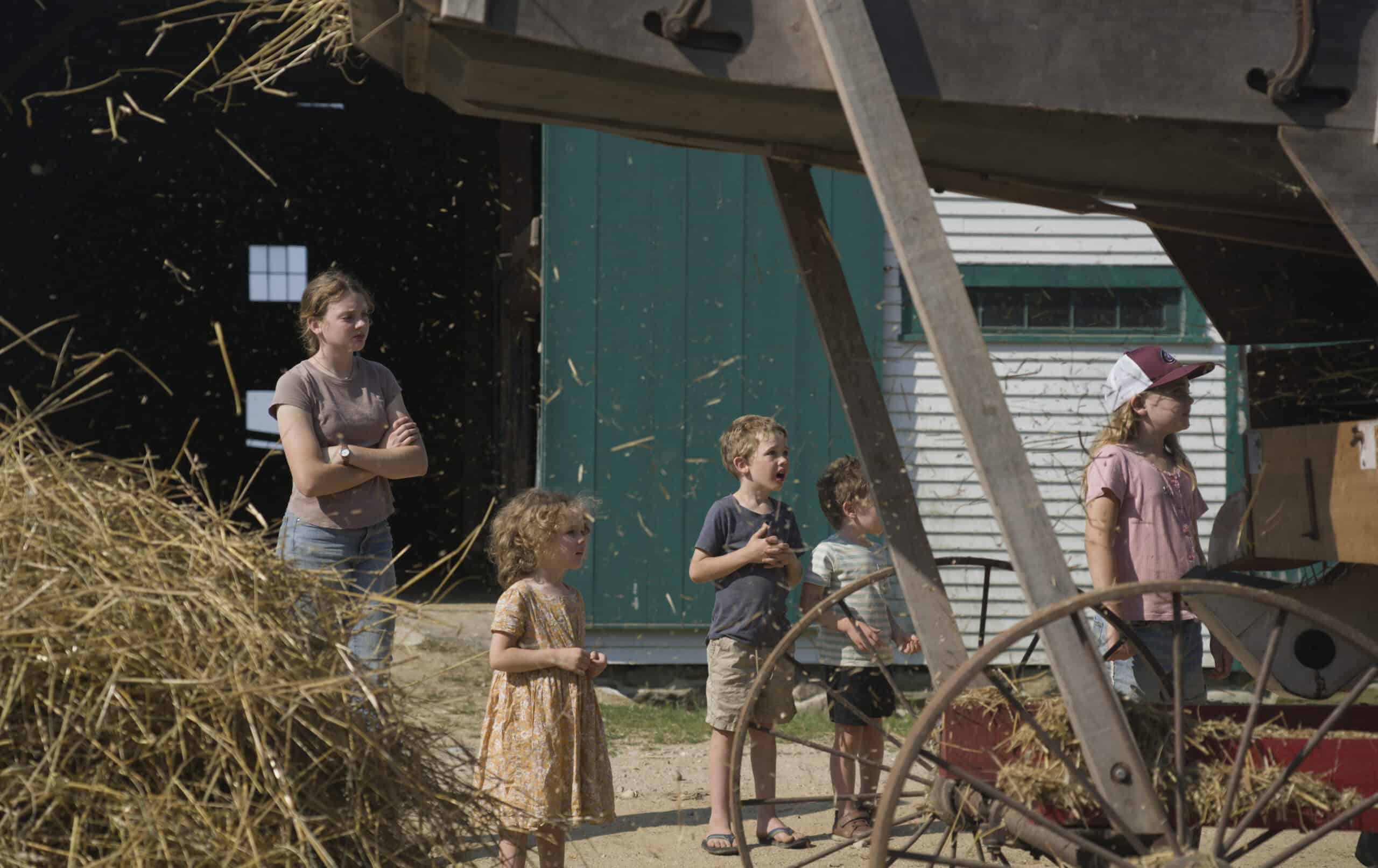
The Symphony of Rural Vibration
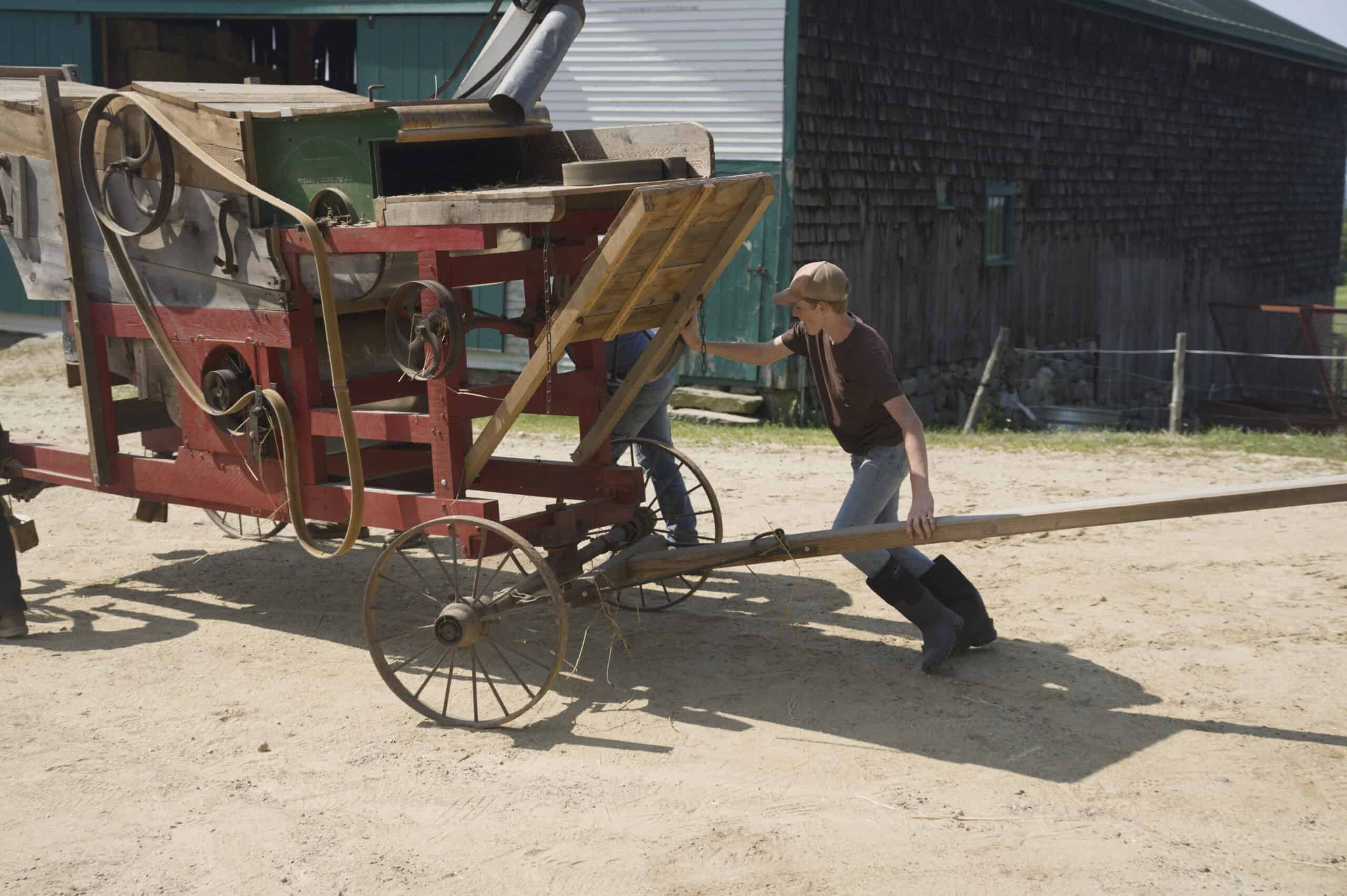
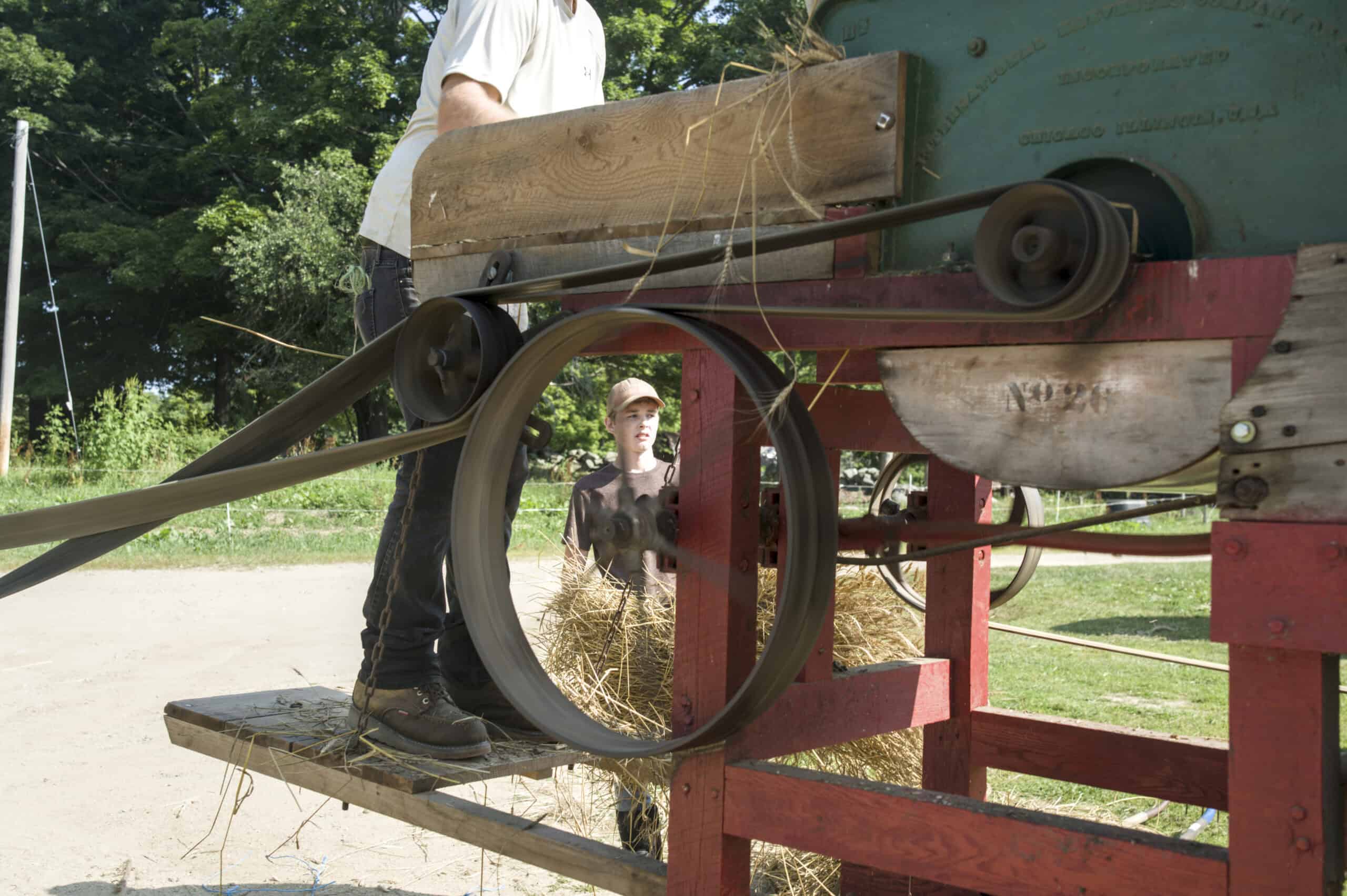
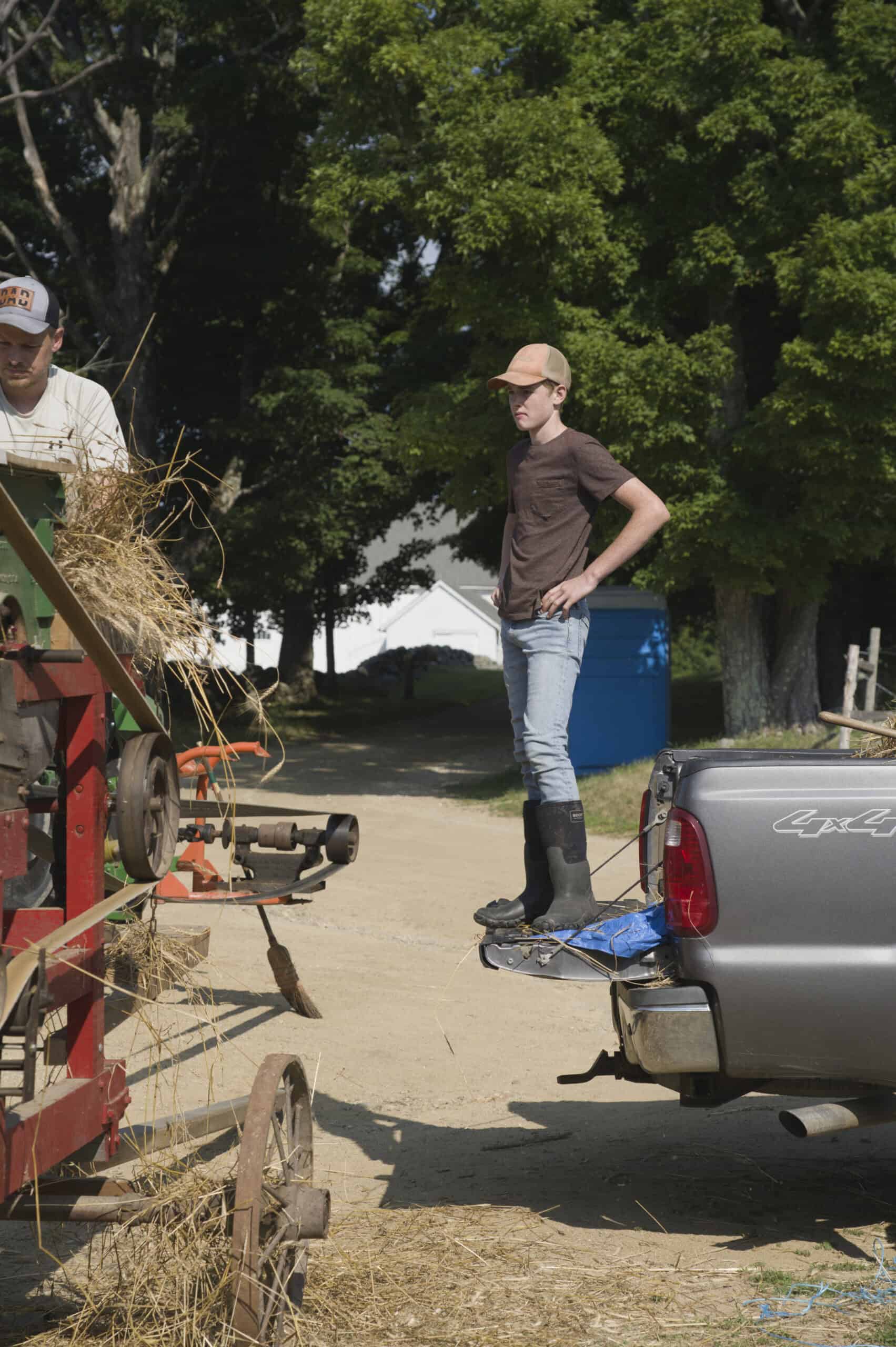
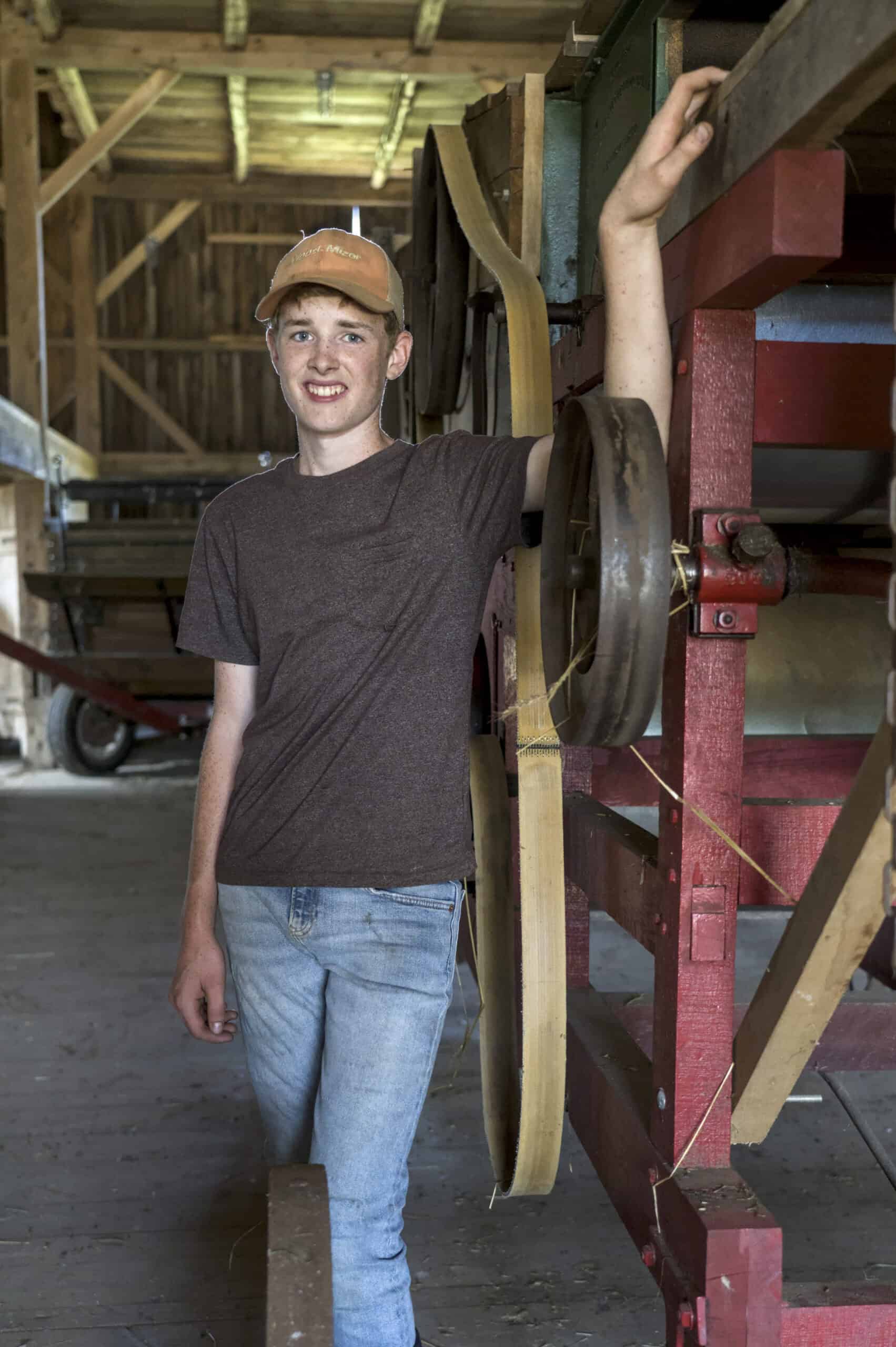
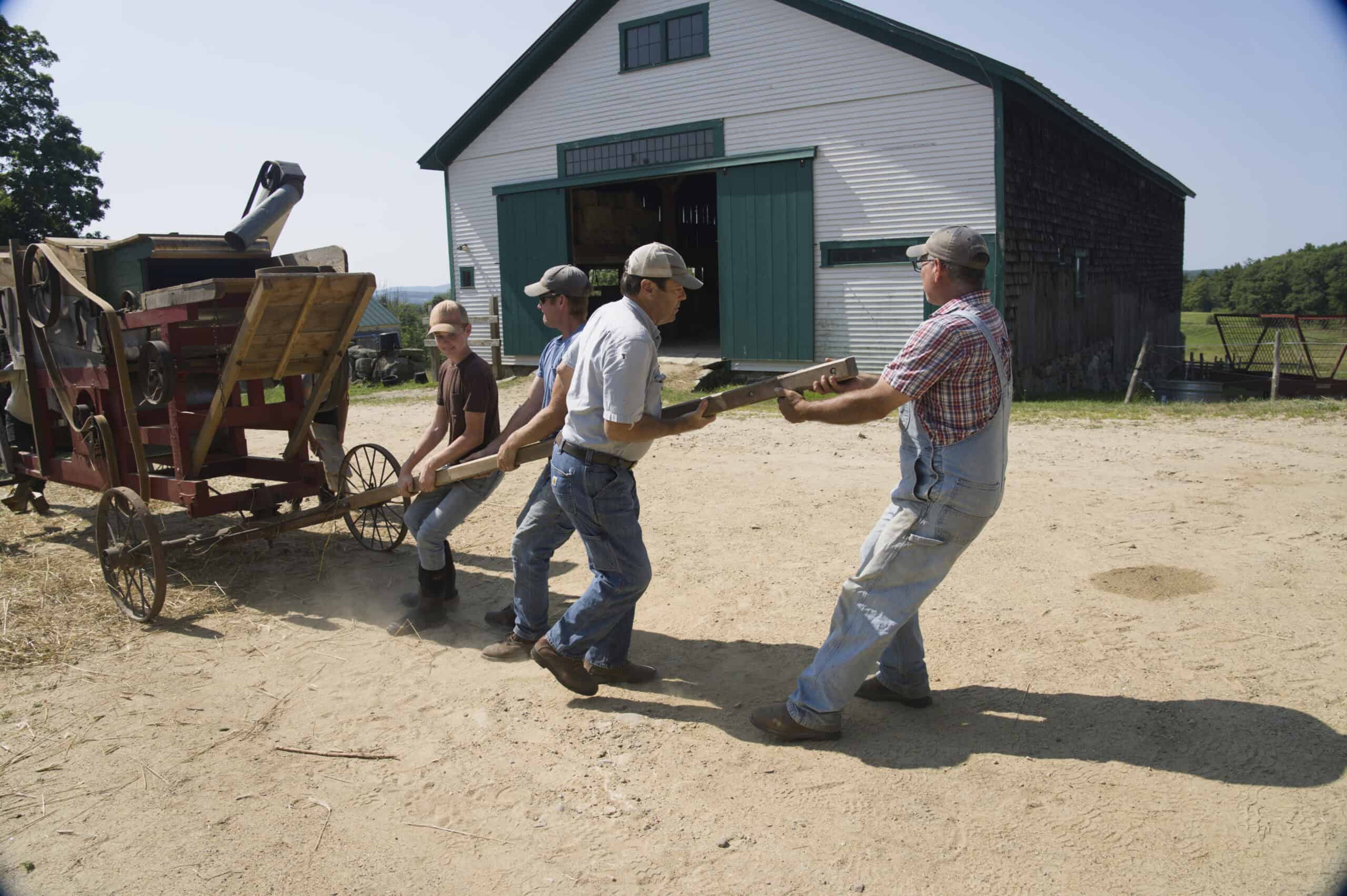
To bring a century-old mechanical thresher back into service is to perform a tactile ritual. First comes careful visual inspection. Heavy grease is worked into historic grease cups. The thresher and the tractor are precisely leveled against the New Hampshire earth, and the long leather drive belt is aligned to the engine’s flywheels.
A trial run brings the machine up to speed, letting a season of dust clear from its internal wooden chutes. The engine is throttled down, screens are cleared, and the true work begins.
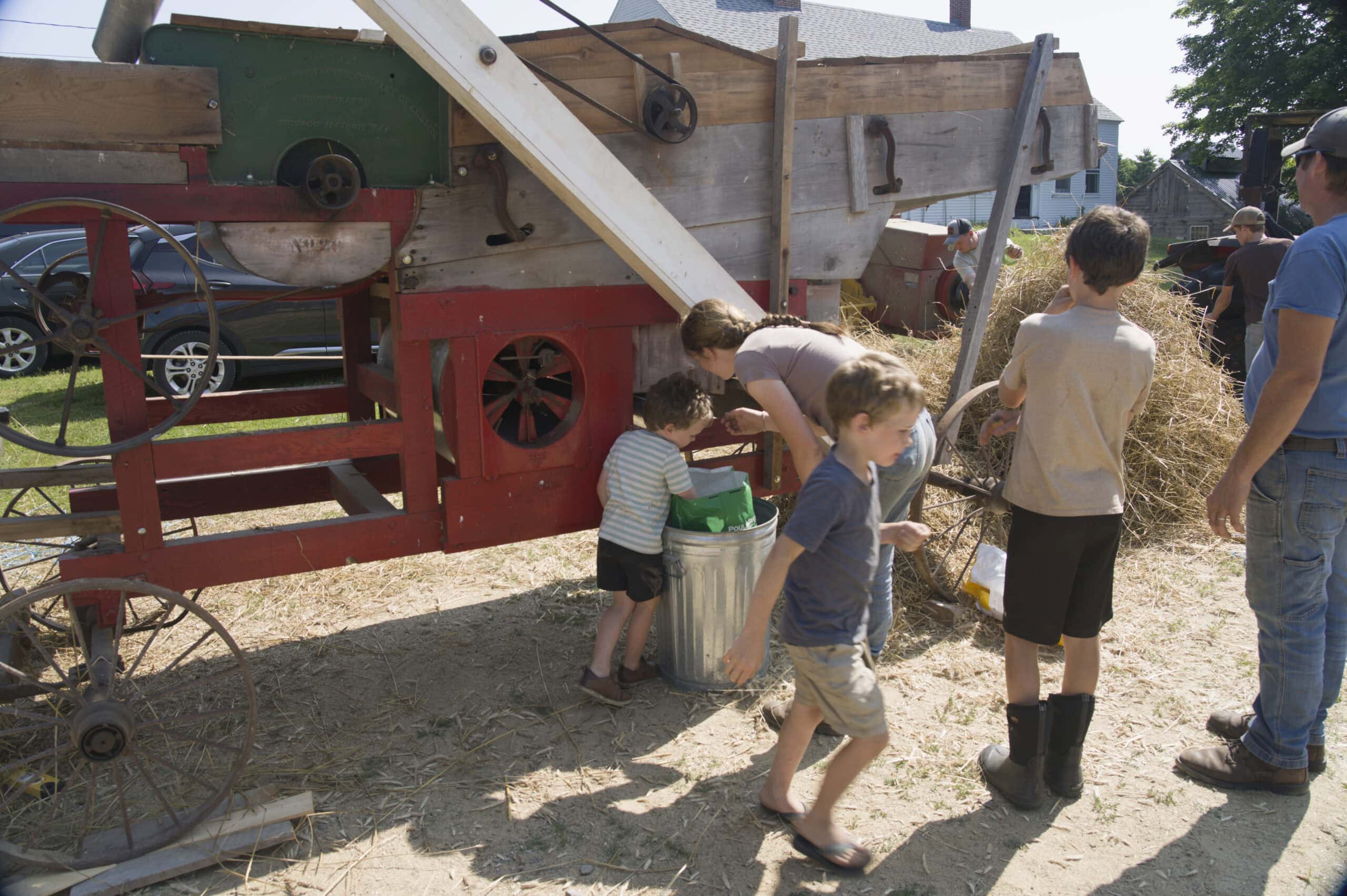
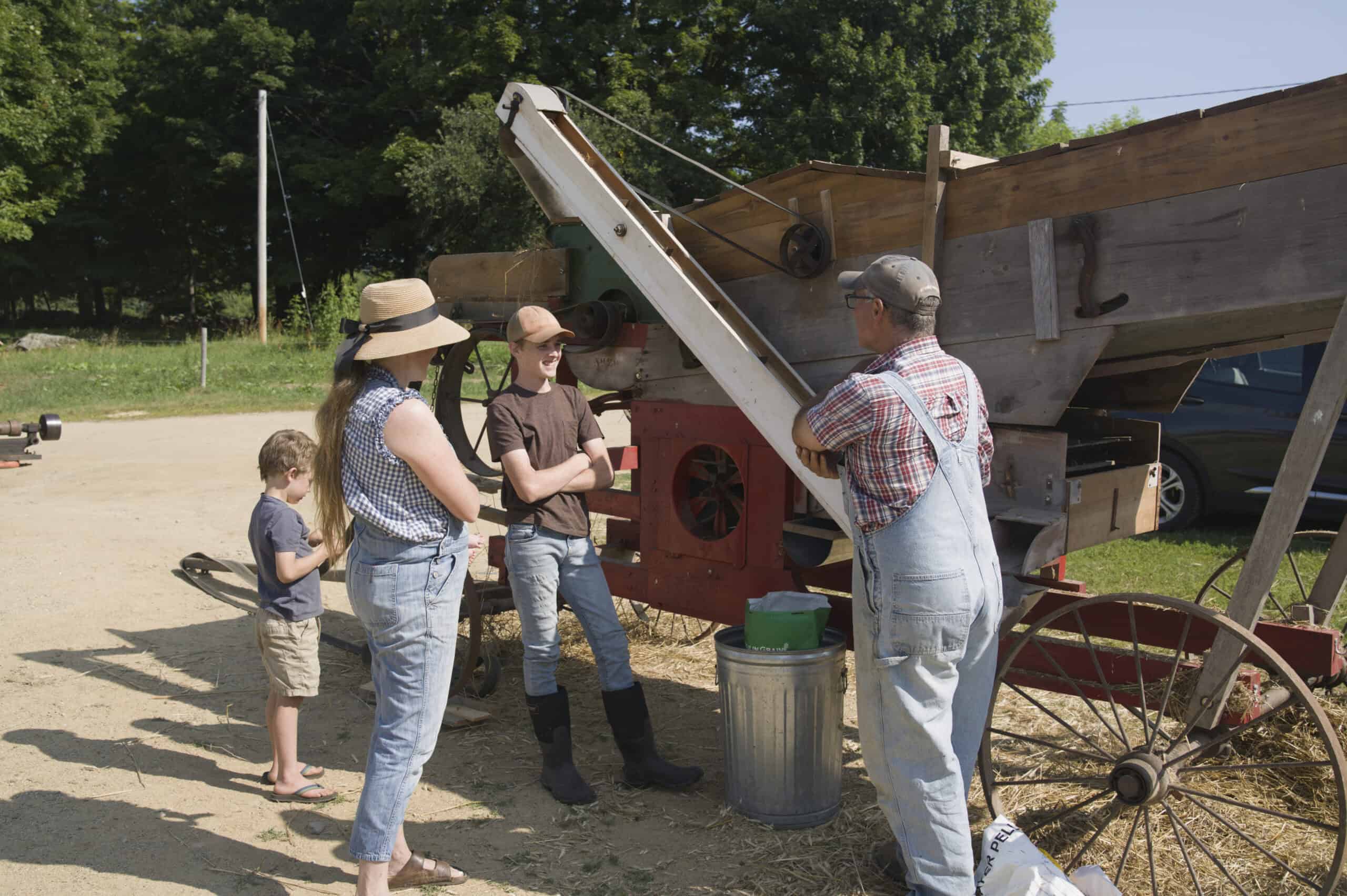
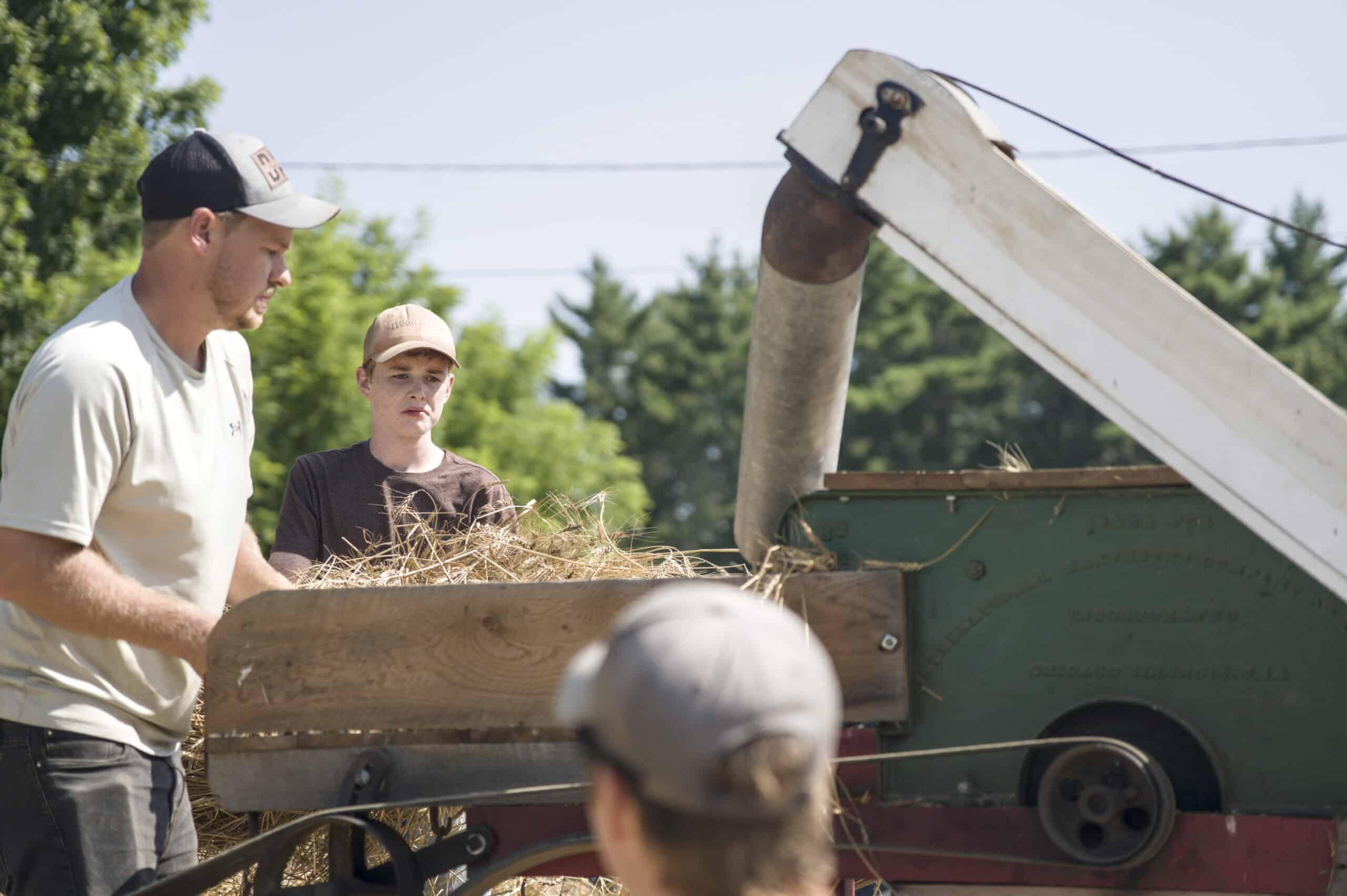
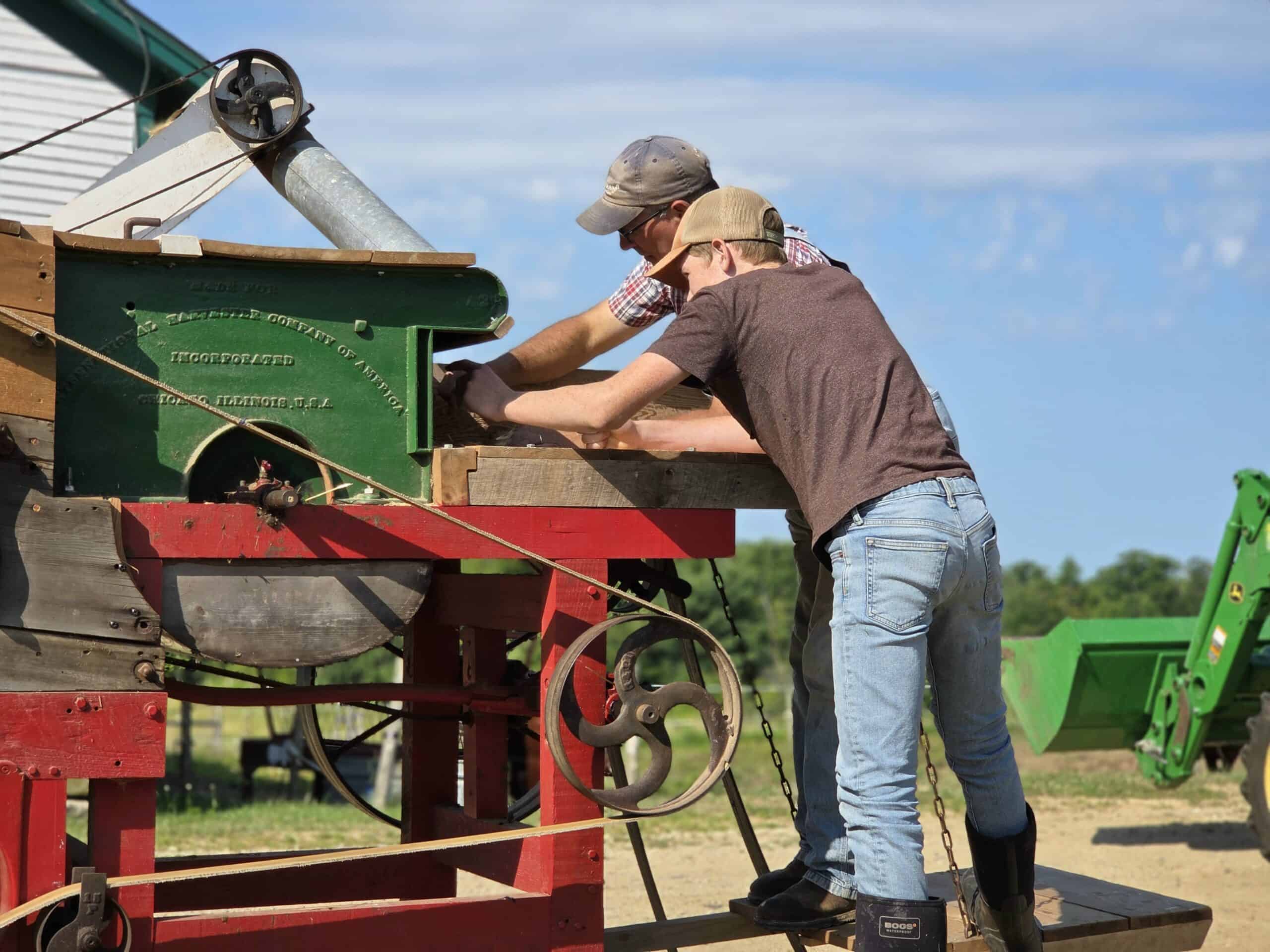
The machine—a 1919 Sterling manufactured for International Harvester—was a gift from the Milton Farm Museum and restored over eight painstaking months. Its wooden frame boards are serialized with the painted number 198, ensuring the manufacturer could craft exact replacement parts a century ago. Its tin casing remains original, a survivor from an era when hundreds of independent implement makers flickered into existence before fading into industrial history.
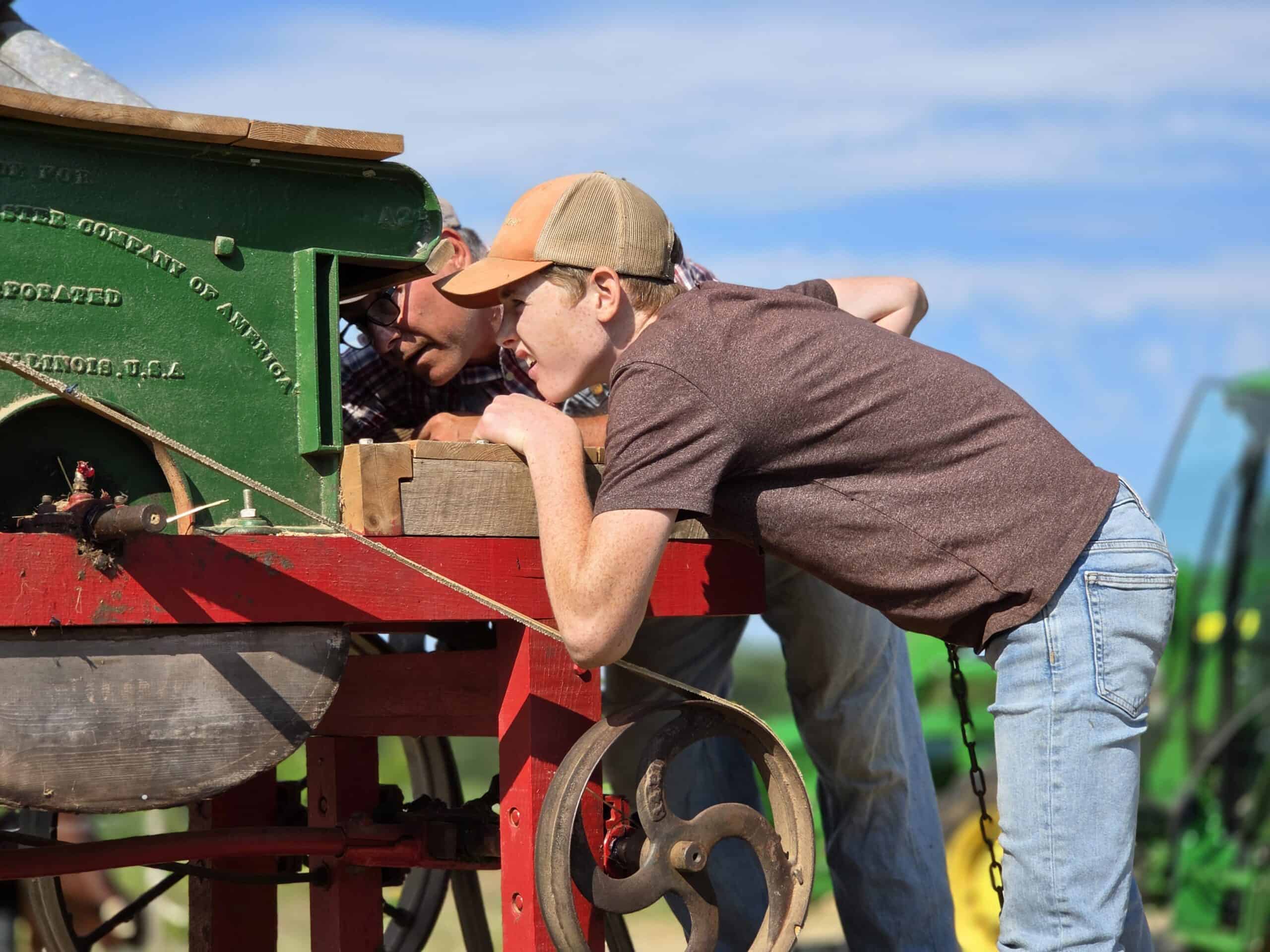
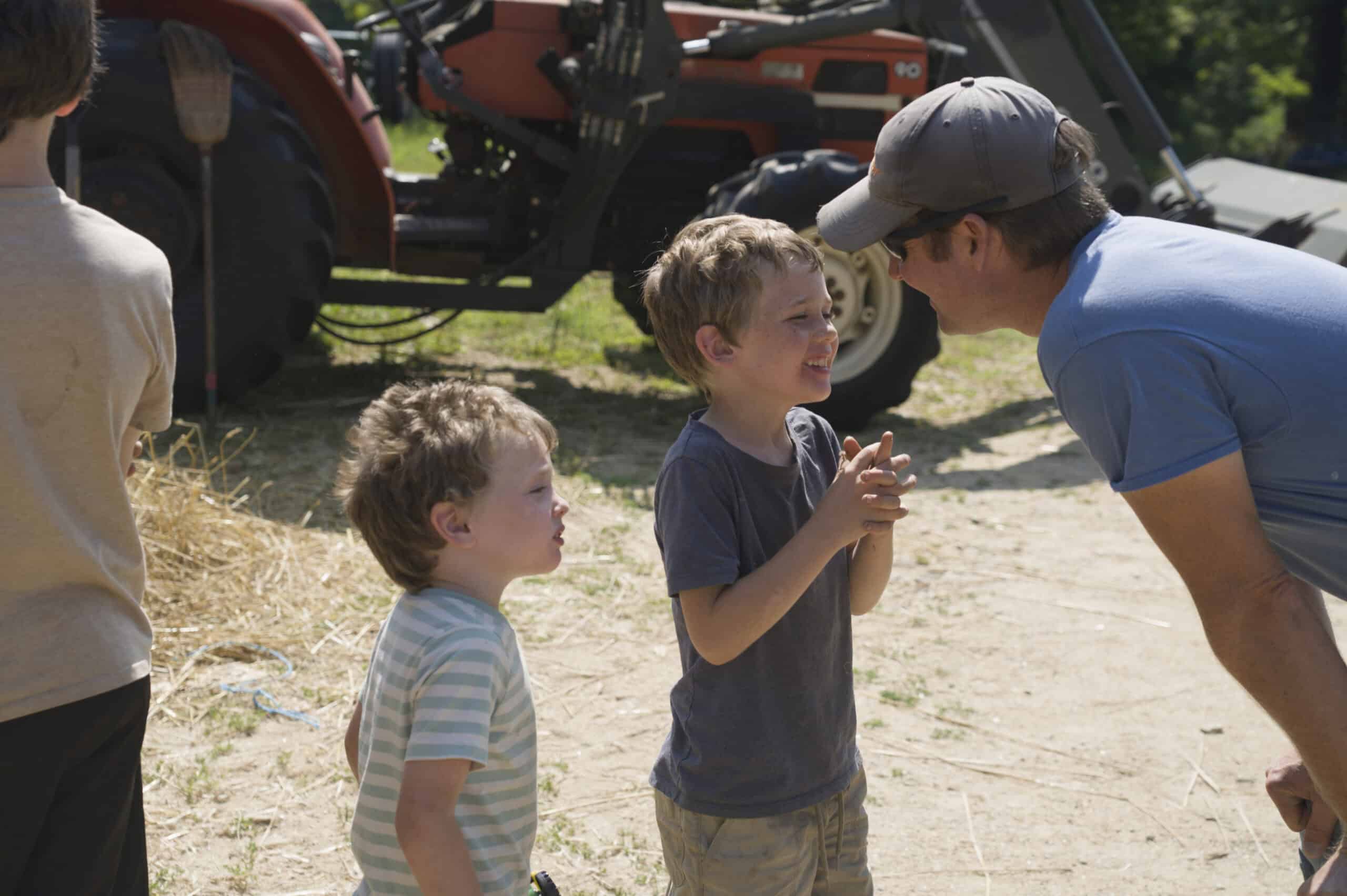
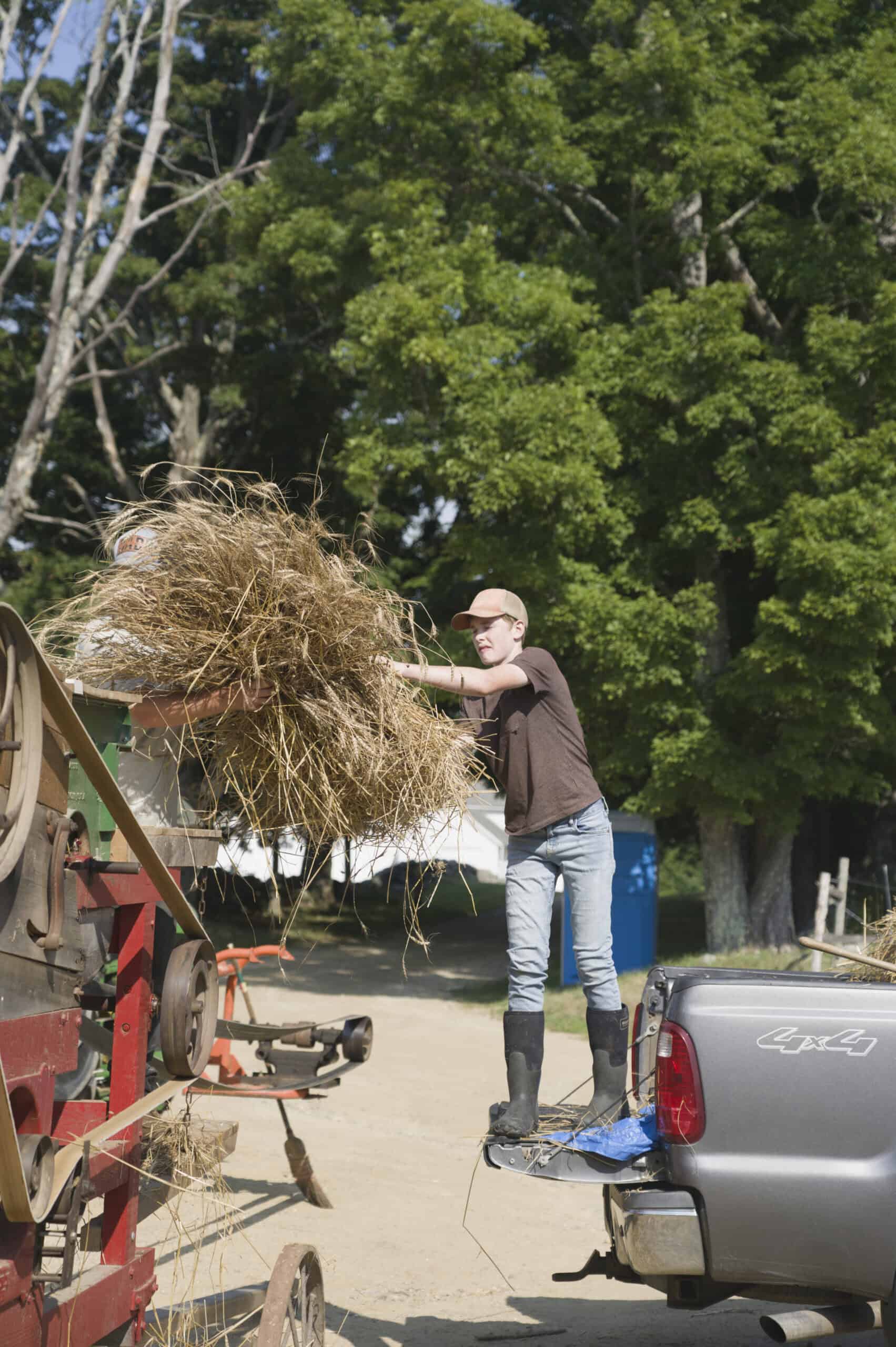
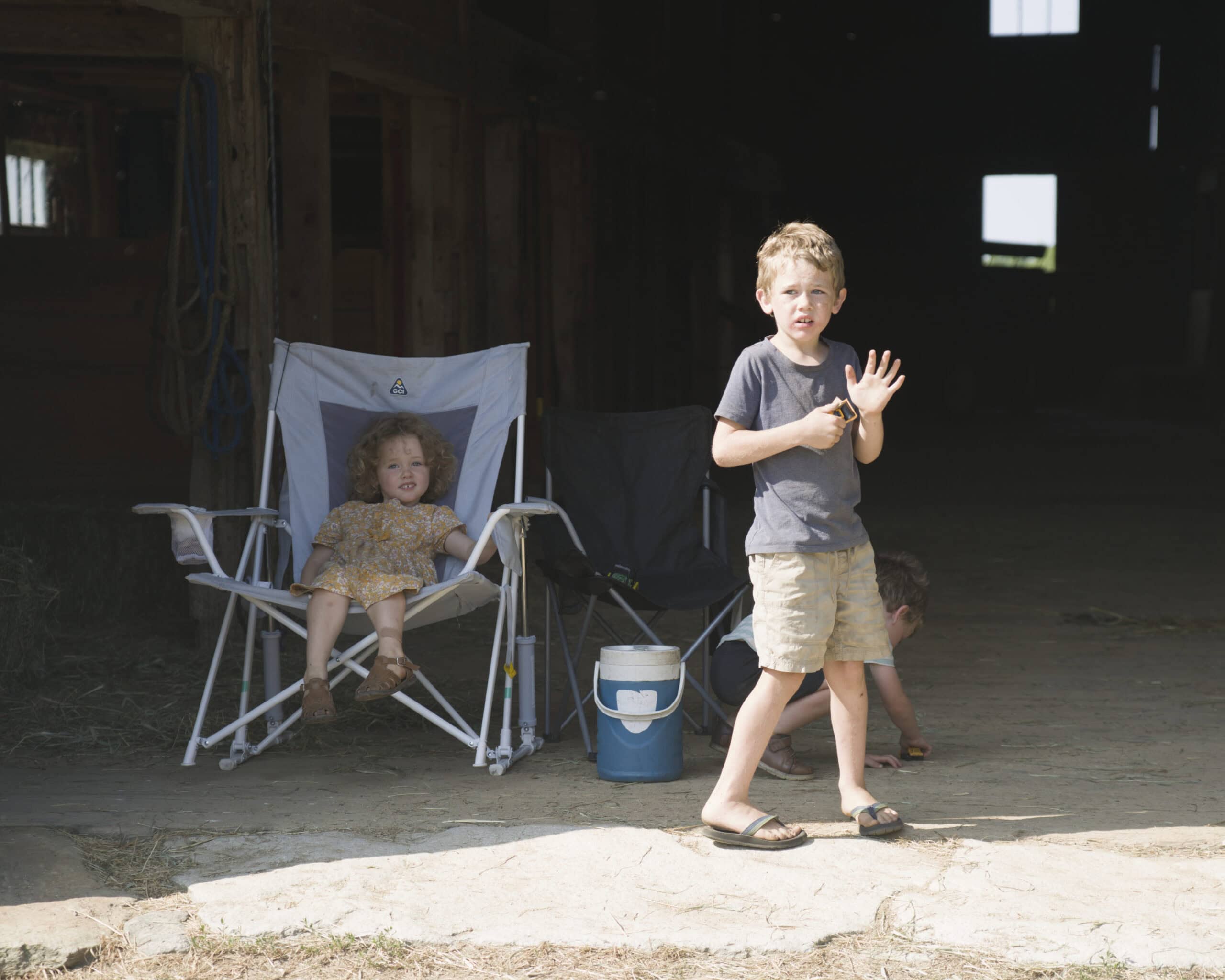
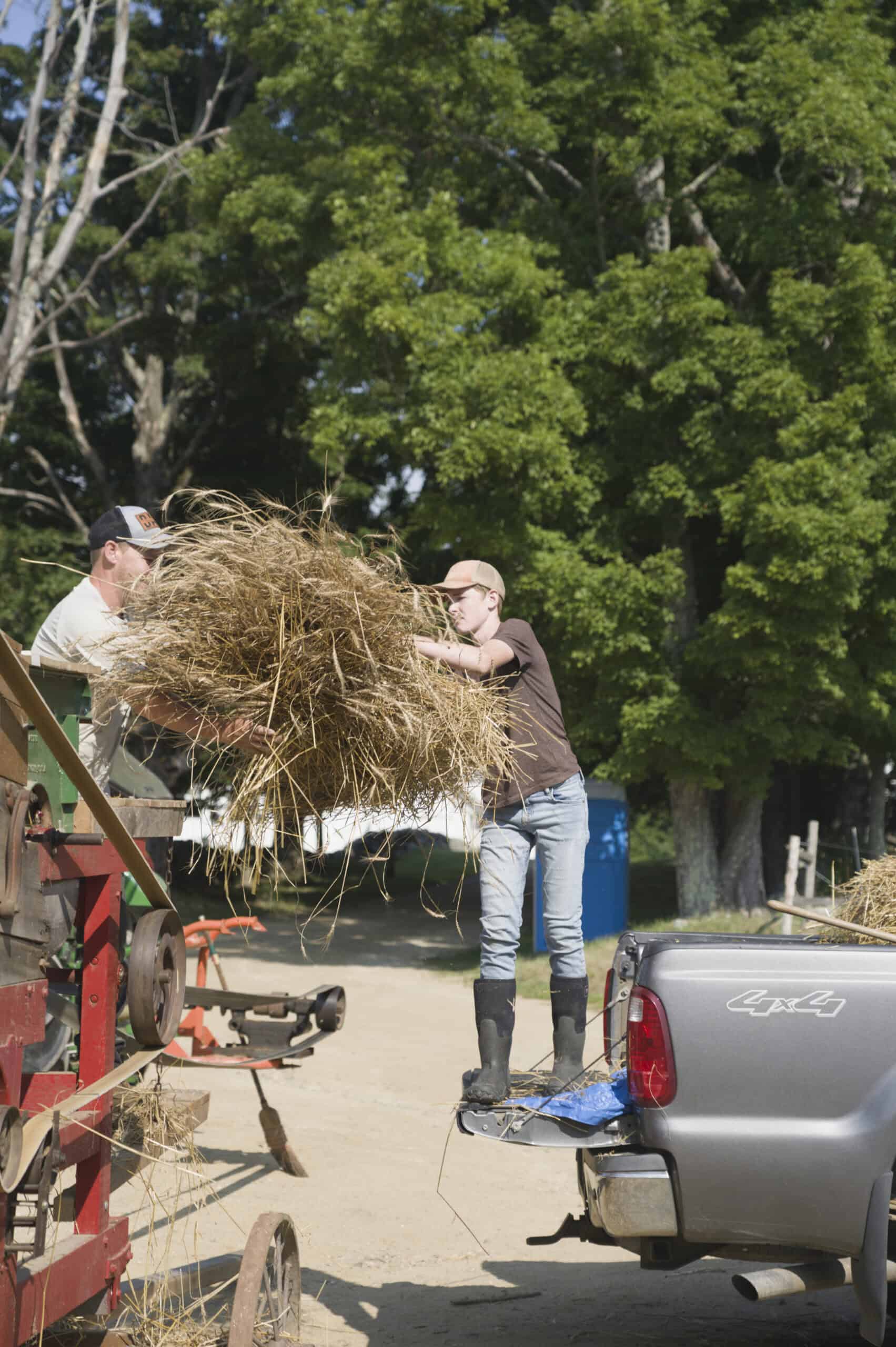
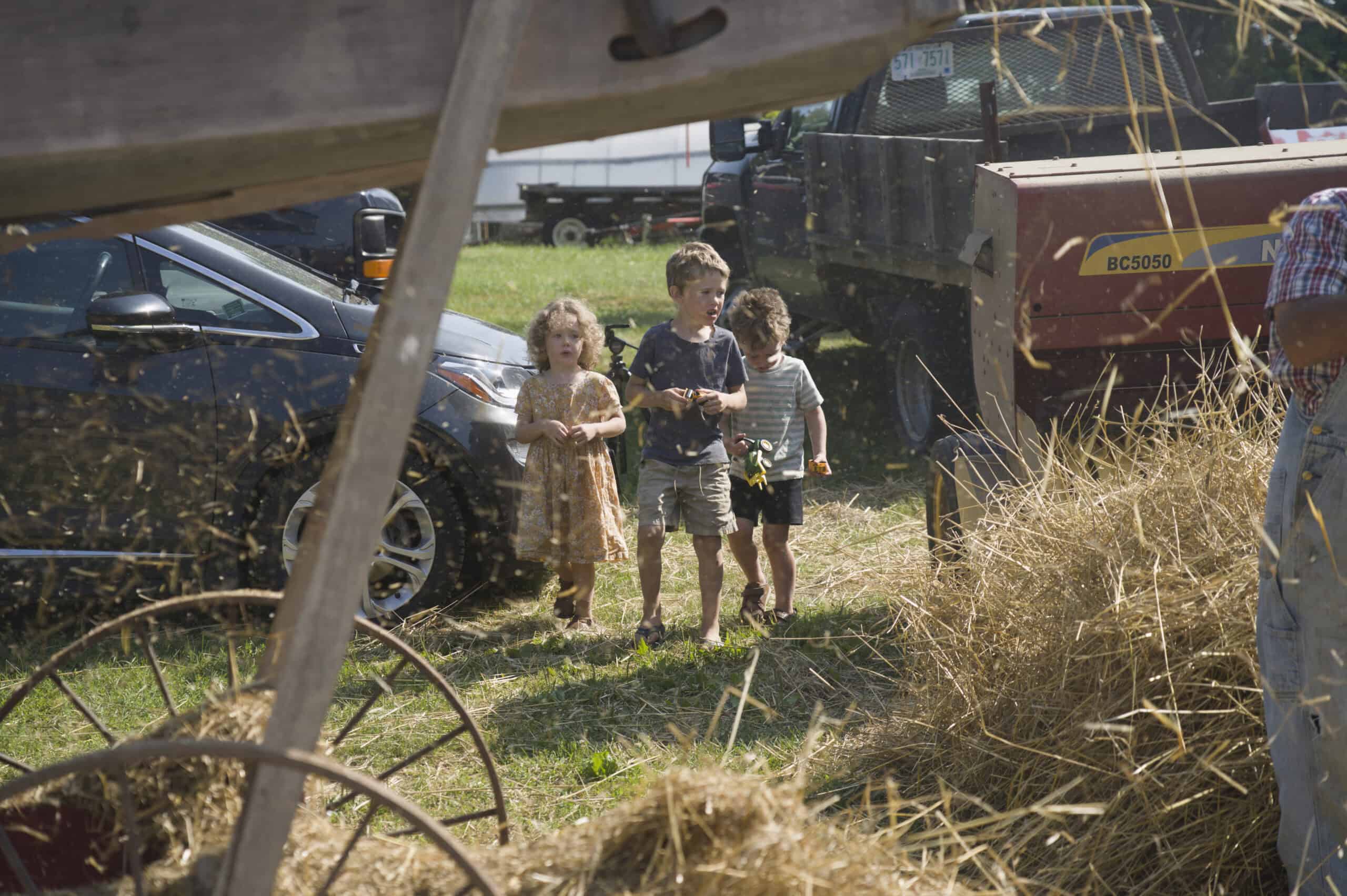
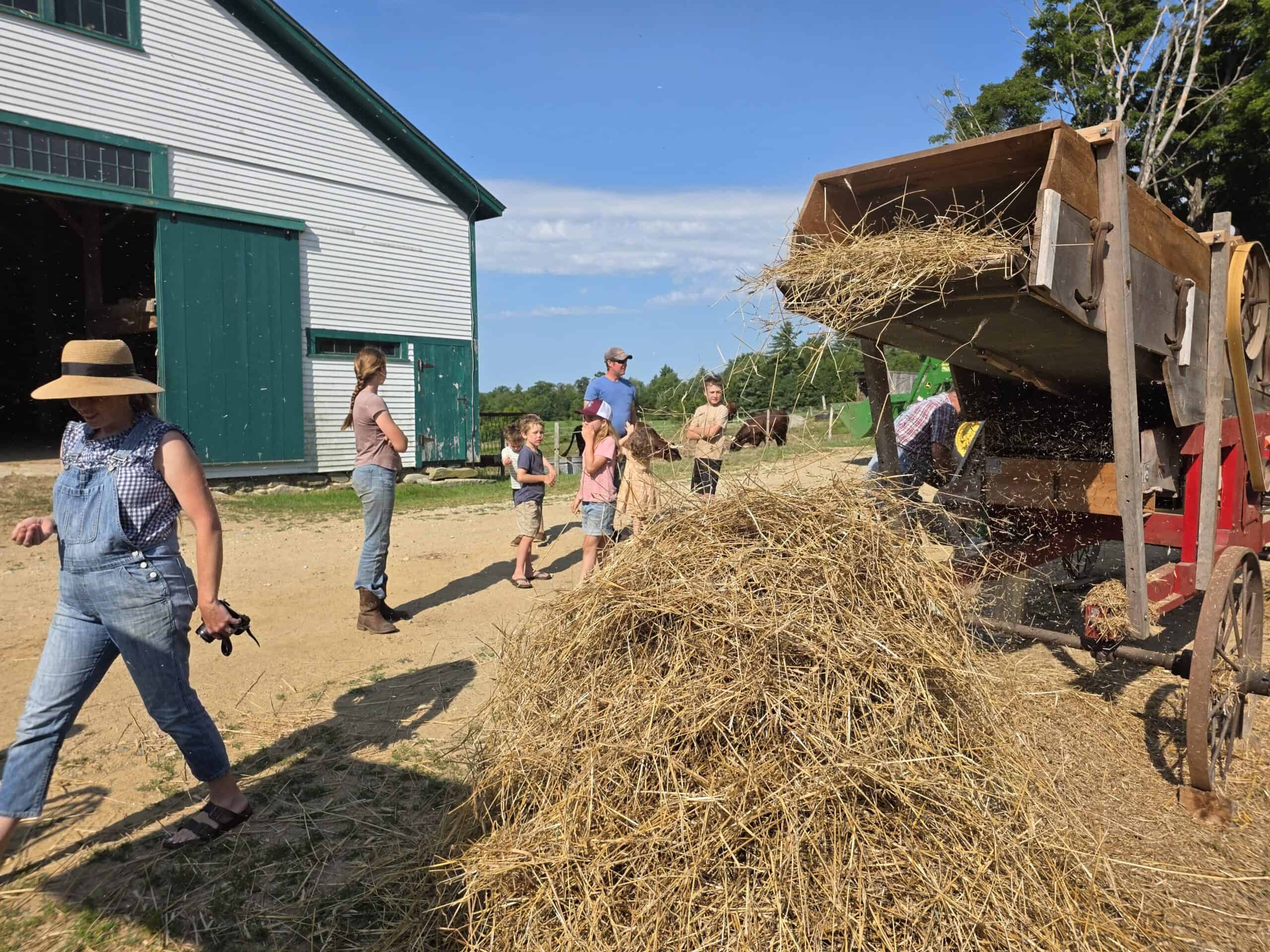
When the drive belt catches, the thresher comes alive. It shudders and shakes with a deliberate thrum—a mechanical violence designed entirely to separate precious wheat kernels from their papery chaff. Standing beside it feels like stepping inside a roaring symphony of rural engineering that trembles on the very precipice of falling apart, yet works with astonishing grace and speed. On this morning, the air around the thresher smelled earthy, dry, and fresh, punctuated by the laughter of the Matras children gathered around the grain chute, occasionally sneaking their hands under to plunder the spoils.
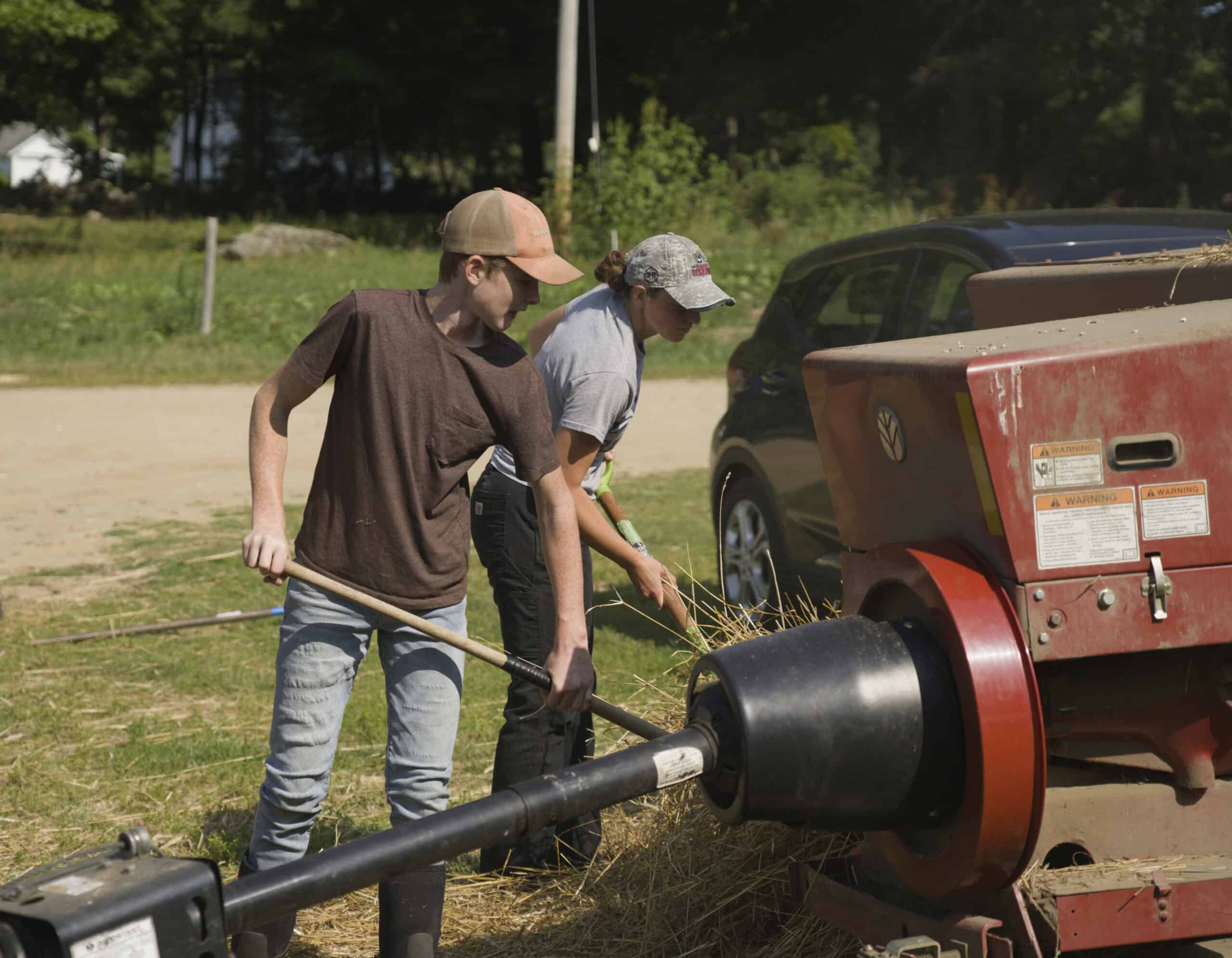
As the golden kernels spilled forth, Ramsey guided Calvin through the art of winnowing, teaching him how to dress and clean the grain. The final result: twenty-five pounds bagged for the Matras kitchen, while Calvin worked alongside Sanborn Mills Farm Oxen Teamsters Tyler Allen and Mary Osmer to bale the remaining wheat straw for farm use.
The Work is the Archive
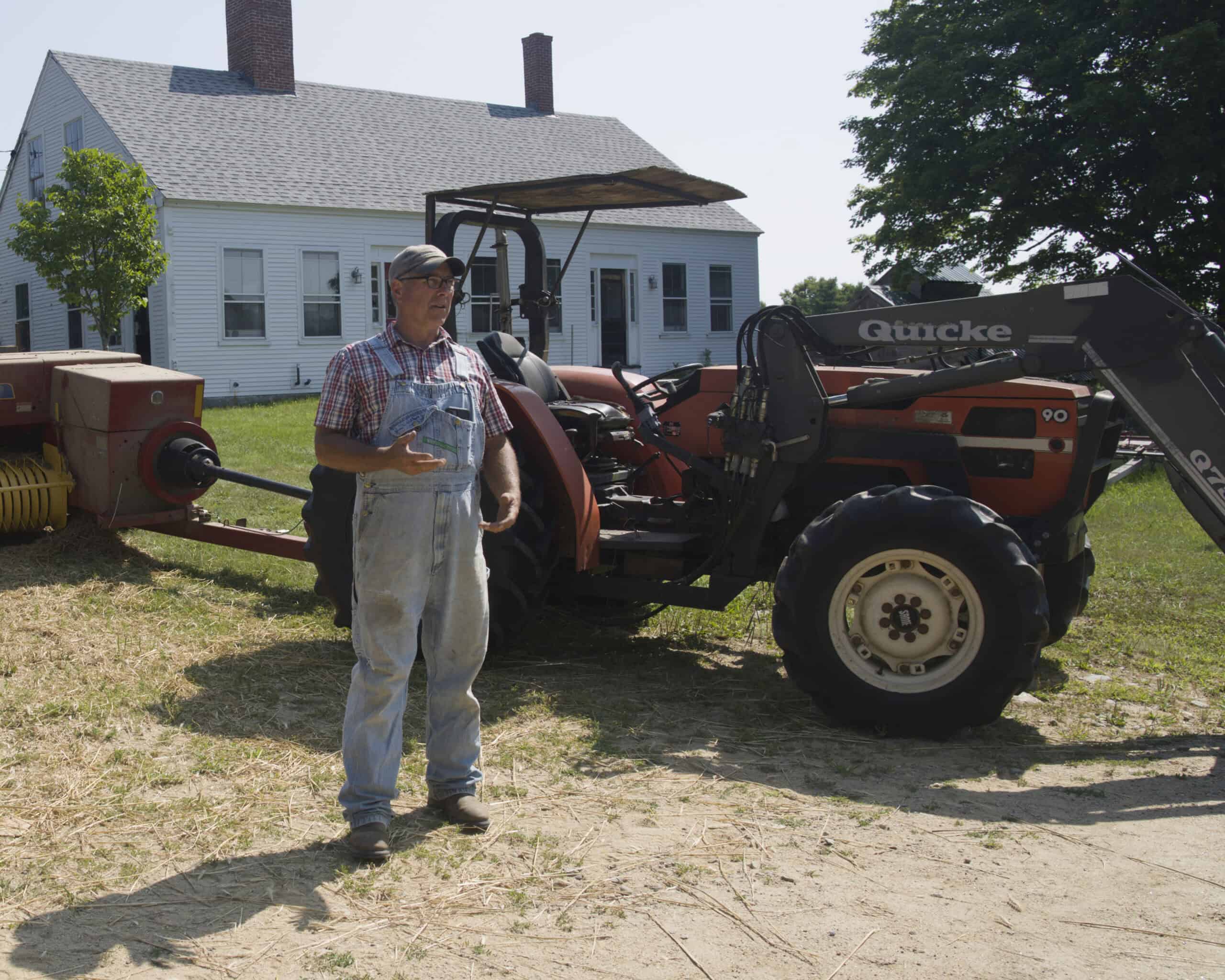
This marked the first time an outside community member had brought their own grain to be processed on the historic machinery at Sanborn Mills Farm in years and years. For Ramsey, seeing a young person engage so directly with the equipment touches the core of the farm’s mission.
“There’s nothing better than teaching someone,” Ramsey says. “They don’t know what they don’t know, so it is important to get them in there and try stuff so they know how to start asking questions.”
Ray, who hails from Indiana, has watched wheat production shift progressively westward over the decades. “It became cheaper to ship in the flour than it was to grow the grain,” he notes. He worries that modern society has grown disconnected from the sources of its nourishment, hoping moments like this spark a broader revival of farm-to-table living.
In early New England, expensive machinery like threshers belonged to agricultural cooperatives or traveling custom operators who moved from farmstead to farmstead during harvest. The Matras family itself holds a deep historical connection to Sanborn Mills. Jesse owns and operates a portable sawmill and was instrumental in restoring the historic sawmill and water-powered grist mill that anchor the property. For nearly two centuries, the grist mill has stood at the outlet of Sanborn Pond, serving as an epicenter of community life where neighboring farmers brought their harvests to be stone-ground by three massive French Buhr millstones designed for high-quality flour. The mill’s central water-wheel drive is powered through a massive octagonal white oak beam—milled by Jesse himself—a beam that may one day turn the stones to grind the grain his son Calvin grows.
This living connection bridges past and future. Ideas are now flowing for a seasonal trade of labor: the farm team bringing historical expertise to the Matras homestead during harvest, and the Matras clan bringing their collective hands to Sanborn Mills.
“We can train them with our learned expertise,” Ramsey notes, “and they can help us preserve the old ways by doing the work. The work is the archive.”
Closing the Circle and Living the Mission
The story of Calvin’s twenty-five pounds of wheat does not end at the thresher. At home, the Matras family plans to stone-grind the grain into flour for sourdough baking, pairing it with fresh fruit grown on their property. Sanborn Mills’ Executive Director, Mike Molla, even encouraged Calvin to take his craft a step further by capturing and cultivating wild yeast from his own land for his starters.
For Molla, Ramsey, and the entire team at Sanborn Mills, this single harvest illuminates the core purpose of the property. The farm is not a static museum piece or a historical reenactment site. It is a vibrant, working craft school and farm anchored in real-world utility.
“Our work is the archive, and the use is preservation,” says Molla. Opening the farm to local growers like Calvin aligns directly with the mission to serve as a regional reservoir of seed, machinery, and practical knowledge, revitalizing community-driven agriculture.
In an era dominated by opaque global supply chains where grain passes through dozens of industrial hands across continents, small-scale heritage farming offers an intimate, grounded alternative: seed to field, field to thresher, thresher to grist mill, and mill to table. The path remains short enough to trace with your own hands—or, like Calvin, to walk every step of the way yourself.