
Gardens and greenhouse
The Gardens
Eight gardens feed the kitchen, supply the studios with willow and dye plants, and give students a place to sit between sessions.
Garden by garden
What grows where
Ornamental Garden
A formal garden of terraced, dry-laid rock walls, alpine beds, and perennial borders, rising in three levels from the Great Room to the greenhouse. Colin Cabot designed its structure, including a waterfall lined up with the Great Room’s bay window.
Plants
Alpines and native and non-native perennials
Used for
A place for students to gather
Dye Garden
Dye plants were among the first things grown on the property. When the Dye Studio opened in spring 2022, the garden grew to hold more species and larger harvests.
Plants
Indigo, weld, madder, and other dye plants
Used for
Natural dye workshops
Sally Garden
Named for Salix, the Latin for willow, anglicized as “sally.” Three hedgerows of basket willow are coppiced each spring, and the long rods are stored for classes.
Plants
Seven varieties of basket willow
Used for
Willow basketry workshops
Teaching Garden
A half-acre plot of vegetables and herbs for the farm, kept apart for the seed-saving program. Students in draft animal workshops plow, furrow, and cultivate it through the season.
Size
Half an acre
Used for
Draft animal workshops, seed saving
Sanborn Kitchen Garden
Raised beds between grass paths in a geometric pattern, below the dining room that overlooks it. Colin and Paula Cabot tend it themselves.
Plants
Herbs and greens
Used for
The kitchen and dining room
Cut Flower Garden
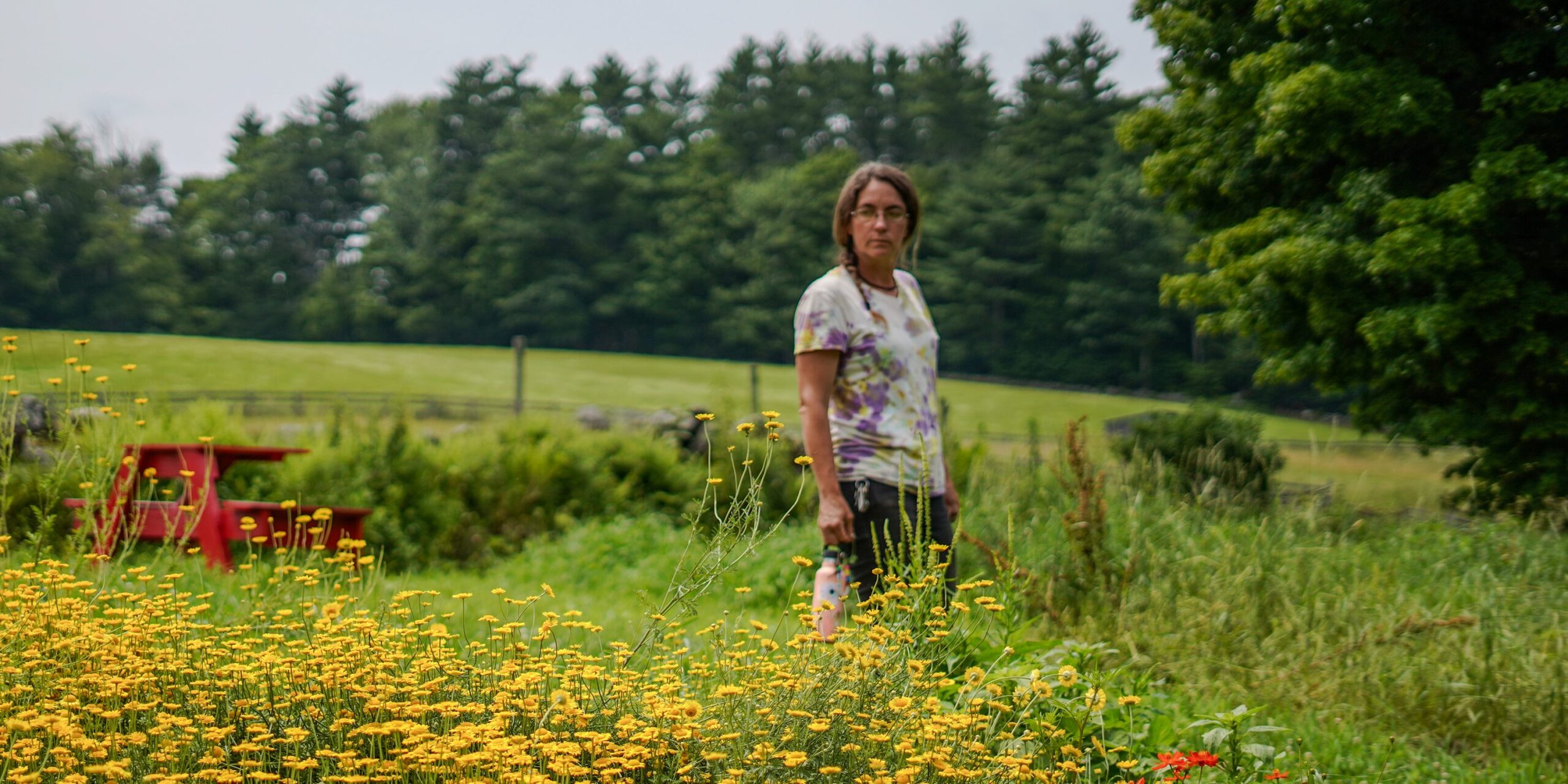
Annual flowers grow here for the farm’s events, and in summer and fall, bouquets are sold on Fridays as the season allows.
Plants
Annual cut flowers
Used for
Events, Friday bouquets
Meadow Garden
A long, sloping field running down from the house to Sanborn Pond, planted with spring bulbs and native perennials.
Plants
Spring bulbs and native perennials
Used for
Food and habitat for pollinators
Stream Garden
A quiet shade garden between the tailrace and the sawmill spillway.
Plants
Native and non-native shade perennials
Used for
A quiet place by the water
Lord & Burnham Greenhouse
Built in 1919 and slated for demolition in Brookline, Massachusetts, the greenhouse was moved to the farm, repainted, and restored. It sits at the top of the ornamental garden and holds farm and garden displays through the season.
The Greenhouse
Built
1919
Maker
Lord & Burnham
From
Brookline, Massachusetts
Used for
Seasonal displays and shoulder-season plants
Many of the alpine plants were propagated at Stonecrop, the nursery of Colin’s father, the gardener Francis H. Cabot, who also made the gardens at Les Quatre Vents in Charlevoix, Quebec.
Garden history
From a dairy farm’s vegetable patch
1770s
The Sanborn family settles here. As dairy farmers and millers, they keep a vegetable garden near where the Barden Barn stands today.
1997
Colin and Paula Cabot plant a knot garden of vegetables and herbs outside the mudroom.
Later
A larger vegetable garden goes into the Sanborn Barn’s barnyard, beside today’s dining room, and settles into its geometric beds.
By 2015
The steep bank behind the Main House is cut back and terraced with rock walls, making room for the Great Room, finished in 2015, and the ornamental garden.
2022
The Dye Studio opens and the dye garden expands.
Visit the gardens
Open with the grounds
Walk the gardens
The gardens are open with the grounds, Wednesday to Saturday, 10 a.m. to 3 p.m., April to November.
Flowers
In summer and fall, the gardens sell bouquets on Fridays, as the season allows.