
The Art of Broom Making
It would be hard to identify a more ubiquitous household tool than the simple and dependable kitchen broom.
Not scheduled right now. Last taught 2026.
It's saved in this browser. Sign in to keep your saved workshops on any device.
The workshop
It would be hard to identify a more ubiquitous household tool than the simple and dependable kitchen broom. Sorghum vulgare or “broomcorn” was first cultivated in America in 1797 by a farmer named Levi Dickinson in the town of Hadley, Massachusetts. Dickinson tied a bundle of broomcorn tassels together to make a broom for his wife, which became the envy of his neighbors. Shortly thereafter, the Shakers improved the sweeping quality of brooms by tying them flat. The American broom-making industry was born.
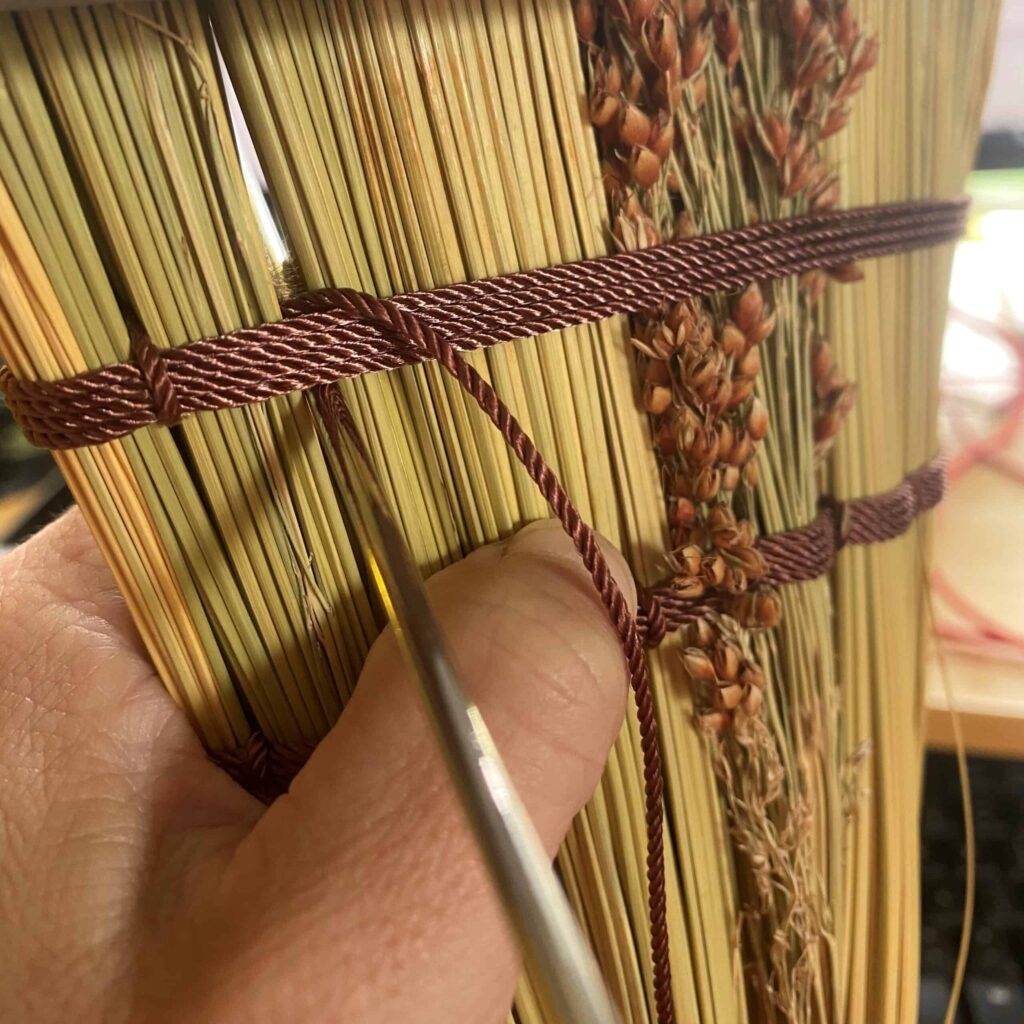
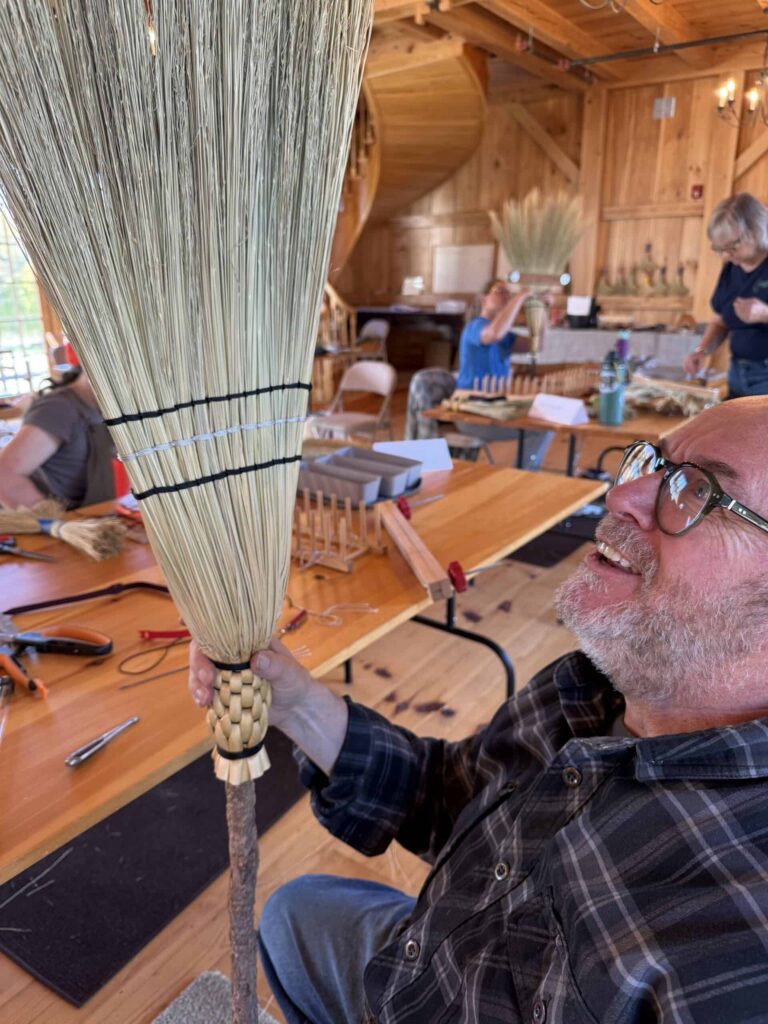
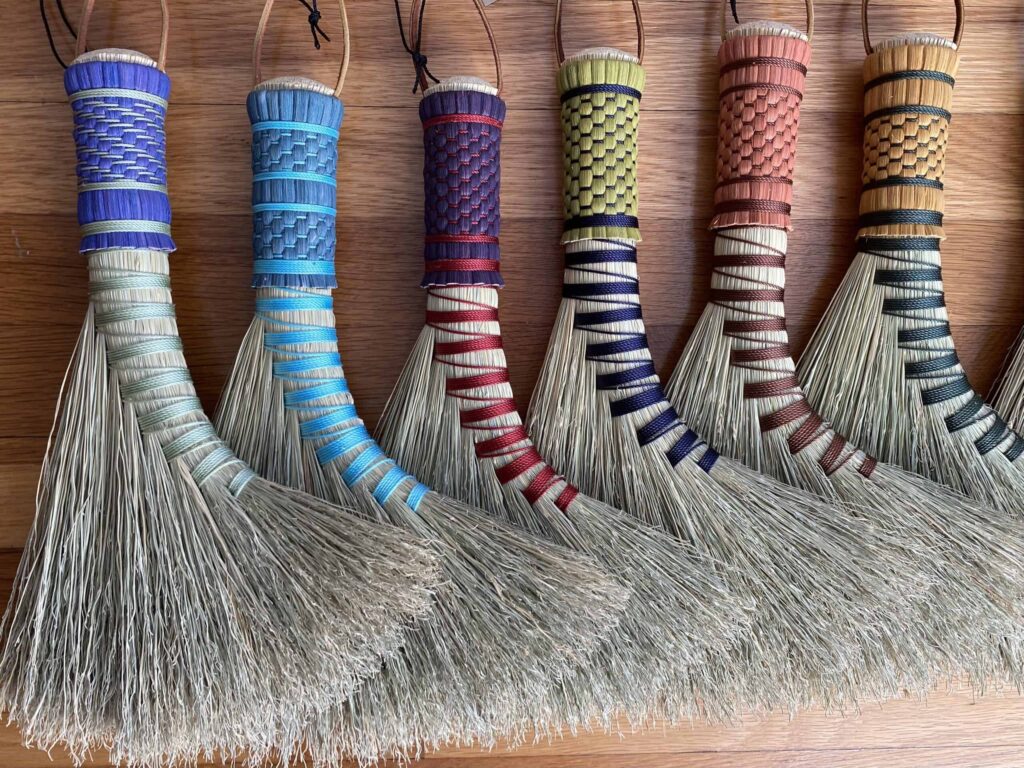
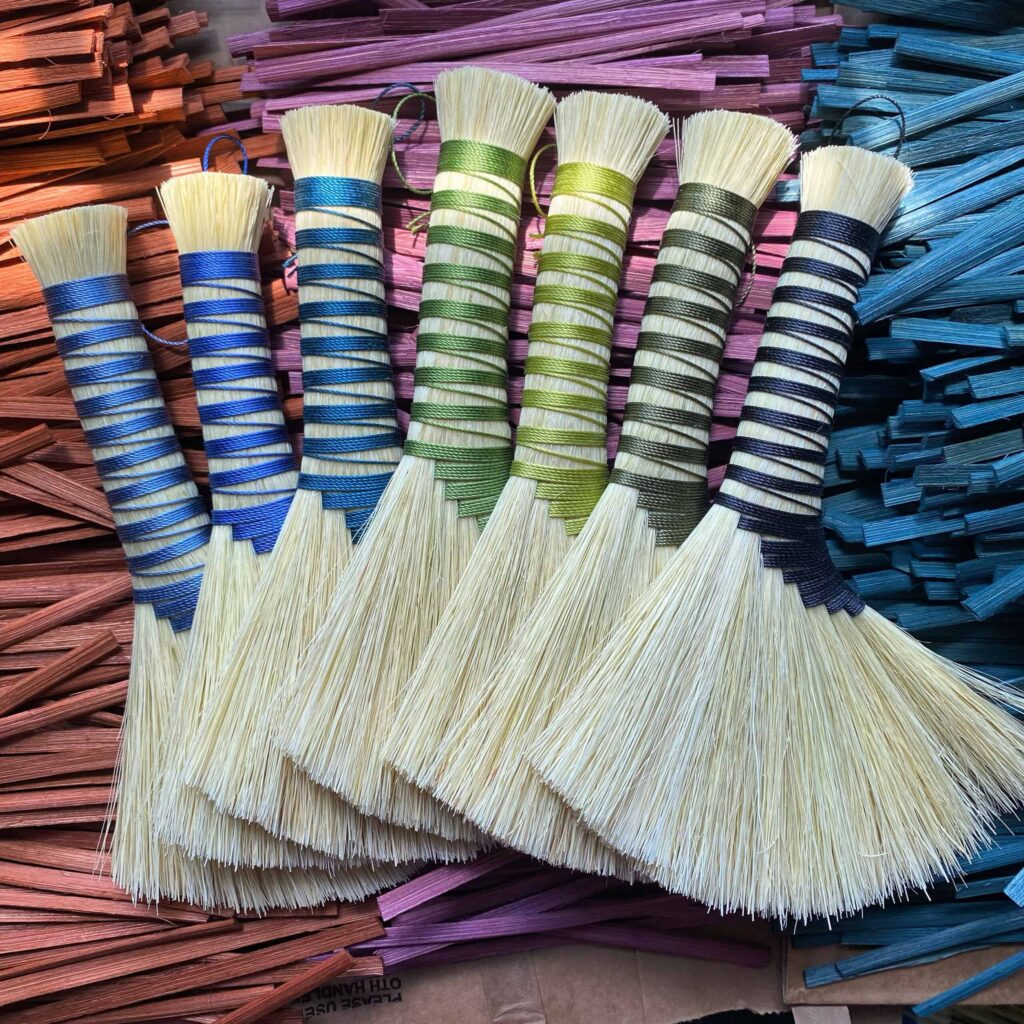
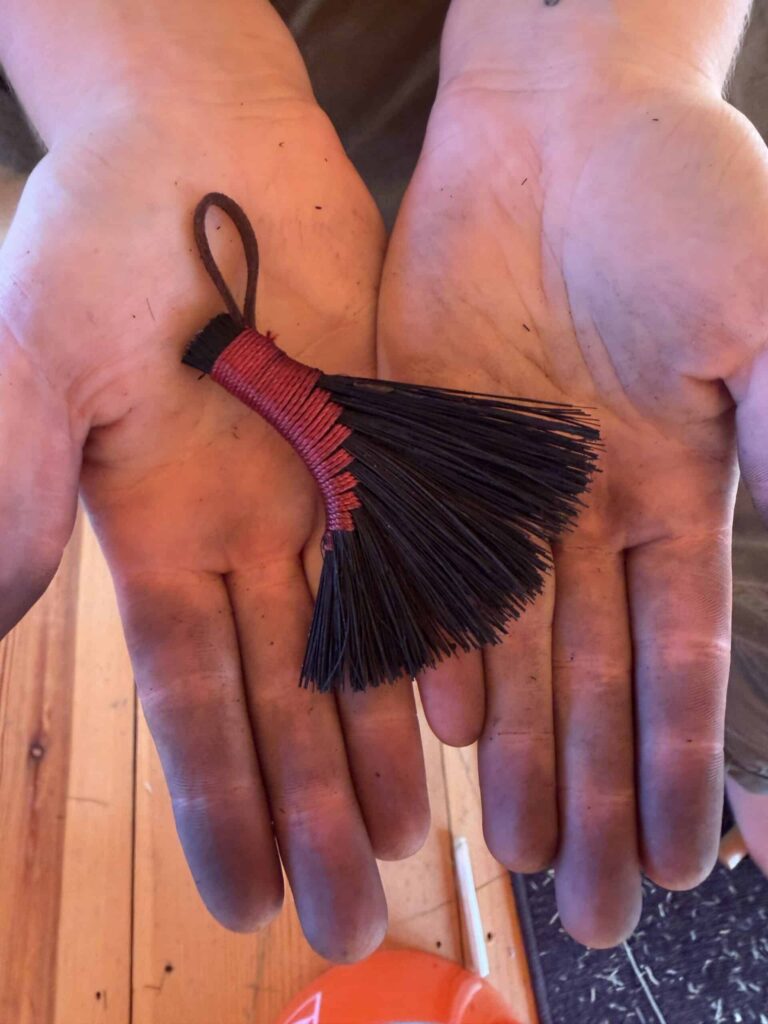
During this two-day workshop, you will learn the skills necessary to create your own beautiful and functional sweeping tools, including a full-sized Shaker kitchen broom, a round broom, and multiple Turkey Wing whisks.
On day one, students will learn how to select, sort, and prepare broom corn and get a working introduction to some of the unique but simple tools that we use in broom making, such as the foot brake. Before lunch, we will tie and plait (weave) our kitchen brooms. While those hang to dry, we will move on to learning how to tie two different styles of hand whisks.
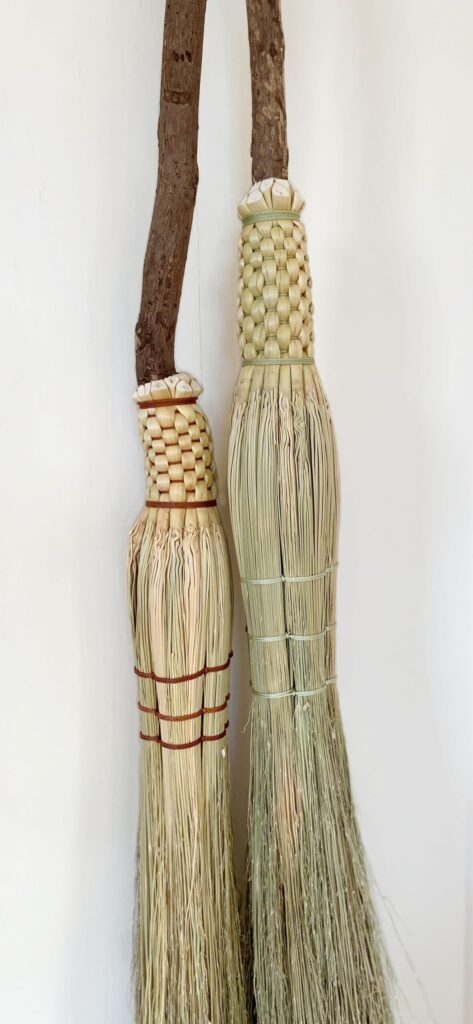
On day two, we will sew our kitchen brooms flat using a broom vice, needle, and twine and students will learn how to add a decorative reed handle to their whisks. In the afternoon, there will be plenty of time to freestyle and experiment with different fibers, weaving patterns and color.
This is a beginner level class. Some upper body and hand strength is required.
Skills and techniques
- Selecting, sorting, processing, and preparing broom corn.
- Using a foot break to create tension.
- Weaving/plaiting with broomcorn stalks as well as basket reed to create decorative handles.
- Sewing a flat kitchen broom
- Trimming and shaping
Before you come
Details for students
Where
One of the farm's studios, confirmed at check-in. See the campus
Staying on the farm
Housing, meals, the daily schedule, and places to stay nearby are on Prepare for your workshop.
Your instructor
Questions about this workshop, housing, or meals? Email registrar@sanbornmills.org or call (603) 435-7314. Please read the workshop policies before you register.