The Mills
The farm’s sawmill and grist mill were built in 1829 and 1830, and both have been restored and still run on water.
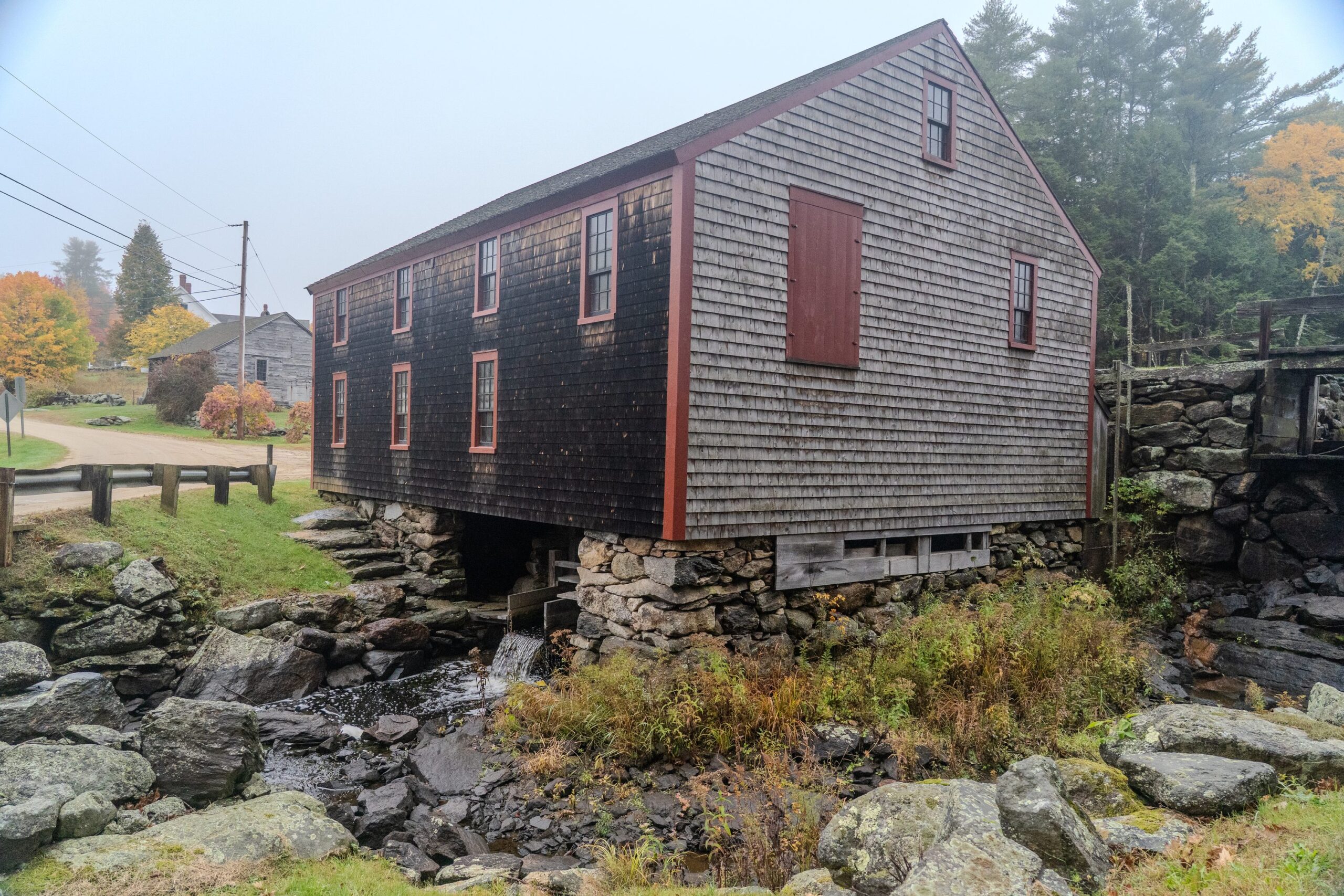
1829 and 1830
Built by millwright Theodore Farnum Elliott for the Sanborn family
Water-powered
Both mills run on water from Sanborn Pond
Still working
Cutting lumber and grinding corn and wheat today
Stops 10 and 11
On the self-guided walking tour
The Sawmill
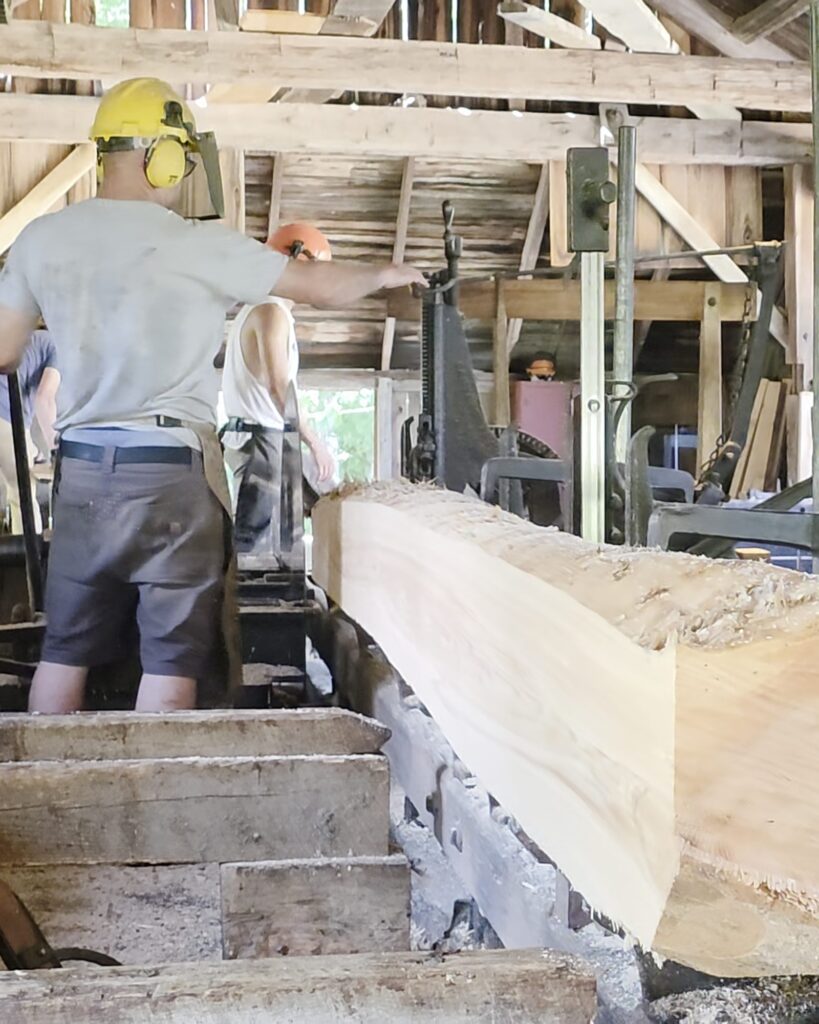
Elliott built the sawmill in 1829 for Edmund Sanborn, his future father-in-law, on the site of an earlier mill. Logs float in the mill pond and are drawn up onto the saw deck by chain.
It runs two saws: a Lane circular saw that came by rail from Vermont in 1891, and a replica of the original up-and-down saw, which leaves the straight marks found in early American timber frames.
Sawmill specifications
Built
1829, scribe-rule mortise and tenon frame
Size
21 by 53 feet
Power
Water turbine, 12-foot head
Saws
Lane circular saw (1891), 54-inch blade, 36-foot carriage; replica up-and-down saw
Speed
Up to 650 rpm
Restored
Dam rebuilt after 1997; running on water again in 2006
The Grist Mill
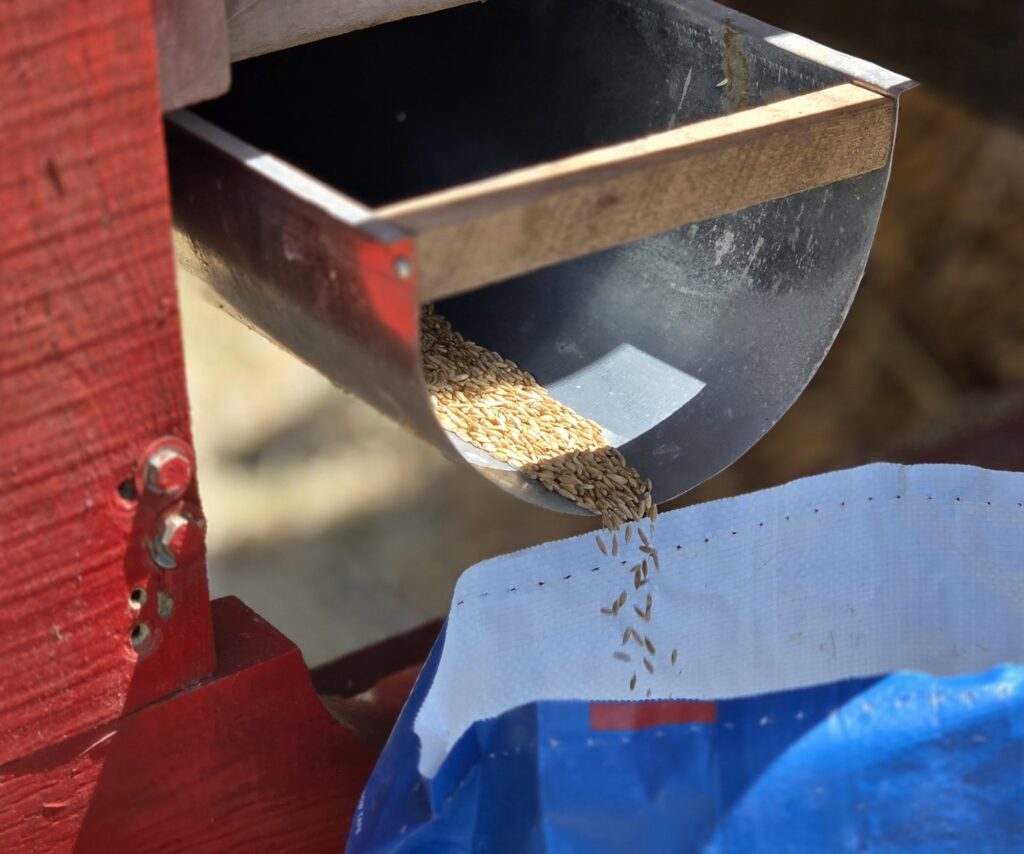
Elliott built the grist mill a year later, on a granite foundation in the brook beside the upper dam. The original bolter, grain cleaner, and corn cracker are still in place on its four floors.
Granite stones grind corn and French buhr stones grind wheat. Some of the corn goes to the farm kitchen as flour.
Grist mill specifications
Built
1830
Size
30 by 53 feet, four floors
Power
Tub wheel turbines; water wheel (2018) for the other machinery
Stones
Granite for corn; French buhr for wheat
Restored
From 2009: new hurst frame, rebuilt dam and penstock
It is likely the only water-powered sawmill in the country with both a working circular saw and a working up-and-down saw.
Lumber from the mill
The mill sells beams, wide plank flooring, and live edge slabs, many of them cut on the up-and-down saw. The mill can also saw logs from your own land, including storm-damaged trees.
Tell us the species, sizes, or logs you have in mind, and the mills team will write back.