SHARE:


Farm Pickings
News and Updates from Sanborn Mills Farm
— July 8, 2022 —

Available Workshops: July and August
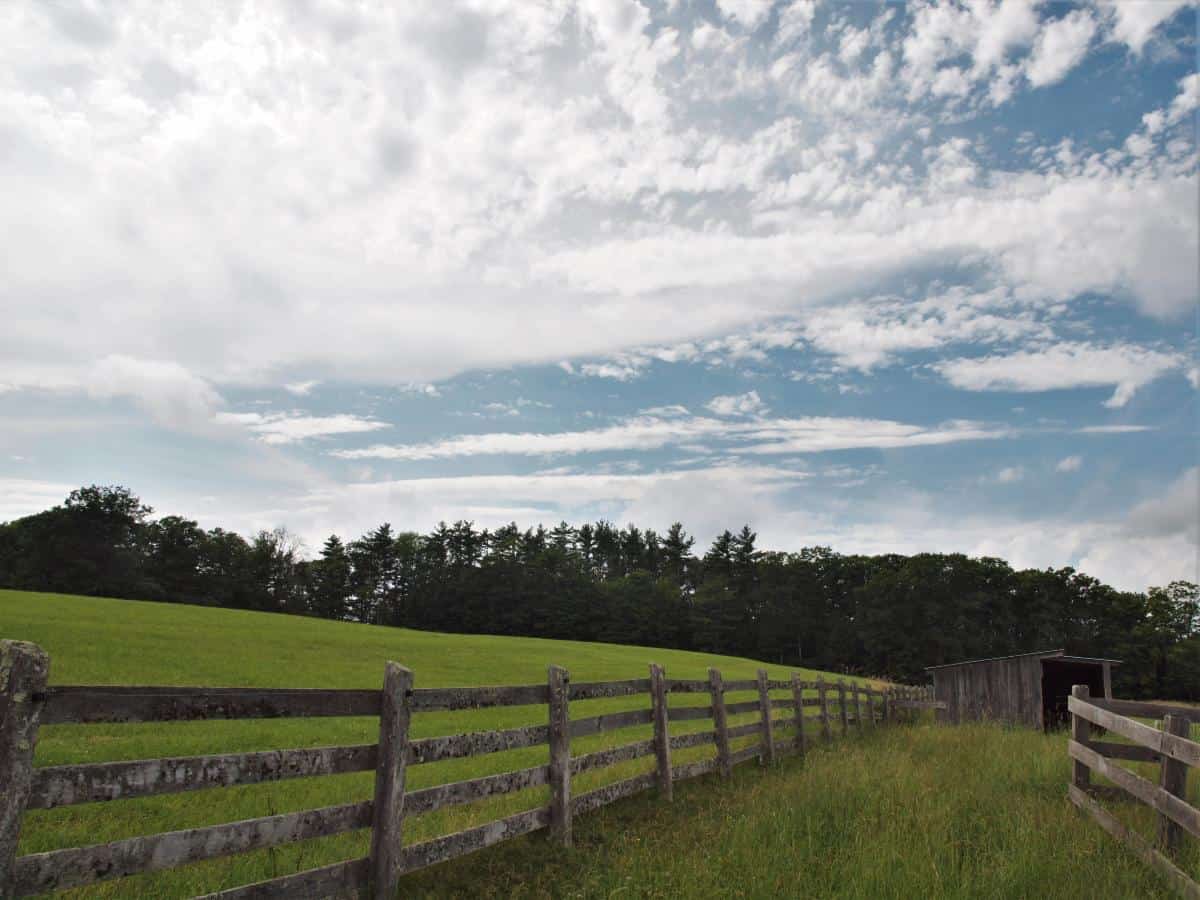
Coming up in July, two of our popular Natural Dye workshops are on the schedule. Participants will work with plants grown here at the Farm.
The list of available workshops that continue the 2022 season at Sanborn Mills Farm, July through August, appear below. Click on the workshop title to learn more and to register. Please note that workshops often fill early. (Workshops that are already full are not listed.) Click here for a month-by-month calendar of 2022 workshops at the Farm. Full workshops can be wait-listed.
Flax in the Field: Growing, Harvesting, and Processing Flax for Handmade Linen: July 13-14
Flax to Linen: Handspinning Flax into Linen Yarn: July 15-16
Blacksmithing: Creating in Copper, Brass, and Iron: July 16-17
Rice Paste Resist: July 25-29
Natural Dye Basics: Harvesting Color from the Dye Garden: August 3-5
Natural Dye: A Focus on Protein Fibers: August 8-12
Celebrating with Garlands from Nature: August 21
|
|
|
|
|
|
Come See Us on Open Farm Day, July 24
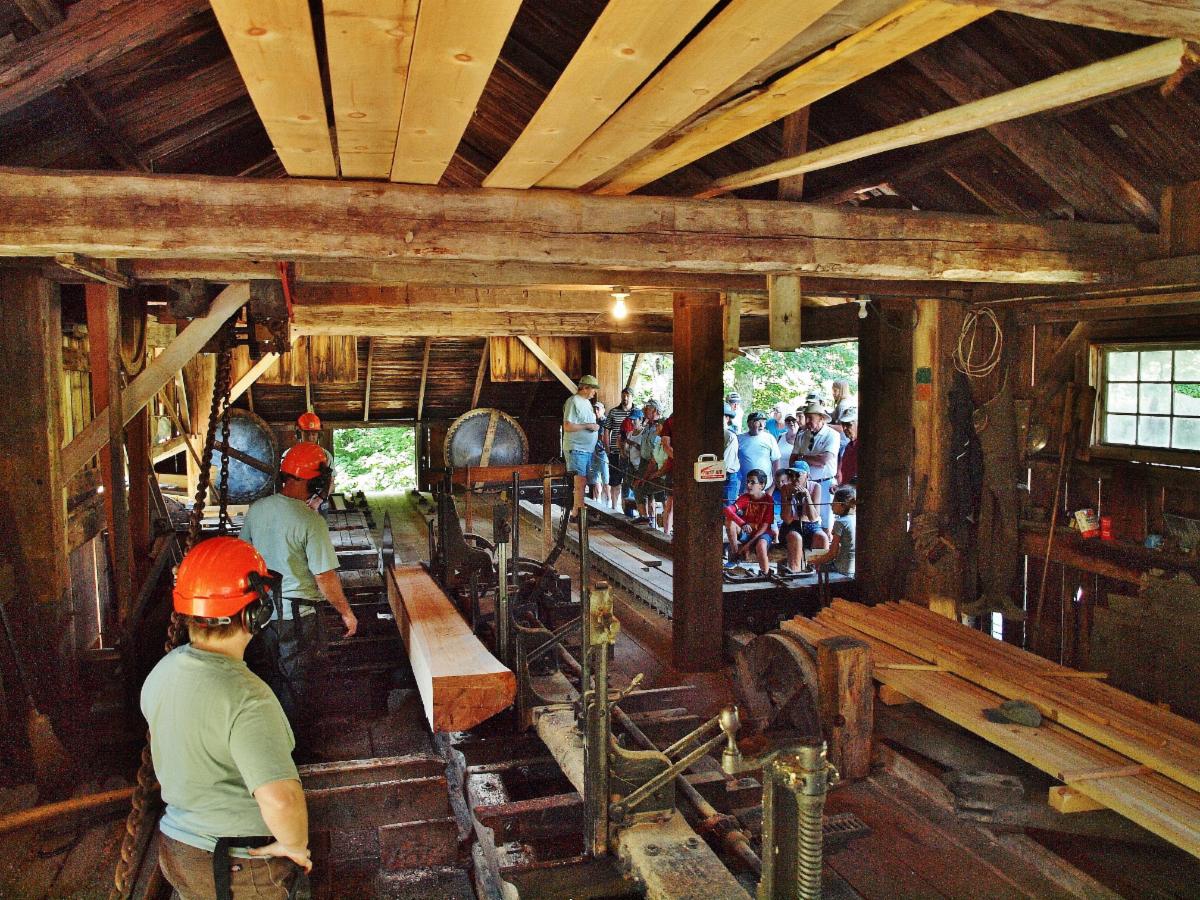
Make plans to visit Sanborn Mills Farm on Sunday, July 24, when the Farm will be open for visitors. Demonstrations in our sawmill and grist mill, as well as demonstrations of working with draft animals, will occur throughout the day. In addition, the gardens will be open and our gardeners will be on hand to answer questions.
So circle Sunday, July 24, on your calendar. The Farm will be open from 10 a.m. to 3 p.m., and we’d love to see you at Open Farm Day this year. Suggested donation for Open Farm Day is $5-$10 per adult, with funds going toward the Sanborn Mill Farm scholarship fund.
|
|
|
|
|
|
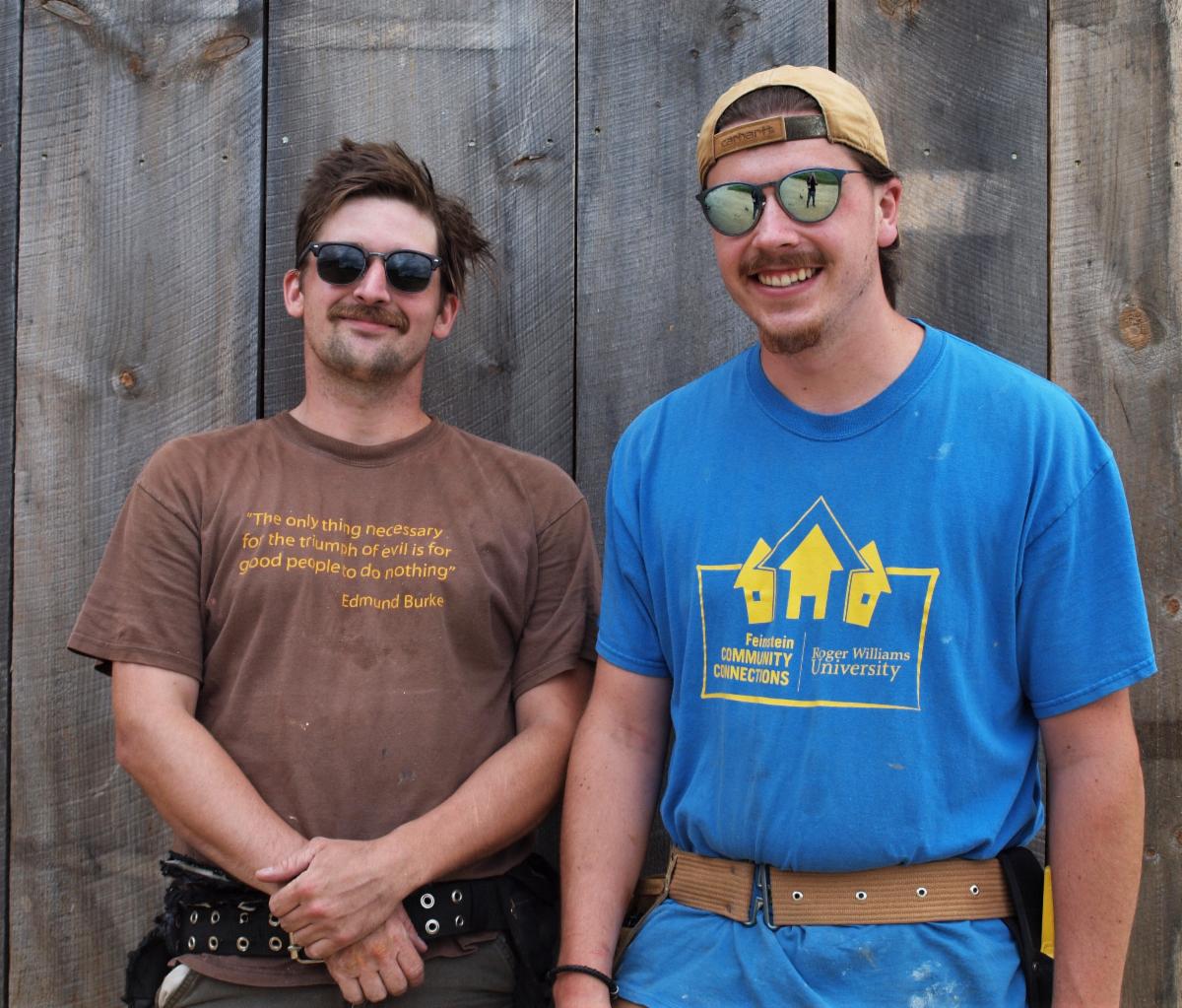
Meet Our Summer Carpentry Interns
Kevin Green, on the left in the adjacent photo, and Matt Papineau are spending the summer at Sanborn Mills Farm as our carpentry interns. They’ve been working on several projects, including shingling the new Merrill Barn and helping reconstruct the Lord and Burnham greenhouse. Both come to us from the North Bennett Street School in Boston, which has sent several interns to the Farm over the years.
Kevin grew up in Connecticut just outside New York City and attended Endicott College in Massachusetts as an environmental science and chemistry major. He also flirted with the hospitality industry during summers on Nantucket, at one point even considering training to become a sommelier. But construction was in his blood: “I’ve been on job sites since I was 14” he says. He made his way to the North Bennett Street School specifically to learn timber-framing, and a big reason he took the internship at the Farm was to learn from Kevin Schurman, the Farm’s head carpenter and a specialist in historic preservation. “Here at the Farm, I’m doing what I love,” he says, hammer in hand, before he pounds a nail into one of the shingles he and Matt are helping put on the siding of the Merrill Barn. “It’s been just great so far.”
Matt grew up in Blackstone, Mass., which was one of the first mill towns in the young United States, so he has been surrounded by historic structures for much of his life and his interest in preserving and protecting old buildings took hold early. He graduated from Roger Williams University in Bristol, R.I., majoring in historic preservation, but he didn’t want to become a teacher or historian of traditional building skills. “I knew early on I wanted to do something with my hands,” he comments. He was first introduced to the Farm on a field trip from North Bennett Street School, though he had long been familiar with the Lakes Region of New Hampshire because his family owned a camp on Lake Winnipesaukee. As he looks up at the side of the Merrill Barn and assesses just how many shingles still need to be nailed up (hundreds), he states, “This is what I want to do until I can’t swing a hammer anymore.”
|
|
|
|
|
|
Book of the Month
What We’re Reading in July
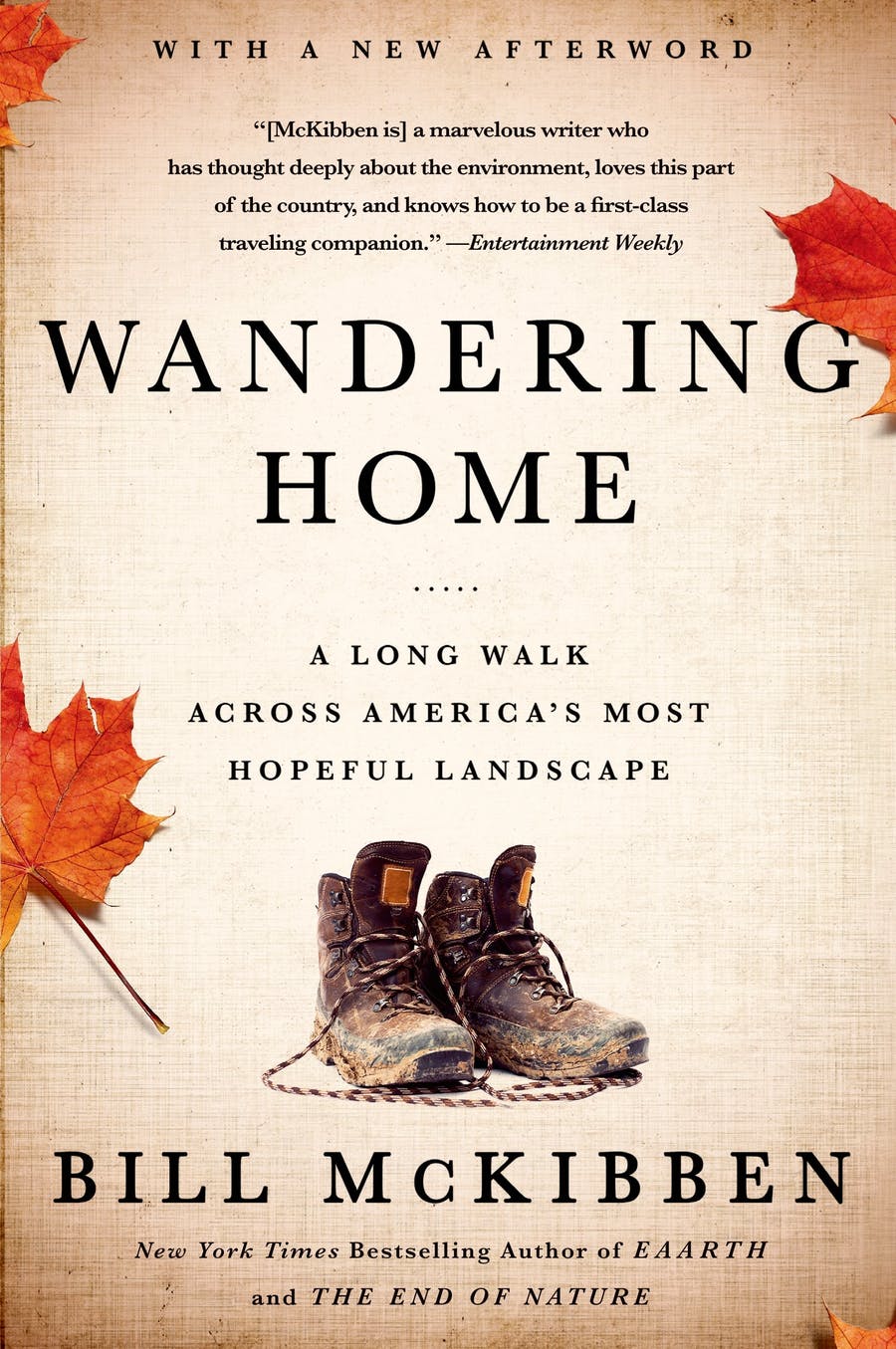
A New England resident since childhood, Bill McKibben is the well-known author of the best-selling “The End of Nature.” In the much more personal “Wandering Home: A Long Walk Across America’s Most Hopeful Landscape,” first published in 2014, Bill takes a three-week walk across two of the most historic regions in the eastern U.S. From the summit of Mt. Abraham in Vermont’s Green Mountains he looks down into the Champlain Valley and across to the wall of the New York Adirondacks. “In my experience,” he writes, “the world contains no finer blend of soil and rock and water and forest than that found in this scene laid out before me—a few just as fine, perhaps, but none finer. And no place where the essential human skills—cooperation, husbandry, restraint—offer more possibility for competent and graceful inhabitation, for working out the answers that the planet is posing in this age of ecological pinch and social fray.”
As he walks, he contemplates the questions that he first began to raise in his groundbreaking meditation on climate change, “The End of Nature”: What constitutes the natural? How much human intervention can a place stand before it loses its essence? What does it mean for a place to be truly wild?
“Here is a nature writer who can consider all sides of an argument and happily end up uncertain of the precise solution, but sure of his nearly evangelical passion for the mountains he calls home,” wrote Publishers Weekly in its review. “This book could single-handedly spur a rush of tourism to the Adirondack area—it’s that good.”
www.sanbornmills.org
Photo Credits
Cover of “Wandering Home” courtesy MacMillan – St. Martin’s Press.
All other photos by Steve Bjerklie.
Sanborn Mills Inc. | (603) 435-7314 | info@sanbornmills.org | www.sanbornmills.org
Hands-on education in traditional craft and farming: Inspiring the future with tools from the past.