SHARE:

 |
At Sanborn Mills Farm, preserving the past and planning for the future go hand in hand. The Farmhand News from Sanborn Mills Farm January 2020
This Month’s Featured Workshop
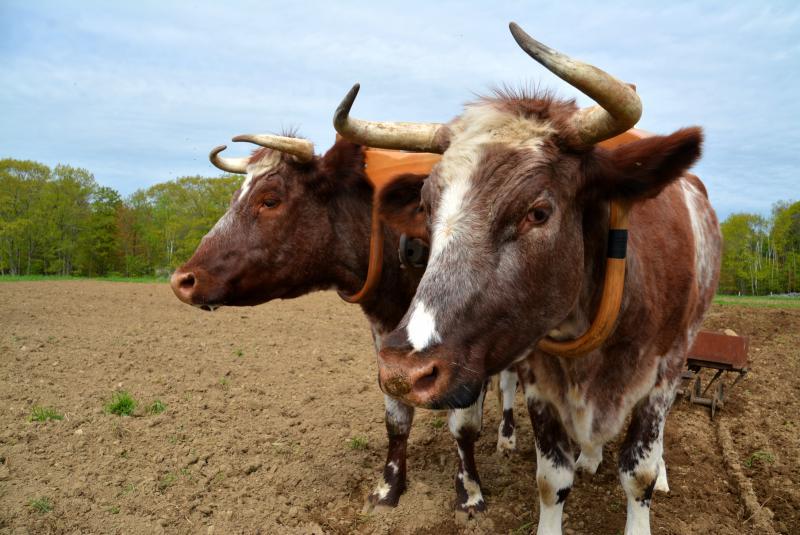
Program Manager Molly Bolick reminds friends of Sanborn Mills Farm that there’s space available in the “Oxen Basics” draft animal class coming up in April. Click on the link below to register: Join us for a two-day workshop to learn the basics of selecting a team or a single ox, halter training, basic commands, and proper yoking and fitting. Our instructors will demonstrate the navigation of a team with equipment while explaining proper body language, position, and voice commands. Students will have the opportunity to practice navigating their team on multiple pieces of equipment.
Instructors: Ray Ramsey, Tyler Allen
Work Begins on Installation of Water-Driven Up-and-Down Saw 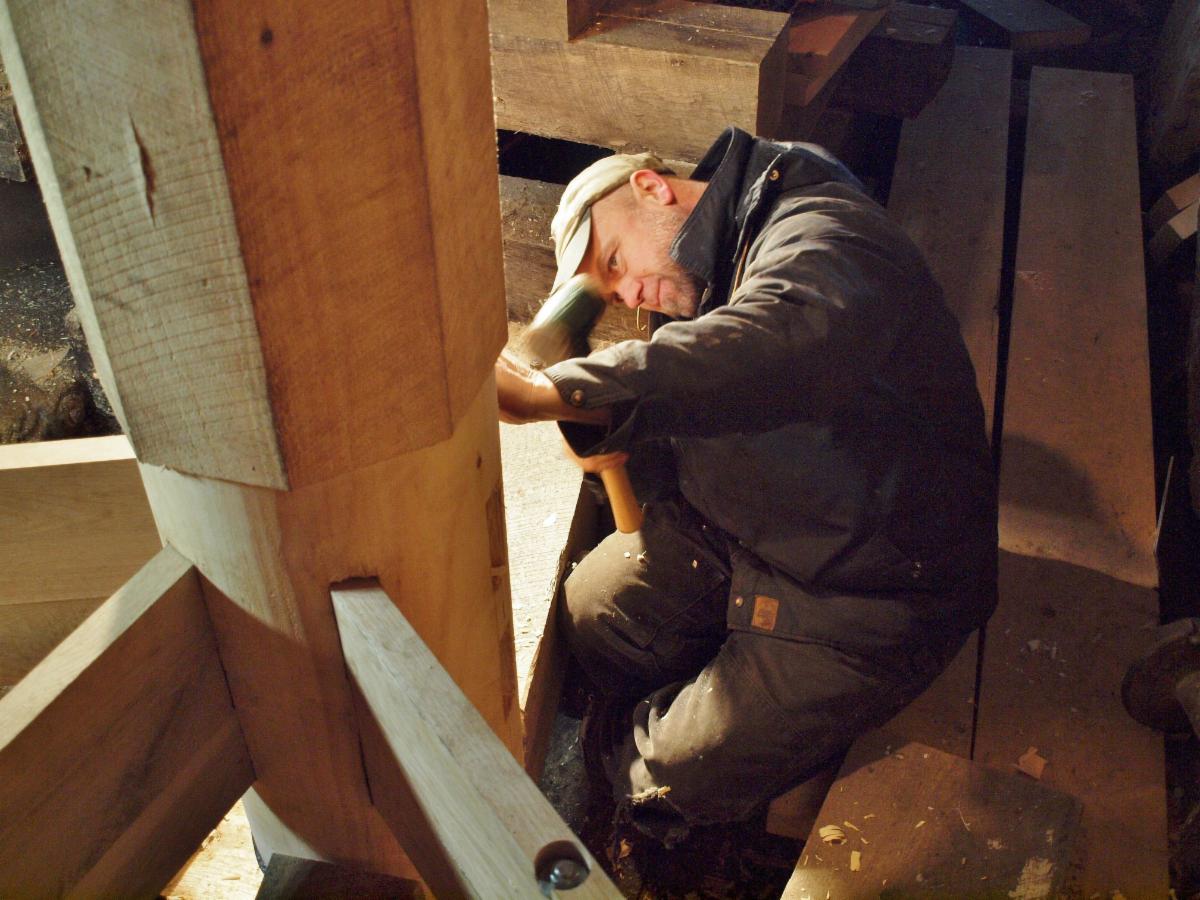
Brian Clough, who is Sanborn Mills Farm’s resident genius at figuring out mechanical things, has begun work on the installation of a water-powered up-and-down saw in the Farm’s sawmill. When the project is finished later this summer, the Farm’s sawmill will likely be the only such mil
Up-and-down saws, also called sash saws, predate circular saws — the original saw in the Farm’s sawmill, which dates b
The eight-sided main shaft was sawn on the mill’s water-driven circular saw; as usual with Sanborn Mills Farm projects, the up-and-down saw installation includes as much material as possible that is made at the Farm itself. There is still a market for up-and-down sawed lumber: carpenters who restore 18th and early 19th century structures want up-and-down sawed lumber for historical accuracy.
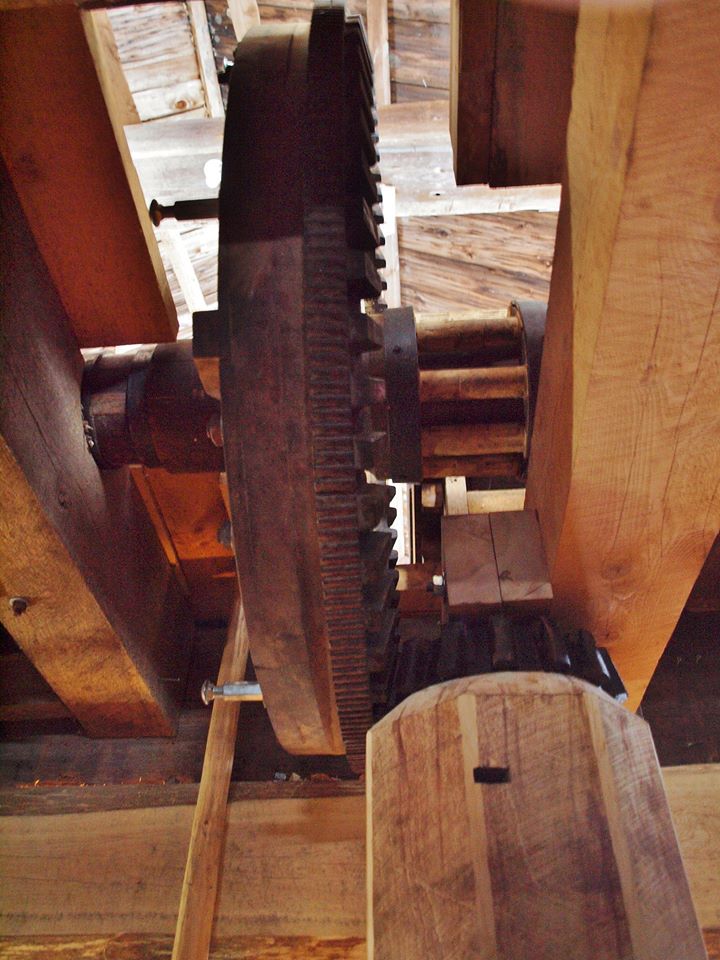
At bottom right is the top of the eight-sided main shaft, which turns the large toothed gear that in turn drives the axle for the up-and-down saw.
Space Available in These Upcoming Workshops
Space is still available in several upcoming Spring workshops, including:
Click on any of the workshop titles for more information and to register.
Photo Credits Oxen photo by Molly Bolick. All other photos by Steve Bjerklie.
Sanborn Mills Inc. | 603-435-7314 |
A traditional New Hampshire farm and nonprofit organization dedicated to sustainability, creativity, and preserving folklife skills and agricultural knowledge so that the best of the past can help shape our future.
STAY CONNECTED: 


|
|