
SHARE:

 |
At Sanborn Mills Farm, preserving the past and planning for the future go hand in hand. The Farmhand News from Sanborn Mills Farm
August
Space Still Available In These Workshops
Program Manager Molly Bolick reminds friends of Sanborn Mills Farm that there’s space available in several upcoming late Summer and Fall workshops, including:
Click on any of the workshop titles for more information and to register.
A Good Time Was Had By All… 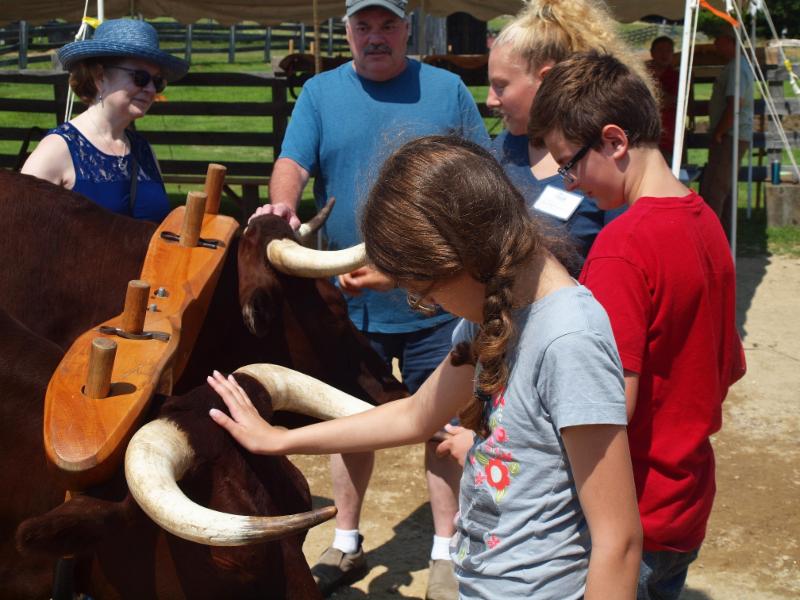
The draft animals at Sanborn Mills Farm are always a big draw on Open House Day, especially for children. These two oxen, “Rough” and “Tough,” were raised from calves by Emma Ramsey, farm manager Ray Ramsey’s daughter.
The weather may have been a bit on the warm side, but the people who came to Sanborn Mills Farm’s Open House Day on July 28 told staff they had a wonderful time touring the grounds and watching demonstrations of the water-dr
Many of the day’s guests who have come to our Open Houses in the past commented on the many improvements they saw at the Farm, from the new rock work behind the Main House to the nearly completed Fifield Hall to the ever-expanding gardens and cultivated fields. “It’s really amazing what’s happening here,” one guest said. “It’s one of the most beautiful farms in the state.” 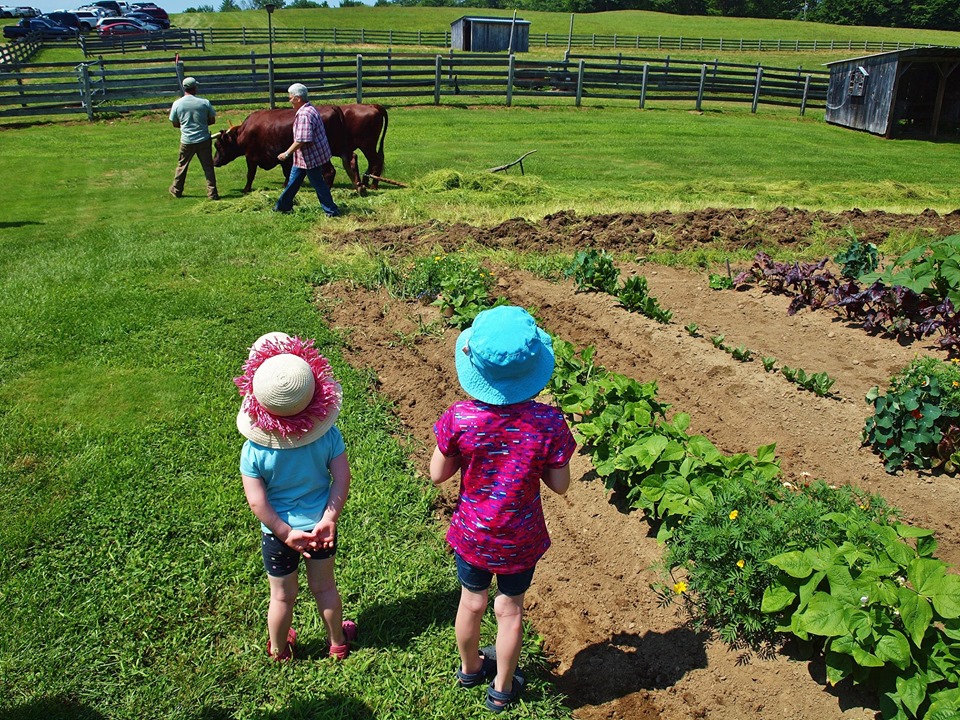
Youngsters fascinated by draft oxen — and keeping a safe distance!
Farming Flax for Linen 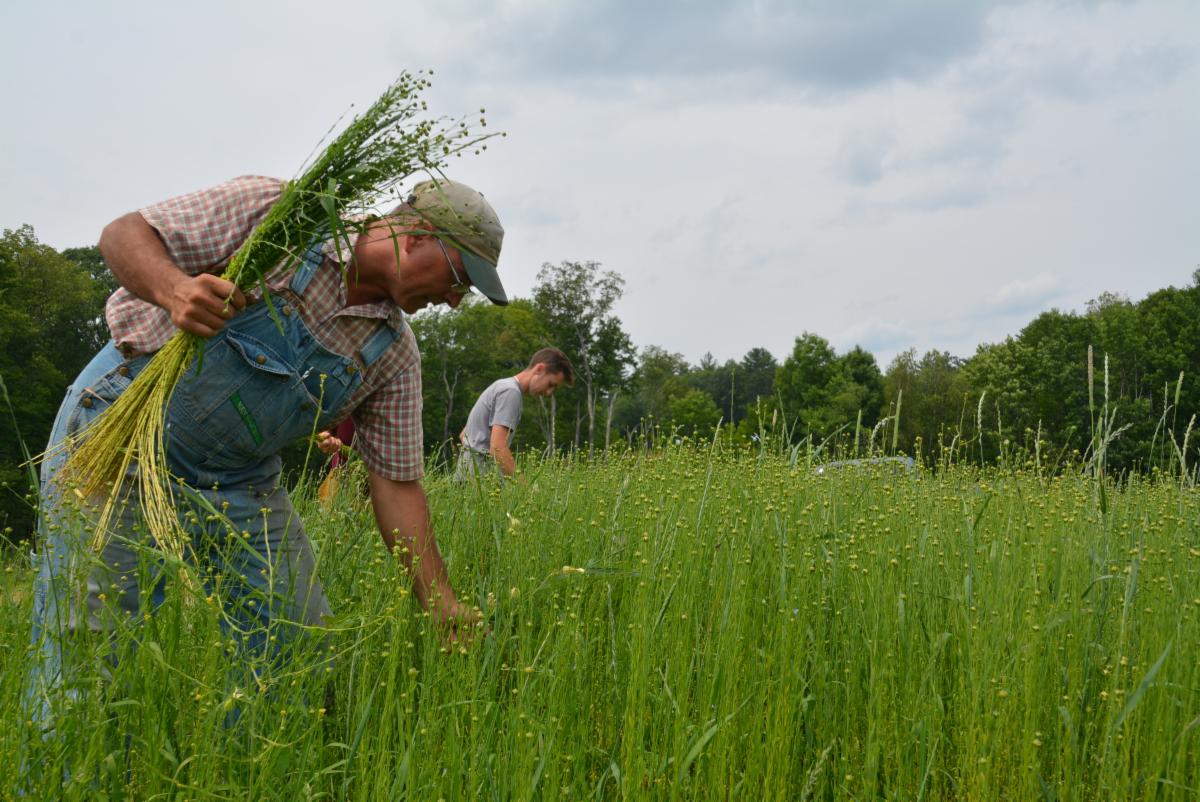
Farm Manager Ray Ramsey pulls flax during the harvest.
Back in May, Farm Manager Ray Ramsey planted a 60-foot-by-60-foot field in flax (
The full cycle to take the plants from flax to fabric involves several steps. Following harvest
It’s a little difficult to imagine a field of blue flowers eventually becoming linen, and one must admire the people who, millennia ago, figured out how to turn flax into fabric. But at Sanborn Mills Farm, the process lives again. 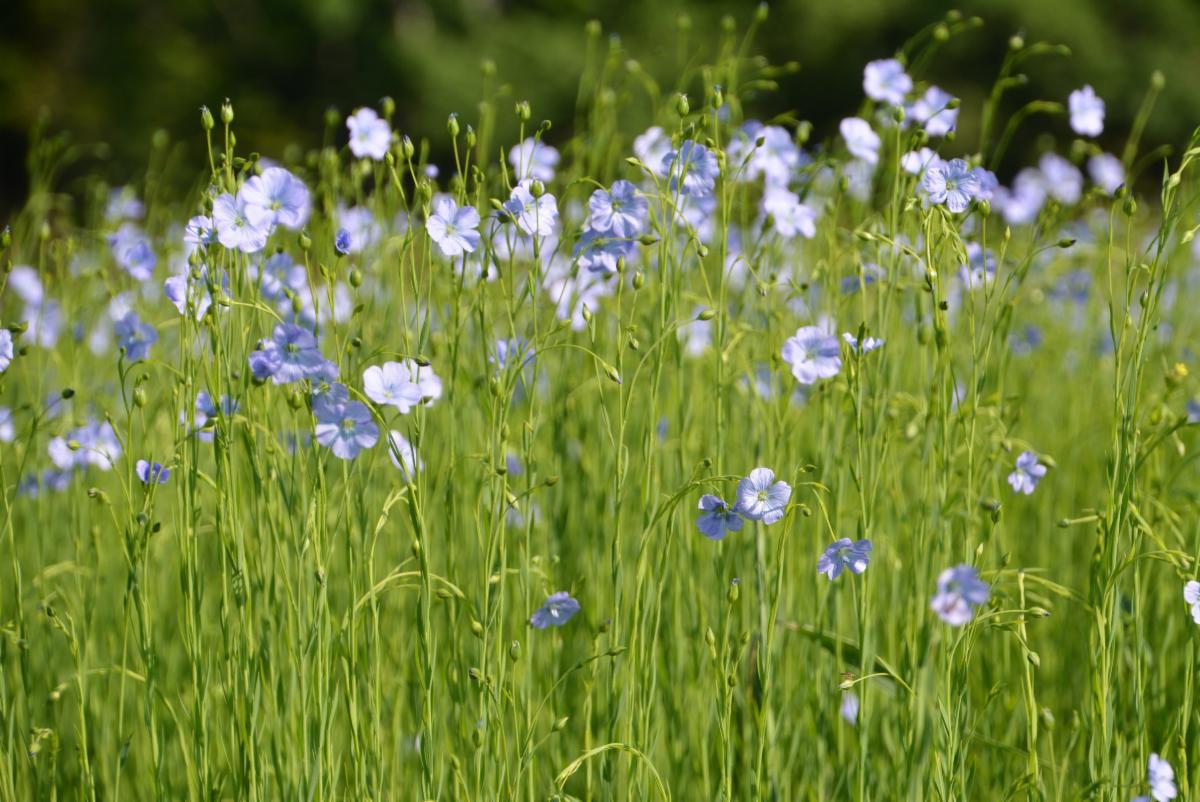
Blooming flax is topped with beautiful sky-blue blossoms.
Shady Oasis: The New Sawmill Garden Tucked in a shady glade below Sanborn Mills Farm’s sawmill, the new Sawmill Garden is a place of quiet, cool tranquility. This woodland garden is a setting for sun-avoiding plants to thrive in, and at the same time it provides garden staff with a nice place to work on a hot day. 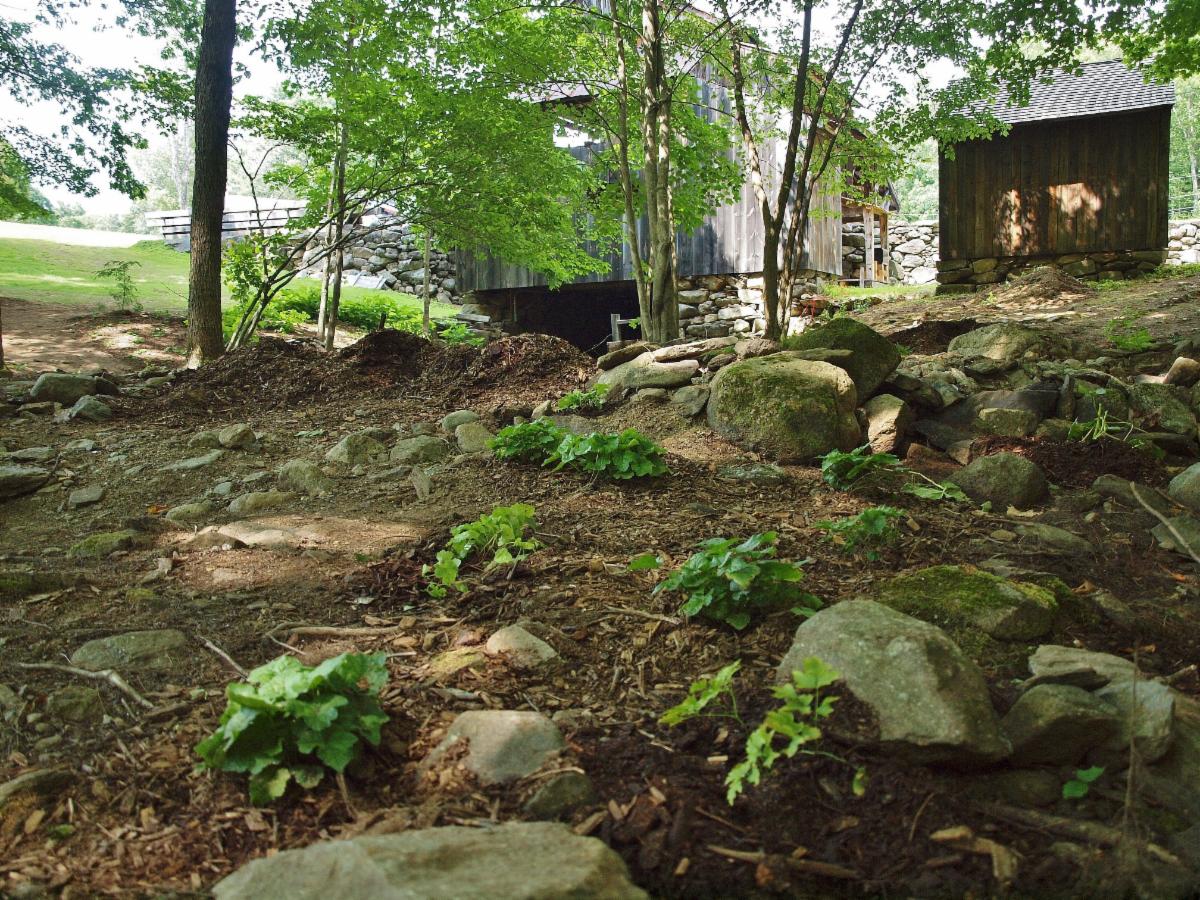
The newly planted Sawmill Garden occupies a spot just below the Sawmill where the mill’s and the pond’s spillways converge.
The plantings are mostly native perennials, according to Michelle Smith, Garden Manager. They include different ferns, including Maiden Hair (
The garden was planted in patches, or what Michelle calls “drifts,” to create a nice visual impact. Two pumps submerged in the Sawmill’s spillway pump water up to the new garden. Michelle points out that the new plants require regular watering for at least a year to establish root systems robust enough to make it through winter. “Woodland gardens are just another way to garden, but with plants that like shady or wet conditions,” she says.
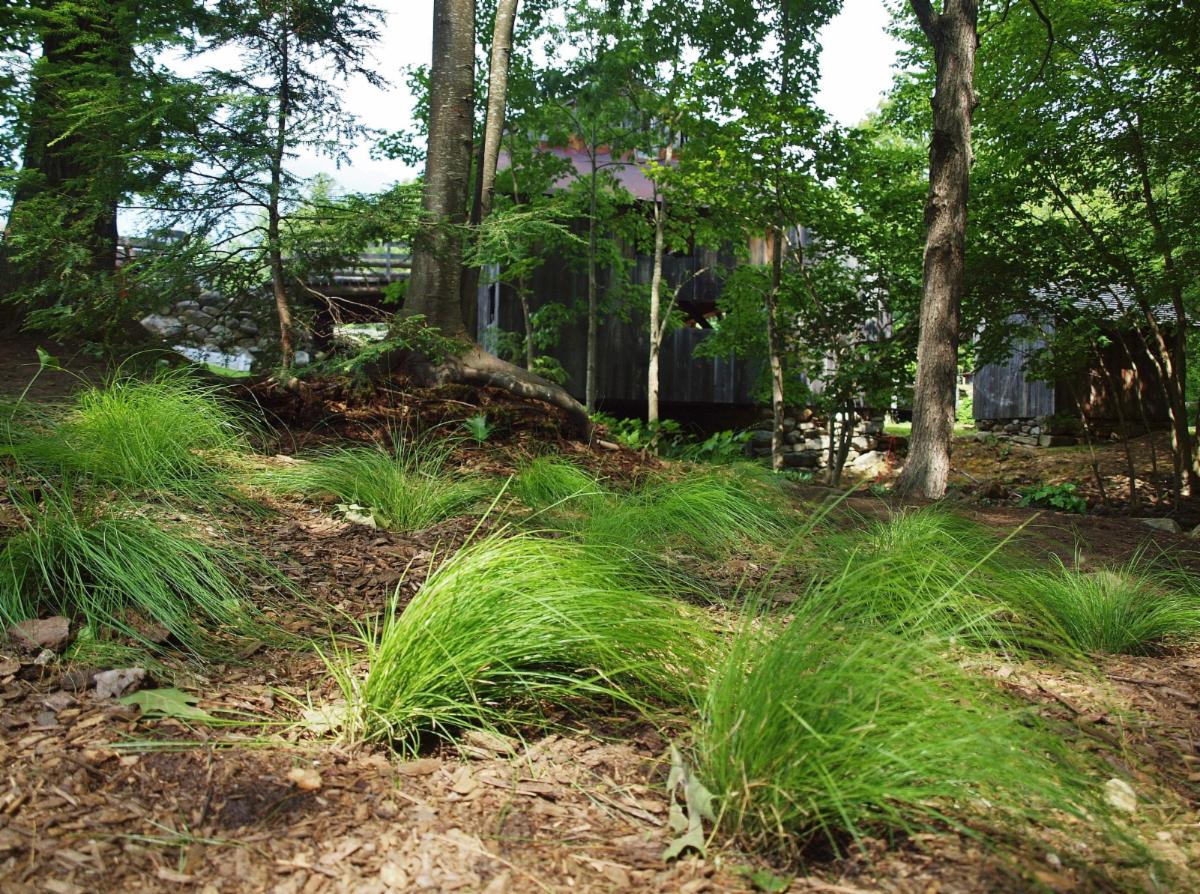
Appalachian Sedge Grass planted in a drift in the Sawmill Garden.
Photo Credits Photos of Flax by Molly Bolick. All other photos by Steve Bjerklie.
Sanborn Mills Inc. | 603-435-7314 |
A traditional New Hampshire farm and nonprofit organization dedicated to sustainability, creativity, and preserving folklife skills and agricultural knowledge so that the best of the past can help shape our future.
STAY CONNECTED: 


|
|