
SHARE:

 |
At Sanborn Mills Farm, preserving the past and planning for the future go hand in hand! February 2019 eNews 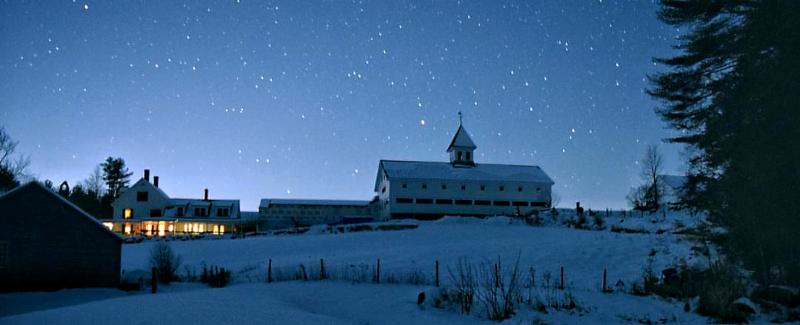
Working with wood . . . what’s best – fresh cut or dry?
The answer is – it depends upon what you are making! Timber framers like to work with what’s called “green wood” – wood that has been sawed out of logs freshly cut from the woods. Timber framing involves working with large pieces of wood, sometimes up to 12″ or more thick. The framework of a building is fitted together by cutting mortise & tenon joinery and the timbers are secured with wooden pegs. 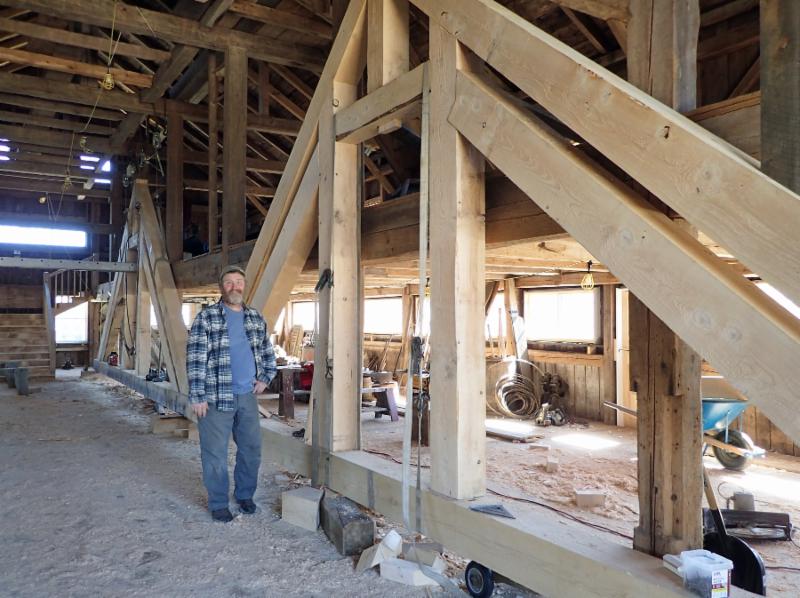
Master timber framer Steve Fifield of Canterbury with the trusses designed by Fire Tower Engineered Timber that support the roof of the new Carriage Barn. It is much easier to cut joinery before the wood dries out and starts to shrink. Additionally, some species – including Hemlock – can get stringy and twist as they dry. It’s better to cut and fit all the pieces together while the wood is still soft and can be held in place by the joinery.
Incidentally, you may have noticed that vertical cracks tend to open up in the large beams of a timber framed building. This is a natural occurrence called “checking” and happens as the wood dries, usually at the rate of about an inch per year. Don’t worry – it doesn’t affect the structural integrity of the building.
In finished carpentry, the situation is different. The work is usually done wi th lumber cut one or two inches in thickness and you don’t want spaces opening up in flooring and paneling. To get wood to the ideal moisture content of 6 to 8%, it can take a year or more of natural air drying. Fine furniture and instrument makers sometimes let their wood dry for seven years or more!
Here at Sanborn Mills Farm, we harvest logs from our forest, saw up large timbers for our timber framing projects and cut out the frame while the wood is still green. 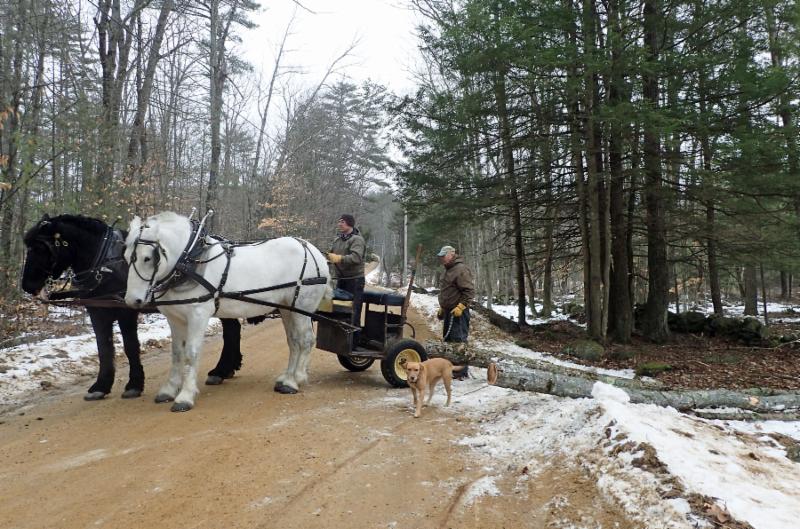
Teamster John Schlang and Farm Manager Ray Ramsey hauling wood out with our team of Percheron draft horses.
Given the length of time it takes to naturally dry out wood for paneling & flooring,
measured up against the fast pace of our building projects, this winter we decided to build our own solar kiln to cut down on the amount of time it takes to get our wood to the right moisture content.
Our new solar kiln is based on a design we found from Virginia Tech’s Cooperative Extension Services. It incorporates both passive solar energy, which is captured through the clear corrugated roofing on the southern exposure, and direct solar energy, which is captured through two solar panels mounted on the ridge. To achieve our goal of being totally off the grid, we modified Virginia Tech’s design by adding a thermostat and solar batteries to run the fans. And, we put the whole structure on skids so we can move the building to new locations. Even during the winter, we’ve been able to cut the drying time of sawed lumber to a fraction of what it would normally take. This is keeping us on schedule with our construction projects and our goals to expand educational opportunities here at the farm.
Click here to download Virginia Tech’s solar kiln design as a pdf. Click here to learn more about DIY Solar Projects: Updated Edition by Eric Smith, a book our staff uses when researching our solar energy needs.
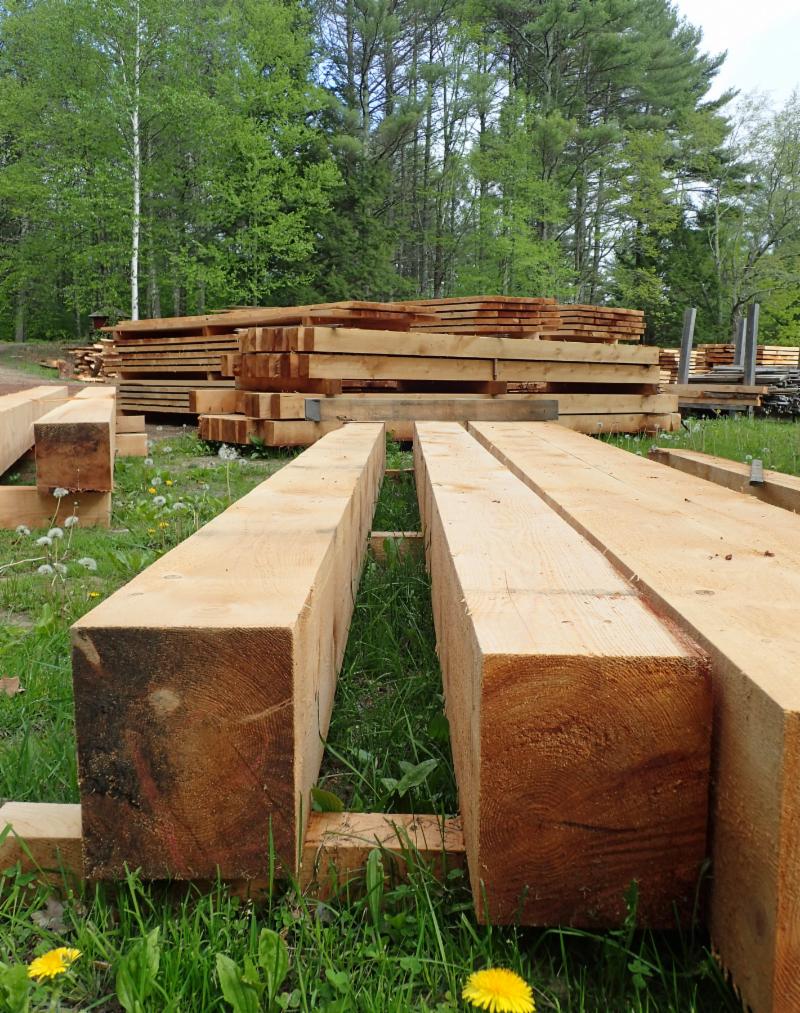
Timbers and sawed lumber harvested from our forests.
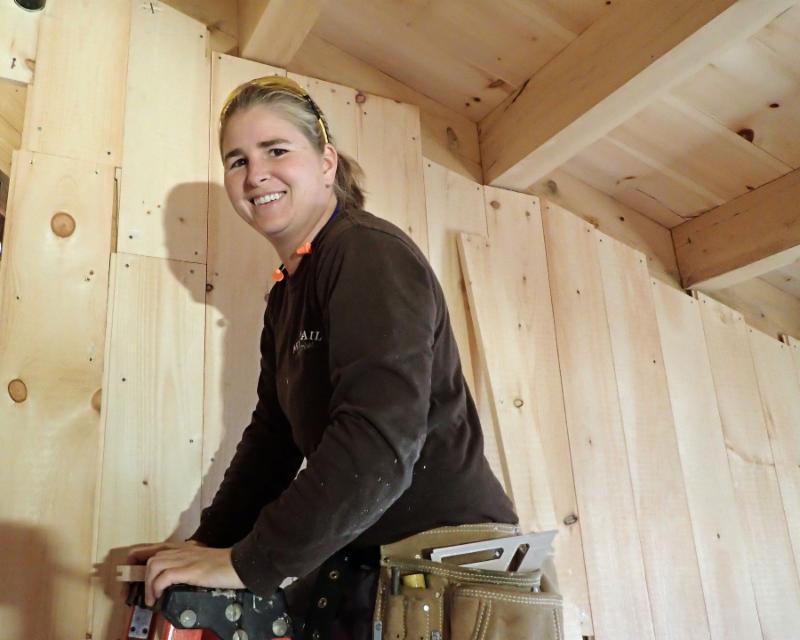
Staff carpenter Emma Woodward working on the paneling in the new Carriage Barn.
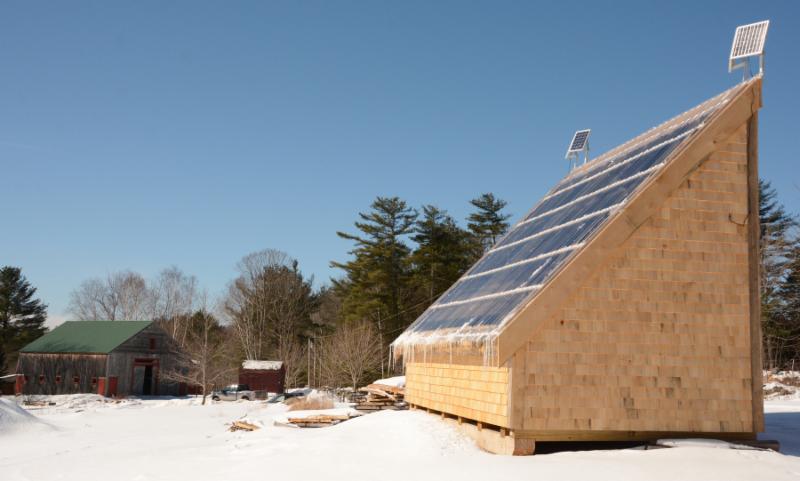
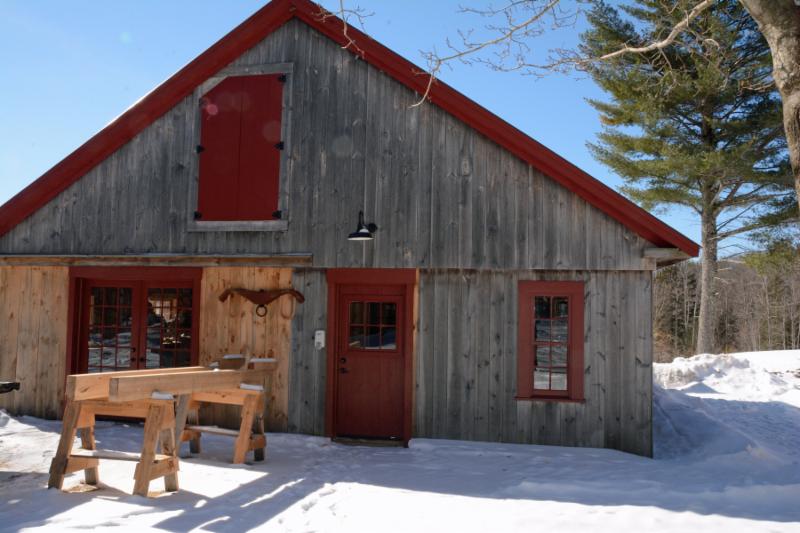
Our new solar kiln.
Spotlight on 2019 workshops . . .
Our 2019 workshop season will once again have plenty of opportunities to learn blacksmithing and oxen skills. This year, we’ve added a few options in fiber arts including basket making, traditional stenciled floor cloths, and rug hooking. On May 25 & 26 we will be welcoming our neighbor and award winning rug hooker Pam Bartlett to the farm to teach a two-day workshop in rug hooking. If you are from Northern New England you probably have an old hooked rug that’s been handed down in your family. Hooking fabric through a backing is a very ancient form of making a thick textile. Some say that the earliest examples were found in Egyptian tombs. Rug hooking as we know it today, gained popularity in England over 400 years ago and was called “brodding” or “thrumming.”
Hooking thin strips of cloth through a backing to make rugs or bed covers was introduced to to this region by early colonists and it became a popular home craft. Wool, treasured for its warmth and durability, was the favored material. Up through the mid-1800s sheep farms were common throughout New Hampshire and the flourishing textile mills meant that woolen fabric scraps were plentiful.
After the Civil War, Edward Frost from Biddeford, Maine brought rug hooking to a wider audience. He purchased patterns from women who were known for throughout the country. During the Depression years of the 1930s, a number of visionaries saw the creative and economic potential of home crafts, including rug hooking. Mary Coolidge and A. Cooper Ballentine founded what became the League of New Hampshire Craftsmen and Caroline Saunders of Clinton, Massachusetts actively encouraged the making of hooked rugs. By the mid-1900s Pearl K. McGown, a designer, teacher, lecturer, collector, and writer from West Boylston, Massachusetts, championed the preservation of rug hooking, published some books on the subject, and developed a certification standard for teachers of the craft. To this day, one of the largest annual gatherings of rug making in the United States is held in Worcester, Massachusetts in her name.
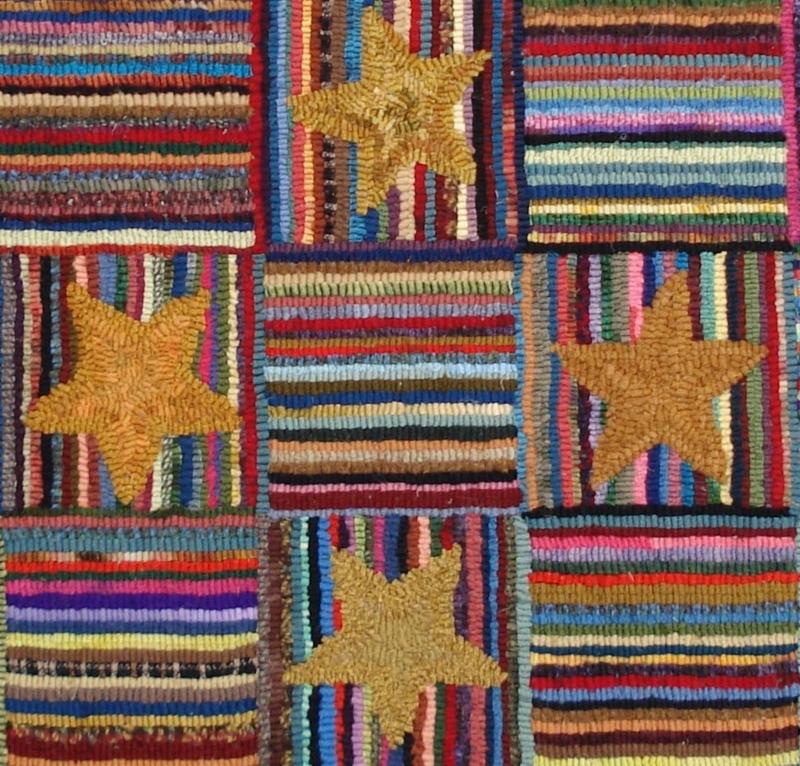
Basic designs can be created in bold colors. Designed and hooked by Pam Bartlett.
For more information on traditional rug hooking, visit these websites:
You can check out the entire 2019 season of Sanborn Mills Farm workshops at
Workshops tend to fill up quickly so sign up early! If you have questions, just call the office at 603-435-7314 weekdays between the hours of 9 am and 3 pm.
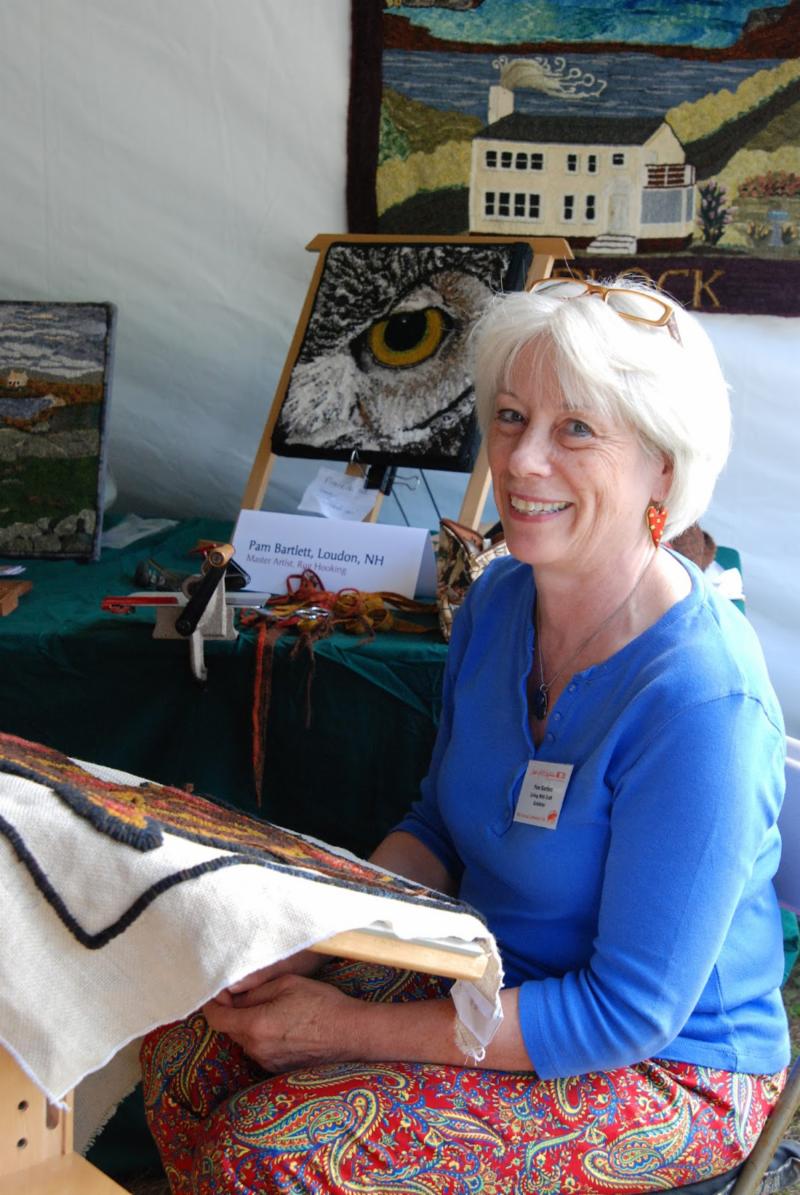
Master rug hooker Pam Bartlett in her studio. 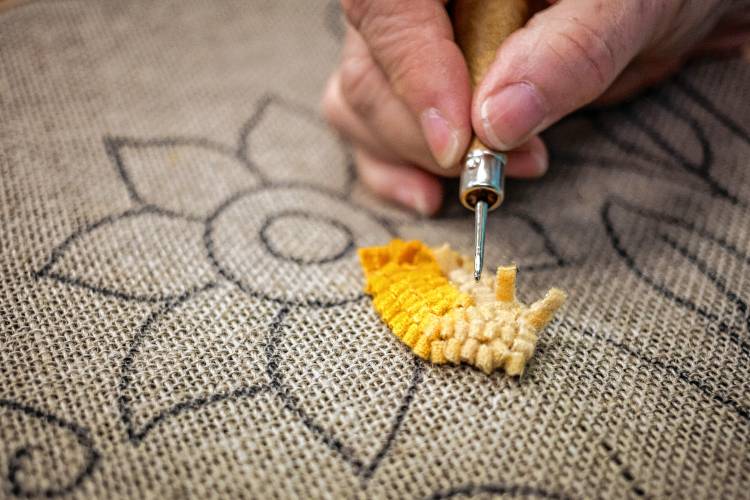
Making a durable and beautiful hooked rug requires patience and nimble fingers. A thin strip of wool is held on the back side of a piece of coarsely woven fabric and drawn up in small loops. Nice even loops are the mark of a rug hooker’s skill.
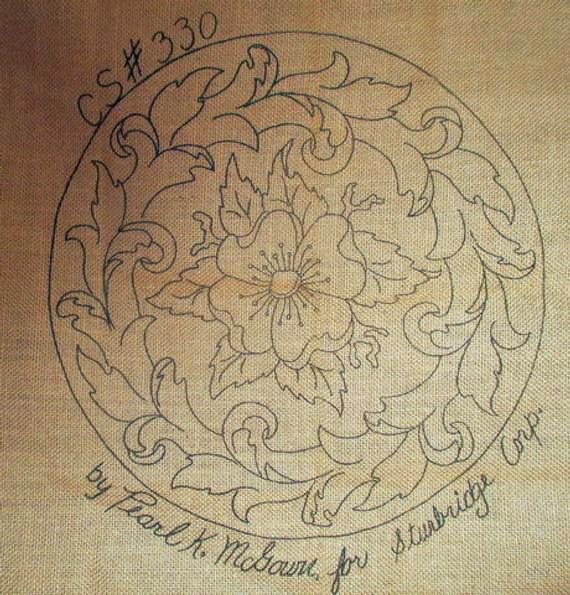
Rug design on burlap by Pearl K. McGown.
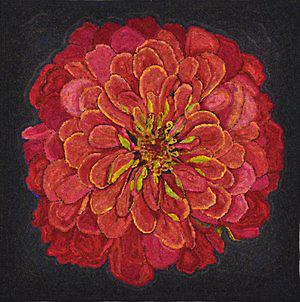
Shading and more complex designs can be tackled as you gain in skill. MZ Zinnia designed and hooked by Pam Bartlett
.
The Ox Corner
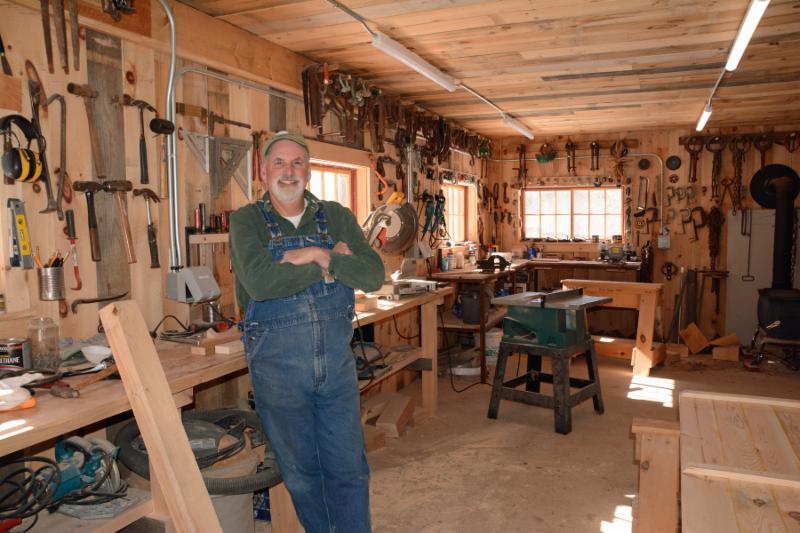
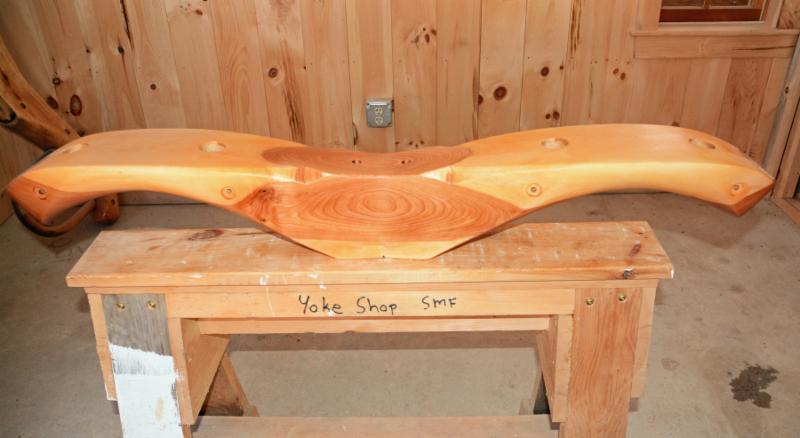
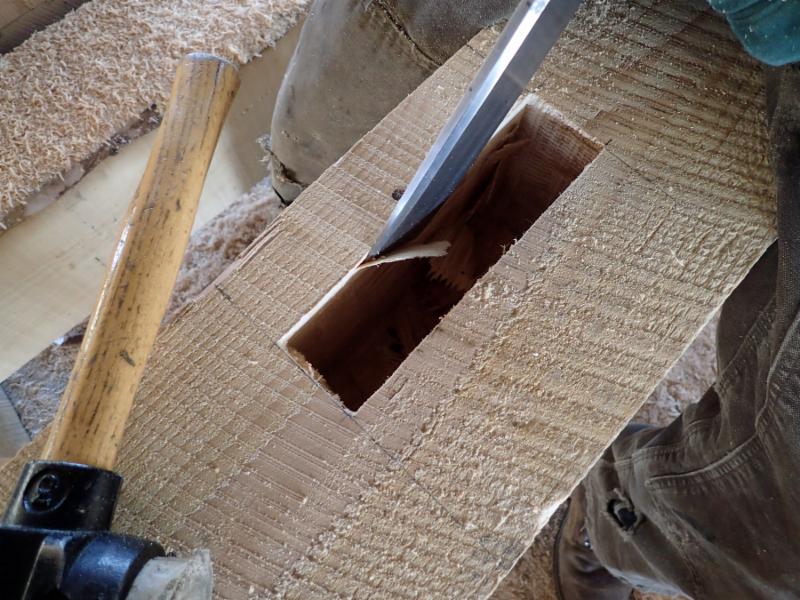
The new ox equipment & supply store is ready for business so if you need custom equipment or repairs to the equipment you have, please contact Tim Huppe – tim@sanbornmills.org There are still spaces the May 16 to 19 Ox Yoke Making workshop if you want to make a yoke yourself!
Credits for photos:
Banner photo of night sky over Sanborn Mills Farm by Chance Grimaldi. All other photos by Lynn Martin Graton.
Our new solar kiln.
Sanborn Mills Inc. | 603-435-7314 |
A traditional New Hampshire farm and nonprofit organization dedicated to sustainability, creativity, and preserving folklife skills and agricultural knowledge so that the best of the past can help shape our future.
Our new solar kiln.
STAY CONNECTED: 


Our new solar kiln.
|
|