
SHARE:

 |
At Sanborn Mills Farm, preserving the past and planning for the future go hand in hand!
January 2018 eNews
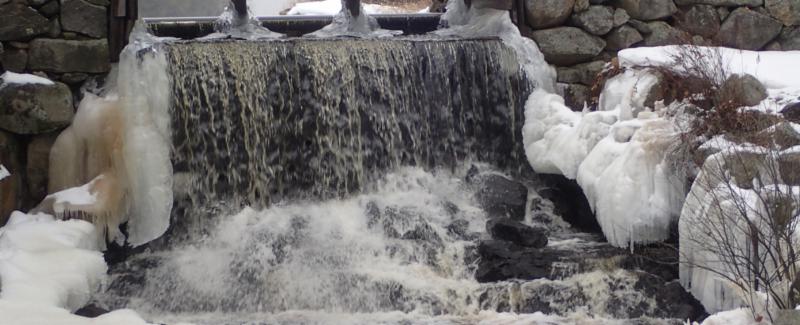
Logging in winter – then & now . . .
For much of its history, Sanborn Mills Farm was a place of intense activity – year round. Work was seasonal and winters were when most of the logging took place. Winter snow makes it easier to haul logs out of the woods and the spring melt provides water to power the sawmill.
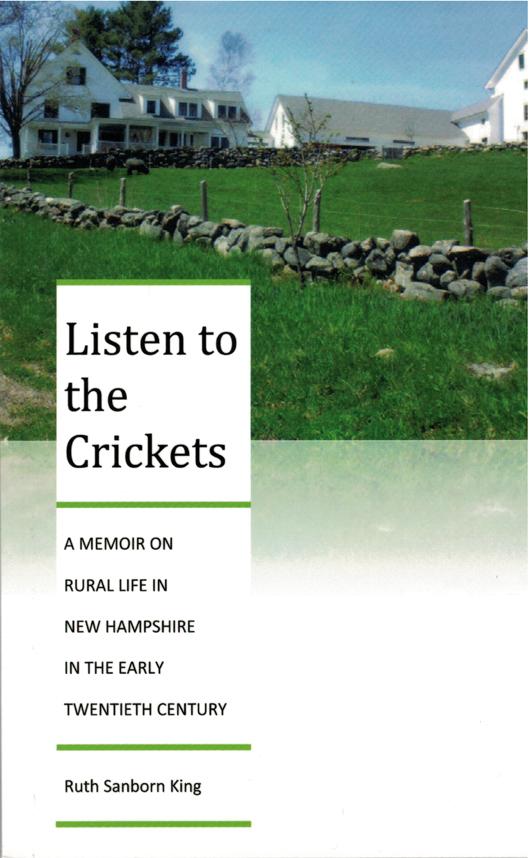
In Ruth Sanborn King’s memoir “Listen to the Crickets – A Memoir on Rural Life in New Hampshire in the early Twentieth Century” she recounts winter logging and the Sanborn family’s approach to forest management: “When snow lay deep in the fields and rolled down solid on the roads, it was time for the men to be off to the woods for the winter work of logging. Lumbering was the chief source of income on our farm. On the three hundred acres, there were stands of white pine in different stages of growth. In the first stage, there would be a seed tree, possibly misshapen or otherwise defective, and pine seedlings growing in the midst of the hardwoods that came up first in a cleared lot: maples, oaks, and birch. My father and his helper would cut down the hardwood trees for firewood. Removing them left room for a forest of white pine to grow straight and tall with little undergrowth. There was a steady market for firewood at a time when most of the homes in the country and villages were heated by wood-burning stoves. My father had regular customers.” “According to my mother, an area of white pine will mature to a marketable size in thirty or more years with proper care. The sawmill was small and could be operated only in the spring months when there was enough water to run it. It might take several years on one lumber lot before it was time to move on to the next one in the order of rotation. In this way, my ancestors would sustain a growing wood lot from generation to generation.”
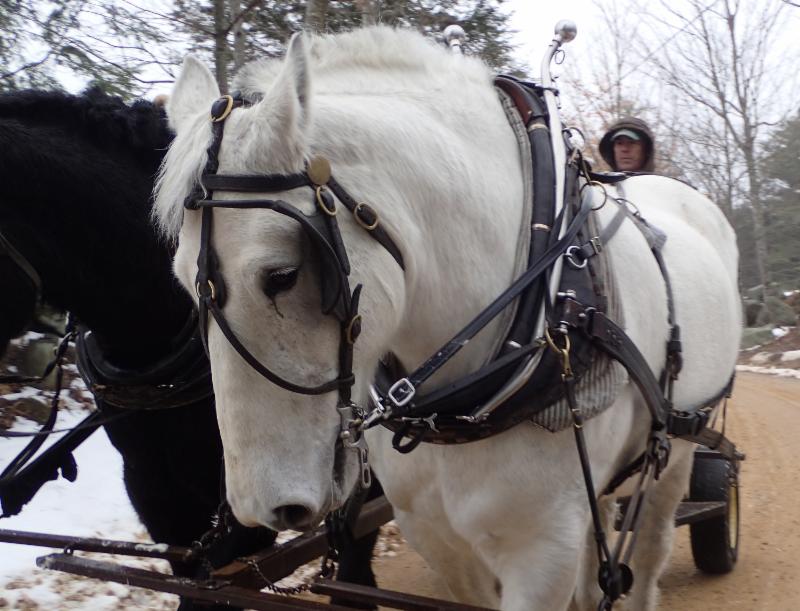
Today, we still carry out logging in the winter using our oxen & draft horses.
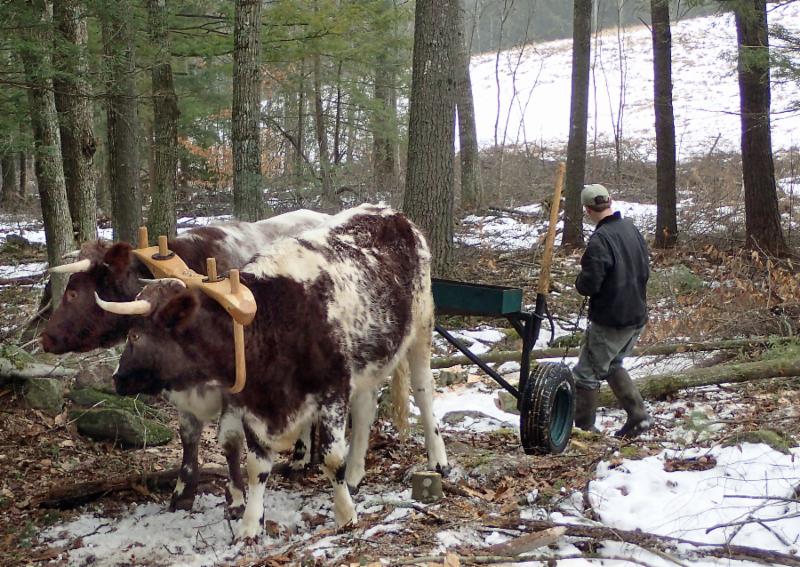
Teamster Tyler Allen hooks up firewood to the forecart pulled by Bill & Ben, our new Milking Shorthorn steers.
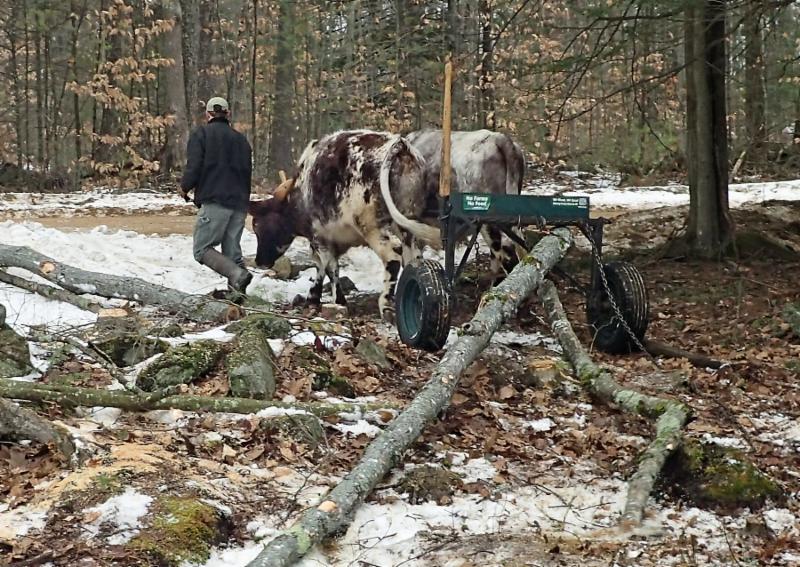
Tyler, Ben & Bill haul firewood out of the woods.
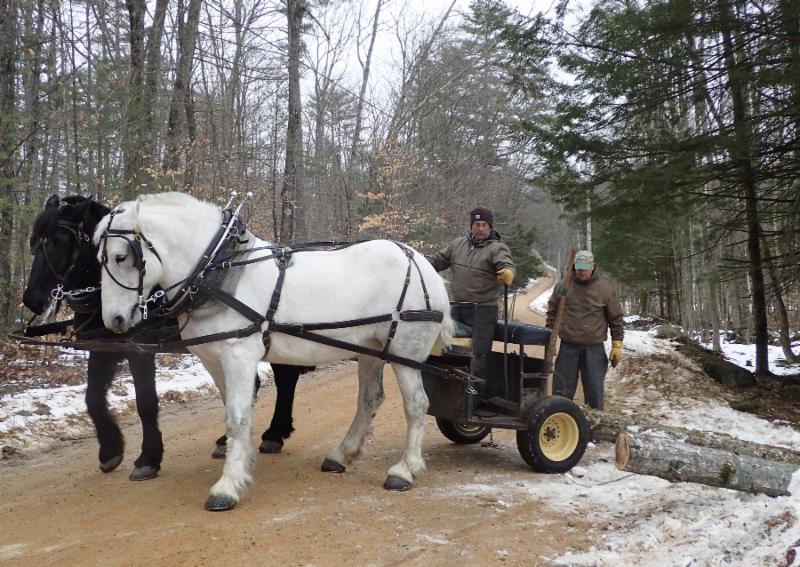
Teamsters Ray & John hitch firewood onto the forecart pulled by our Percheron draft horses Willie (left) & Rose (right). 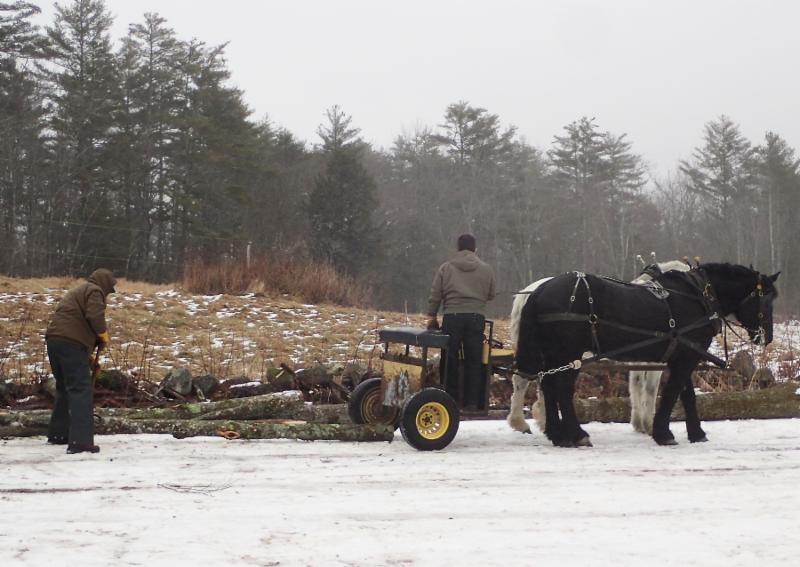
Ray, John, Willie, & Rose drop off firewood at the landing. Interested in learning more about how to use oxen on your woodlot or farm? Click here to explore our 2018 Oxen workshops.
Listen to the Crickets by Ruth Sanborn King was published by Lulu.com in 2009. It is available for sale by contacting the office at 603-435-7314 weekdays 9 am to 3 pm.
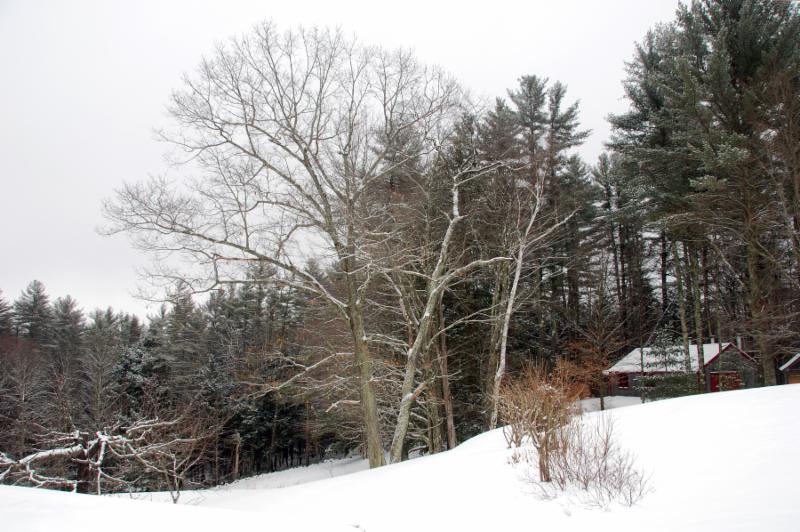
Winter scene at Sanborn Mills Farm.
Winter shelter . . .
When the thermometer dips down to minus 20, you may wonder “Do the oxen mind being outside?” The answer is that cattle grow a nice thick winter coat so as long as they have some shelter to get out of the wind, freezing rain, and blinding snow, they benefit from the fresh air. A three-sided run-in shelter is the ideal solution for both winter and summer shelter and here are some important considerations and building tips form Farm Manger Tim Huppe:
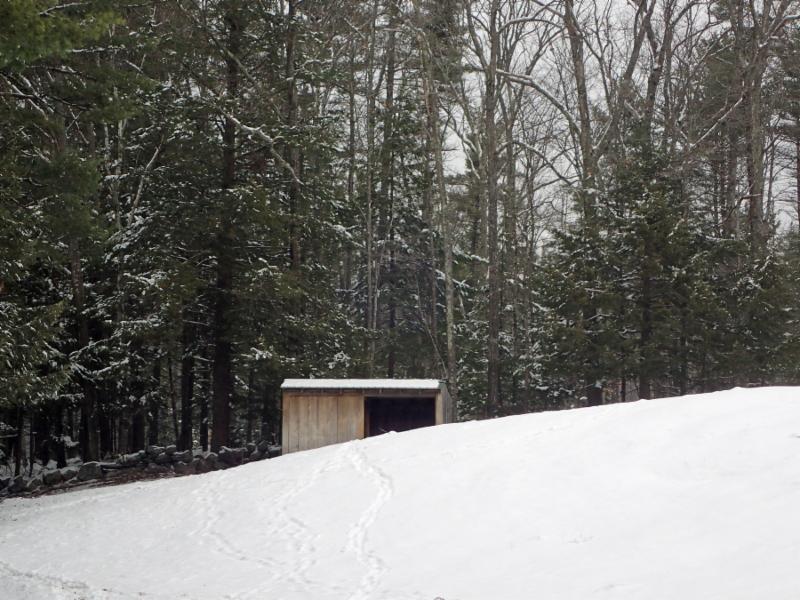
One of six run-in sheds on the farm.
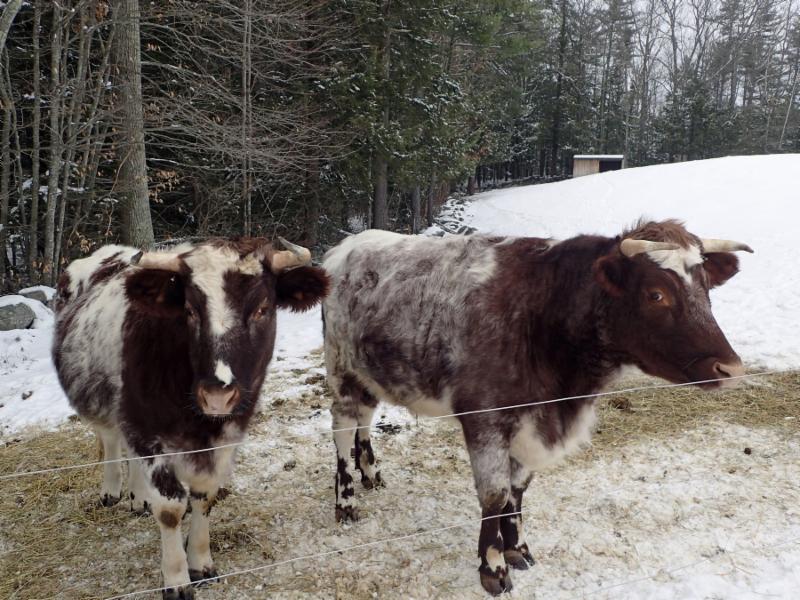
Ben & Bill looking for their next bale of hay.
Are you already thinking about making something this summer?
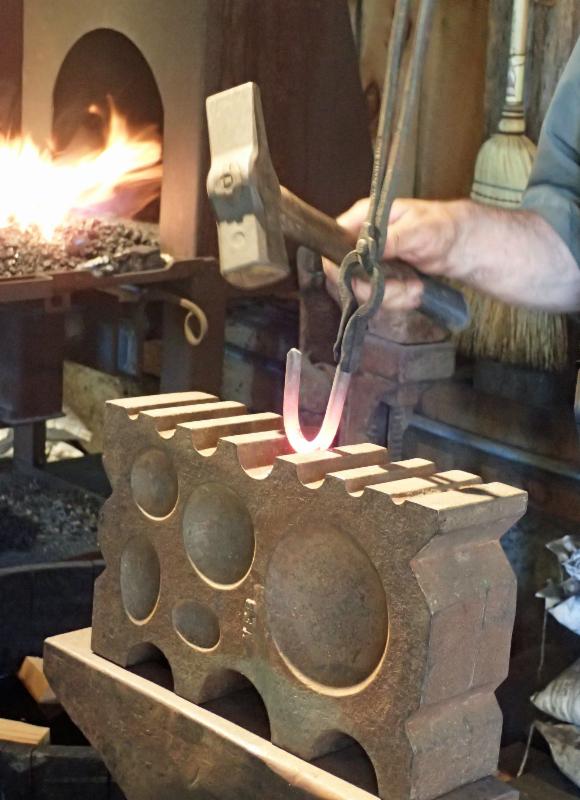
We’ve got some specialty blacksmithing workshops in 2018 that are a great opportunity to expand your forging skills. Check out these workshops!
If your interest is in fibers, spend June 30 with Wendy Jensen and make a
Join us at the Old House & Barn Expo . . .
Mark March 24 & 25 on your calendar for the Sanborn Mills Farm will be among the 60 or more exhibitors and the event also features a wide range of lectures and workshops.
For more information visit the NHPA website : 
How to visit the farm . . .
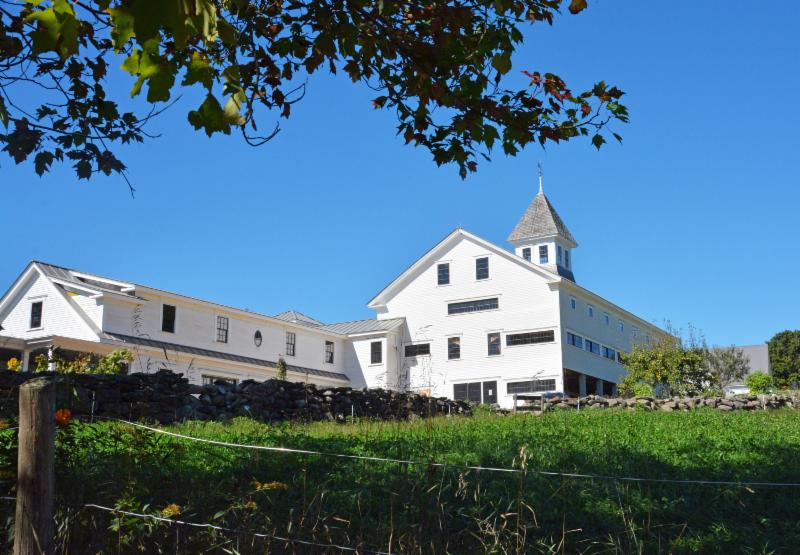
Though we are not open for visitors on a daily basis, group tours can be scheduled from spring to fall.
The best time to see the farm is during the annual
Photographs for this eNews:
Winter scene at Sanborn Mills Farm by Robert Braun.
All other photos by Lynn Martin Graton.
Winter scene at Sanborn Mills Farm.
Ben & Bill looking for their next bale of hay.
Sanborn Mills Inc. | 603-435-7314 |
A traditional New Hampshire farm and nonprofit organization dedicated to sustainability, creativity, and preserving folklife skills and agricultural knowledge so that the best of the past can help shape our future.
Winter scene at Sanborn Mills Farm.
Ben & Bill looking for their next bale of hay.
STAY CONNECTED: 


Winter scene at Sanborn Mills Farm.
Ben & Bill looking for their next bale of hay.
|
|