SHARE:

 |
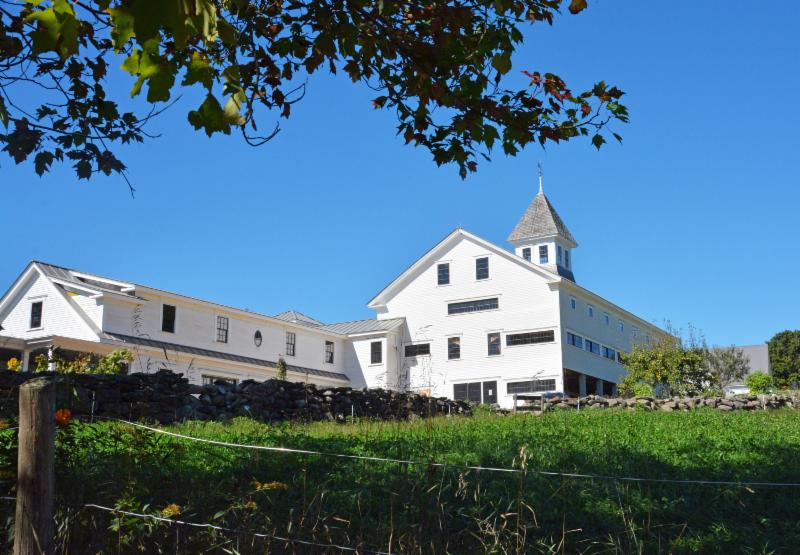
At Sanborn Mills Farm, preserving the past and planning for the future go hand in hand!
December 2017 eNews
Thinking of a unique gift this holiday season ?
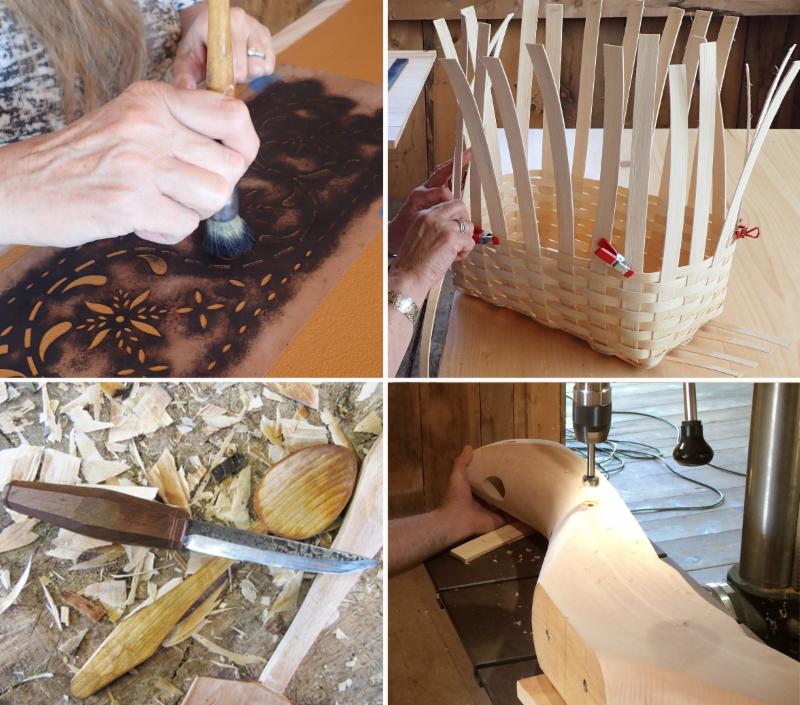
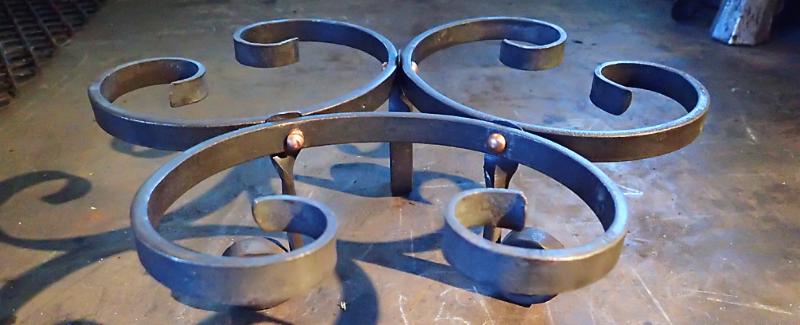
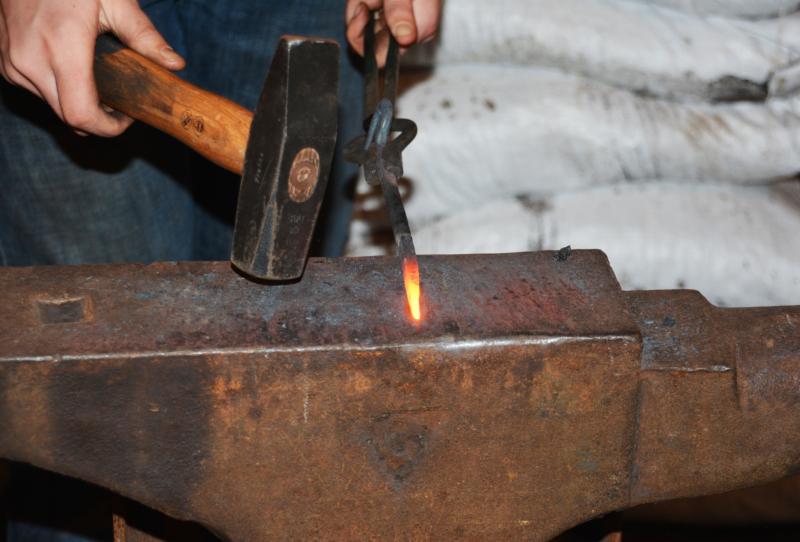
If someone you love would like the “gift of learning and doing,” click here to learn more about gift certificates for a workshop at Sanborn Mills Farm. Blacksmithing Basics workshops taught by
If you’ve got oxen, you know they keep growing so if you’d like to make your own neck yokes, there are two opportunities to take an ox yoke making workshop, one in May, and the other in September. We have two fiber workshops next season, one in basket making and the other in making traditional canvas floor cloths. You can view the upcoming workshops from the home page of the website www.sanbornmills.org but the best way to explore the line up is to go to the Calendar section. Just scroll forward to 2018!
Seasons greetings & thoughts on grist mills . . .
Dear Friends of Sanborn Mills Farm,
Seasons Greetings! You may remember me as the scribe of last December’s newsletter about the goings on at the farm, especially focusing on the quadruped members of the staff team. You’ll be happy to know I spent a good part of this year foraging amongst unguarded lunch boxes on the construction site, harassing plumbers, electricians, HVAC installers, and even the crew working on the elevator that will make the big Sanborn Mills infrastructure project ADA compliant. My favorite source of extracurricular food is still centered around the horses and the staff members whose pockets are redolent with the scent of dog biscuits. They shall remain nameless as I know they fear reprisals from Colin and Paula for overfeeding me. (They shouldn’t because I still have something of a waist!). Being a Chocolate Labrador definitely has its advantages. Not only am I a first class retriever unafraid to plunge into the mill pond at all times of year to fetch whatever is thrown for me, but I have been working on my understanding of foreign languages. It became obvious when Paula and Colin figured out that I understood several important four-letter words in English such as: food, walk, bone, and swim. To avoid excited tail thrashing, excessive drooling, and constant pestering they switched to French, (promenade) some Italian (passegiato) and even German (spaziergang). Their tactic worked for a while, but I’m a quick study and now they have to resort to text messaging to keep me in the dark. French is my favorite new language.
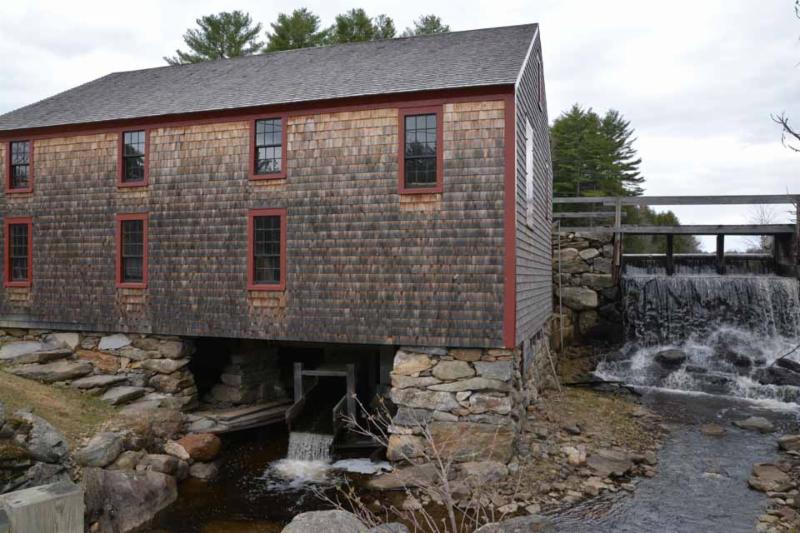
But I should stick to my subject and the reason for this letter. Yesterday I stretched out under the desk and eavesdropped on a conversation mostly in French that turned out to involve experts from four countries talking about things that will ultimately have a profound effect on Sanborn Mills Farm. The conference call originated in French Canada where Colin’s family has a restored Grist Mill, which was built by the Jesuits in 1828, almost exactly the same time frame as the constructions of the Sanborn Mills. The conversation was started by a Belgian agricultural consultant passionate about creating an organic production pipeline (land, crops, processing and distribution) to supply the French Canadian region with organic grains for animal feed, bread, beer, distilling, and many other purposes. On the phone from France were several experts not only in grinding grain on millstones, but also in restoring and/or reconstructing both windmills and water-powered mills. The purpose of the call was to make
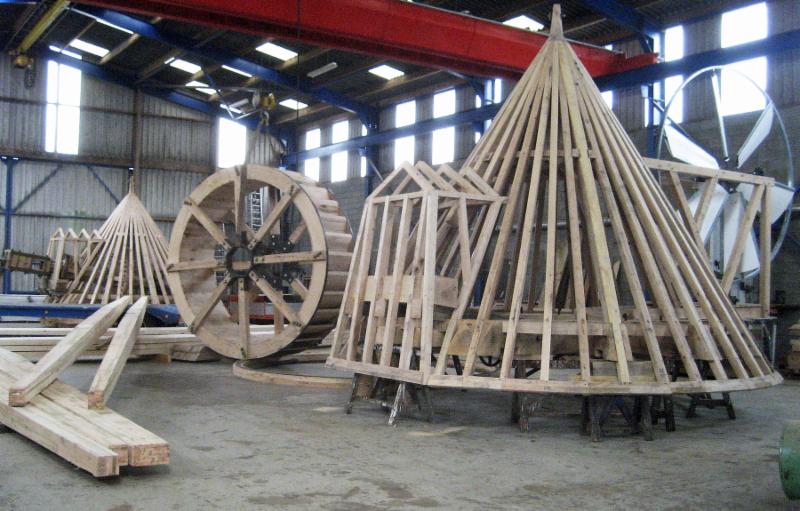
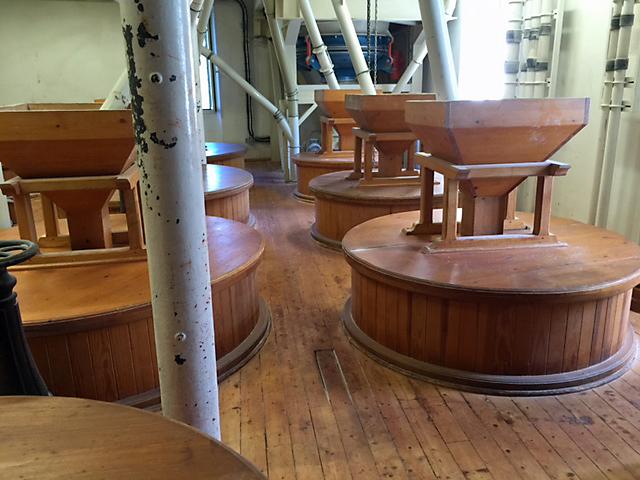
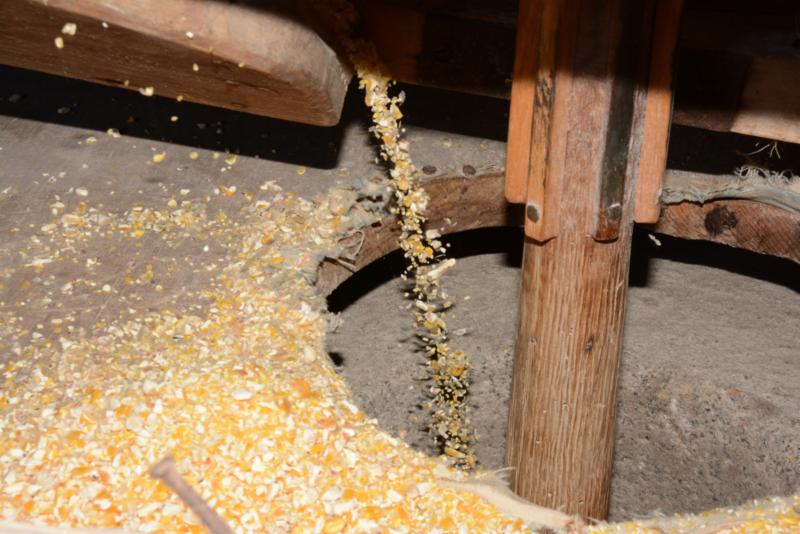
plans for converting the mill, which up till now has served as a venue for interpretation of local history, into a small producer of organic flour for four local organic bakeries. It turns out that things like engineering the gearing for water-powered drives, dressing (sharpening) the “lands and furrows” on millstones, cleaning, drying, grinding, and sifting various kinds of flour, can be learned in Europe because the traditions of stone milling have never completely yielded to more modern systems (like roller mills or industrial milling that achieves economies of scale). One of the experts on the call runs a mill in France with 16 old-fashioned millstones all operating at once.
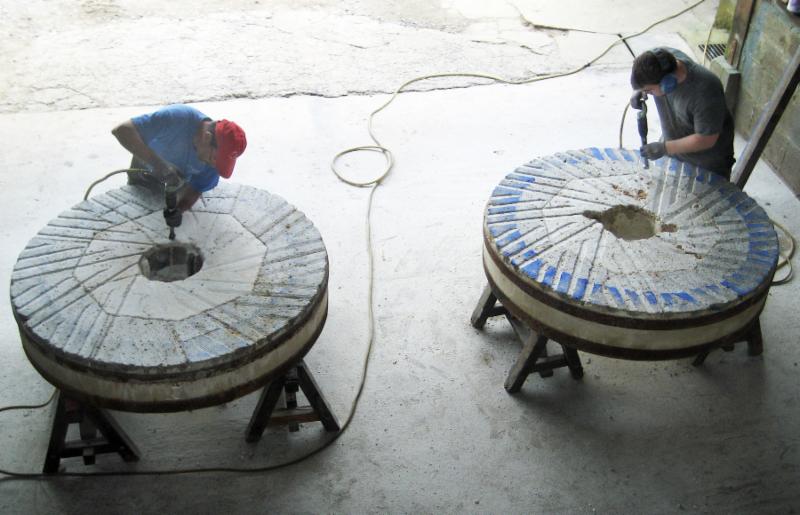
Plans are being developed to ship the millstones from Quebec to France next summer where they will be returned to working order by craftsmen whose principal work is dressing millstones, and where the metal bits which separate the stones from each other and connect to the drive mechanism will be improved to modern standards. Also in the plans is the replacement of the wooden teeth in the big gear which transfers the power from the water wheel’s horizontal shaft to the vertical shaft which runs the stones. At Sanborn Mills Farm we had to replace all the teeth in the saw mill gearing when we brought the sawmill back into operation. Scott Carbonneau built 14 jigs to get each tooth just right. He used rock maple to make the teeth. The mill in Canada turns out to be right next to a sugar bush. It will make sense to use some of trees to make the teeth for the mill gearing.
All these skills are important to the mission of Sanborn Mills Farm. Preserving crafts that are in danger of dying out and teaching those crafts to a next generation of craftsmen, is definitely one of the primary reasons the farm exists. I fear though that I won’t be among the lucky ones who might get a trip to France to inspect the work and learn the techniques needed to upgrade our mills. But that’s all right because I can’t lift heavy timbers, hold a mallet or a chisel, or handle the pneumatic tools used for dressing the stones. Of course, I could be useful as a translator from the French into, well, dog, which no one would understand. So I guess I’ll stay home and see if I can figure how to text. Joyeux Noel et Bonne Annee,
Toby Toblerone, the chocolate Labrador

How to visit the farm . . .
Though we are not open for visitors on a daily basis, group tours can be scheduled from spring to fall.
The best time to see the farm is during the annual
Photographs for this eNews:
Workshop montage, farm shots & portrait of Toby by Lynn Martin Graton.
Images of French grist mill equipment courtesy
Sanborn Mills Inc. | 603-435-7314 |
A traditional New Hampshire farm and nonprofit organization dedicated to sustainability, creativity, and preserving folklife skills and agricultural knowledge so that the best of the past can help shape our future.
STAY CONNECTED: 


|
|