
SHARE:

 |
At Sanborn Mills Farm, preserving the past and planning for the future go hand in hand!
August 2017 eNews
Clapboards, then & now . . .
True to New England tradition, many of the buildings at Sanborn Mills Farm are sided with clapboards.
According to James Garvin in his book “A Building History of Northern New England,” when settlers first arrived they tended to side their buildings with sheathing boards that were beveled or half lapped on the edges and nailed on horizontally. The challenges of protecting a building through the winter prompted the idea of using clapboards. Until the 19th century, most clapboards were riven or split from bolts of straight grained wood, often eastern white pine or oak. The best clapboards are quarter sawn, which means they are cut at right angles to the annual growth rings. The story goes that they are called clapboards because of the sound the plank makes against the log as it is being split.
The important concern with all siding is to keep moisture from getting into the wood to prevent wood rot. A technique used by early craftsmen was to skive (taper) the ends of the clapboards so they overlap, providing a weatherproof joint. By 1830 or so, this technique was abandoned in favor of a simple flat end joint. The clapboards on our 18th century Red House were skived when it was resided in 2002.
Another difference between then and now, is that
For more information on early building practices in New England, check out Jim Garvin’s book
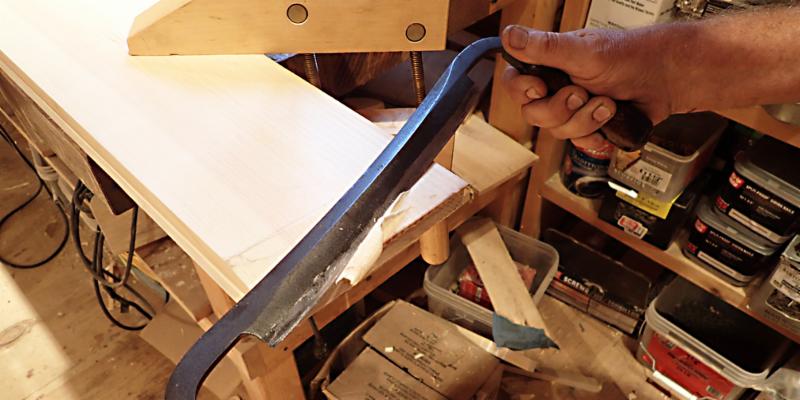
Skiving a clapboard with a drawknife. 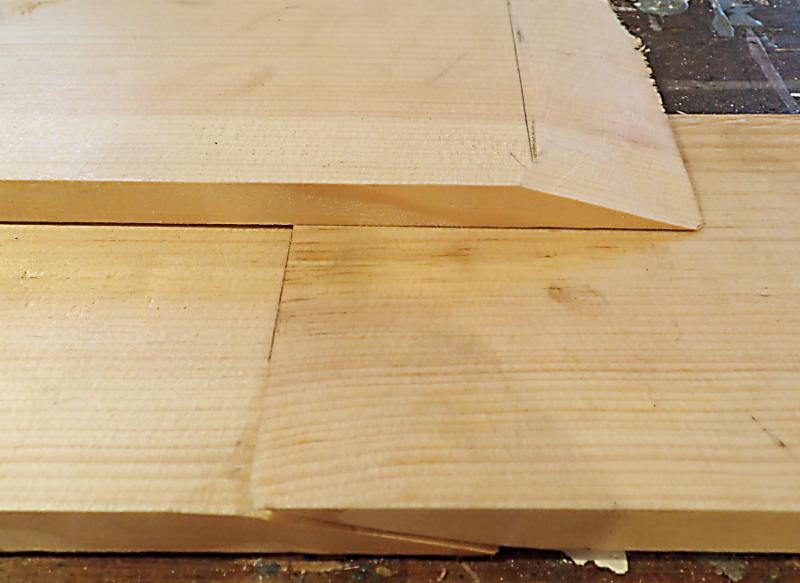
Skived clapboards.
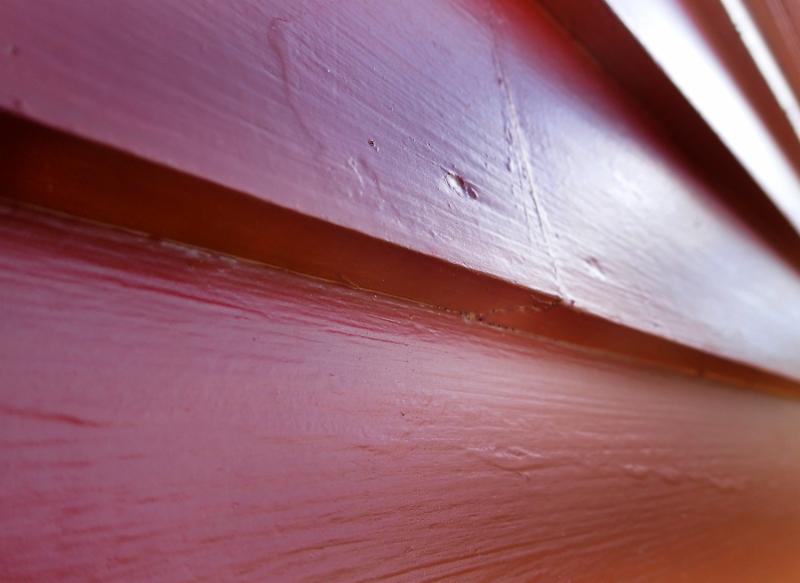
Look closely to see the skived clapboard at the Red House. 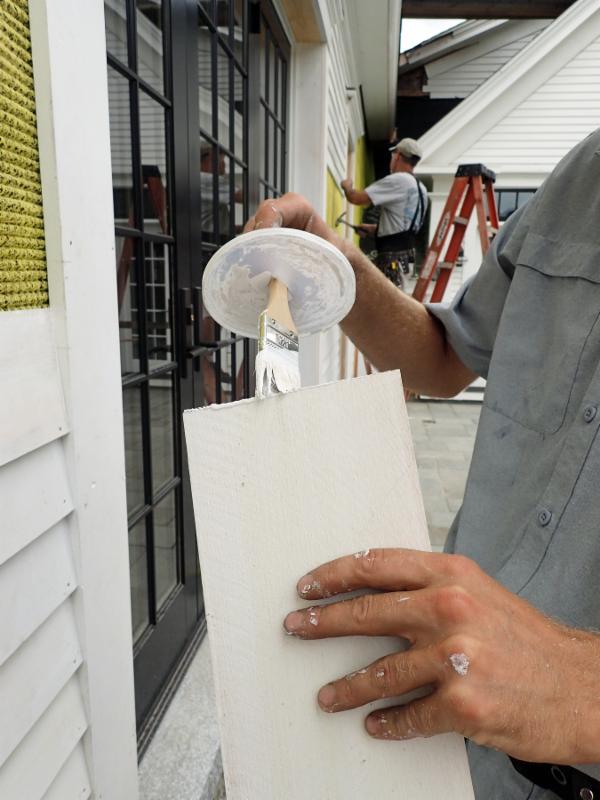
Painting the ends of a modern clapboard.
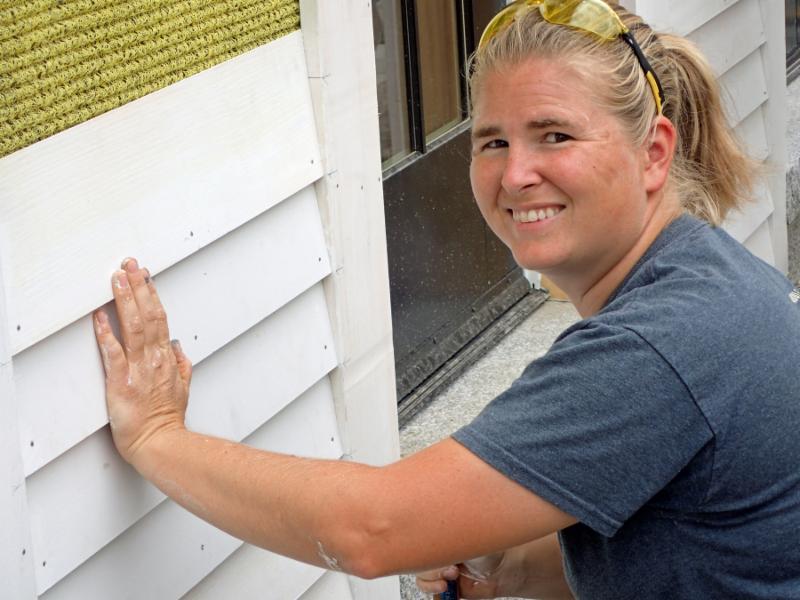
Carpenter Emma Woodward placing clapboards on the new Carriage Barn.
Forge welding, an ancient & useful technique . . .
There are still two spaces in the Forge Welding workshop on September 17. Fo rge welding is introduced in a Blacksmithing Basics workshop but this one-day workshop is an opportunity to focus on perfecting your skills.
Forge welding is a method of joining metals together without fasteners and has been used since ancient times. It is considered a “solid-state” diffusion welding process, which means that two pieces of metal are heated to a very high temperature and physically hammered together (instead of melting them). Forge welding has been used throughout history for making a wide range of tools, fences, gates, and cookware. In the Middle Ages smiths forge welded armor and weapons. One of the most famous applications of forge welding is in the making of pattern welded steel, also called Damascus steel, which involves hammering two types of steel together then repeatedly folding, drawing out the billet, and forge welding it each time. The end product reveals the patterns created by the different steels. 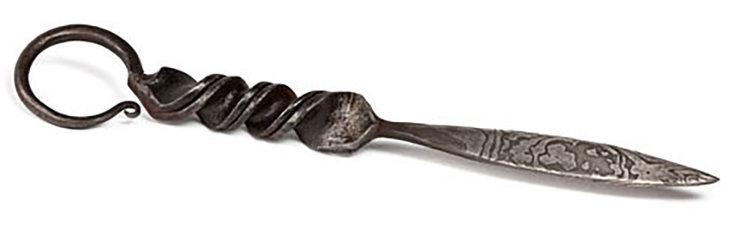
Letter opener with Damascus steel blade by Garry Kalajian.
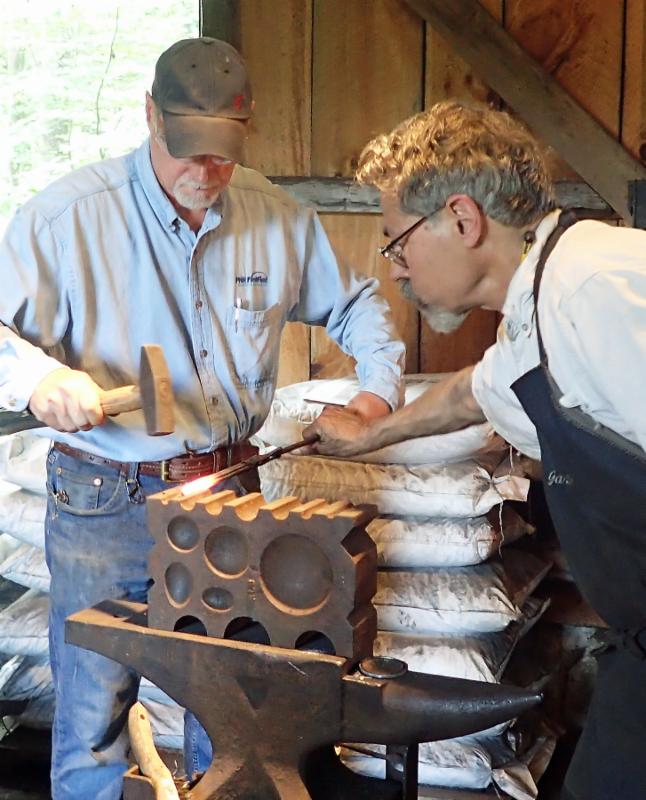
Garry Kalajian (right) & Jim Allen shaping a forge welded piece on a swage block.
We’ve got a new power hammer . . .
As the size of your project gets bigger, sometimes as the saying goes – “You need a bigger hammer.” In blacksmithing the increase in power is supplied by either a foot-powered treadle hammer or a power hammer. Thanks to the help of master blacksmith Ralph Sproul of Bear Hill Blacksmith, Sanborn Mills Farm just acquired a Little Giant power hammer that dates from 1917. Owing to the specialized training needed to operate it, our new power hammer is currently being used for “in-house” projects like fittings for the mills. As the blacksmithing program expands, the power hammer will be helpful in workshops focused on railings, gates, grills, and posts.
Click here
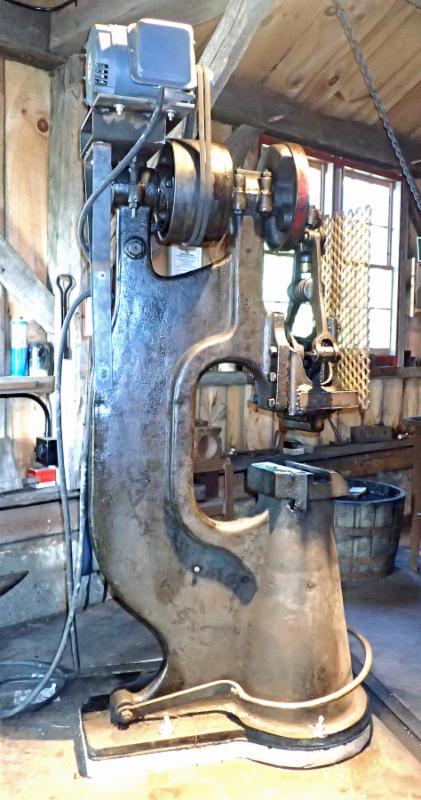
Little Giant power hammer.
Introducing our new Farm Educator . . .
Ray Ramsey just joined the Sanborn Mills Farm staff and will be in charge of the farm’s vegetable gardens and a new grain program. The plan is to boost our commitment to sustainability by growing grains and processing them in the water-powered grist mill. Using traditional techniques of plowing & cultivating with draft animals, we willl continue growing healthy produce for farm-to-table meals served at our workshops. Ray comes to us with a background in traditional farming techniques acquired growing up on a family farm in Indiana. Ray served eight years in the Marine Corp where among other responsibilities, he developed training protocols. After the military, Ray went on to start a homestead farm in Pittsfield, NH, worked as a pipe fitter and welder for Unique Mechanical Services, and then as a Mechanical Foreman and welder for PSNH/Eversource.
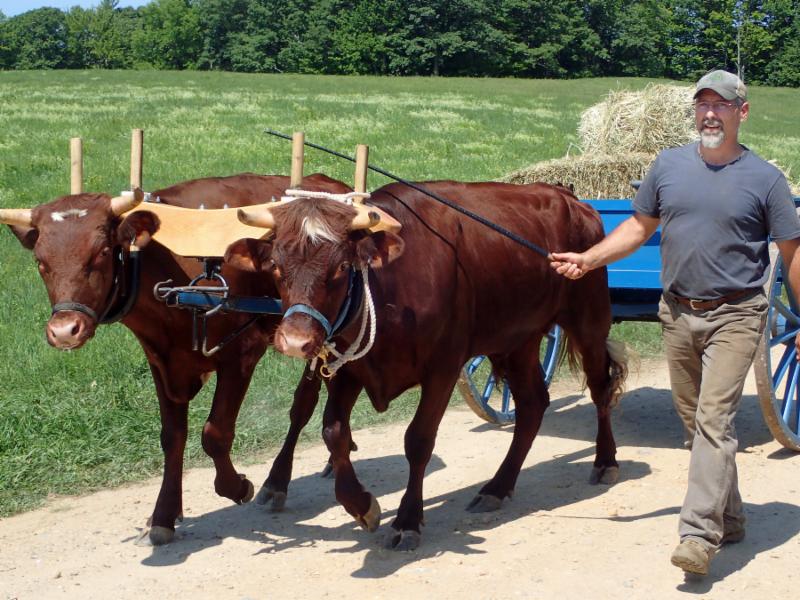
Ray Ramsey with Bow & Arrow.
Setting the stage for our new main entrance . . .
Artist Bob Braun is once again at Sanborn Mills Farm bringing his research and artistry to designing the interior walls and ceiling of the main entrance leading into the Main House & new Carriage Barn complex.
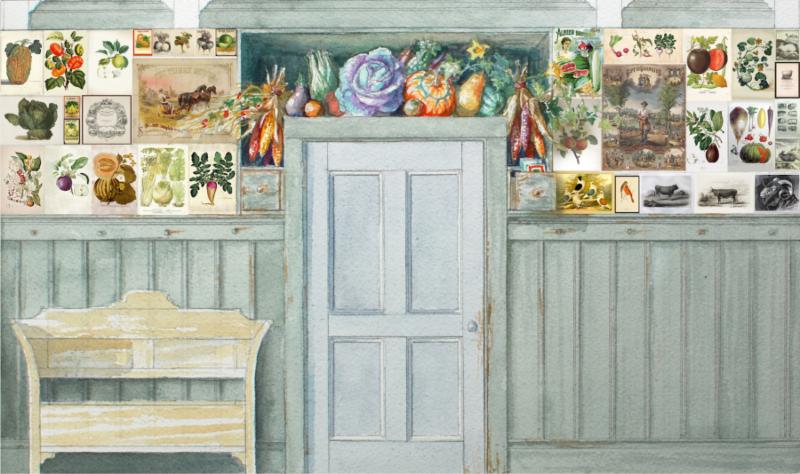
Design for interior of entrance with tromp l’oil & print collage.
Before the invention of the camera, artists created most of the images for calendars, advertisements, seed packets, and more. They captured the sentiments and aspirations of the era.
Click here
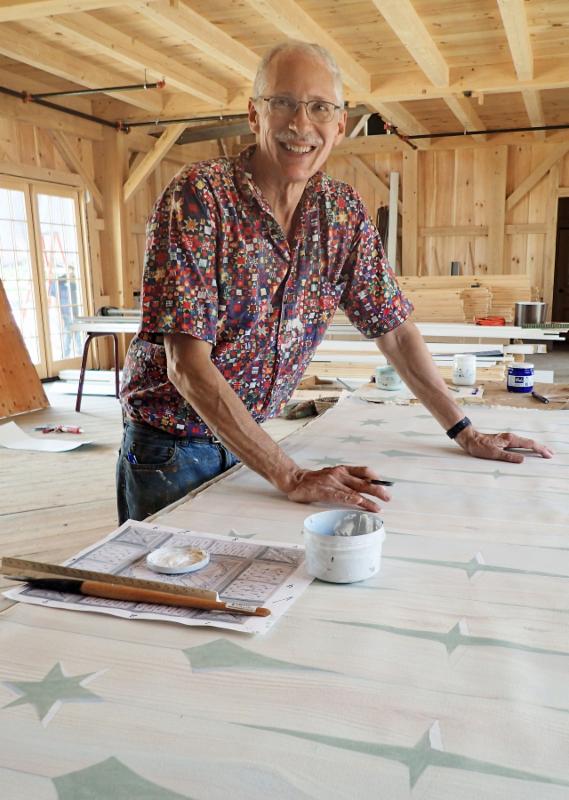
Bob working on a ceiling panel.
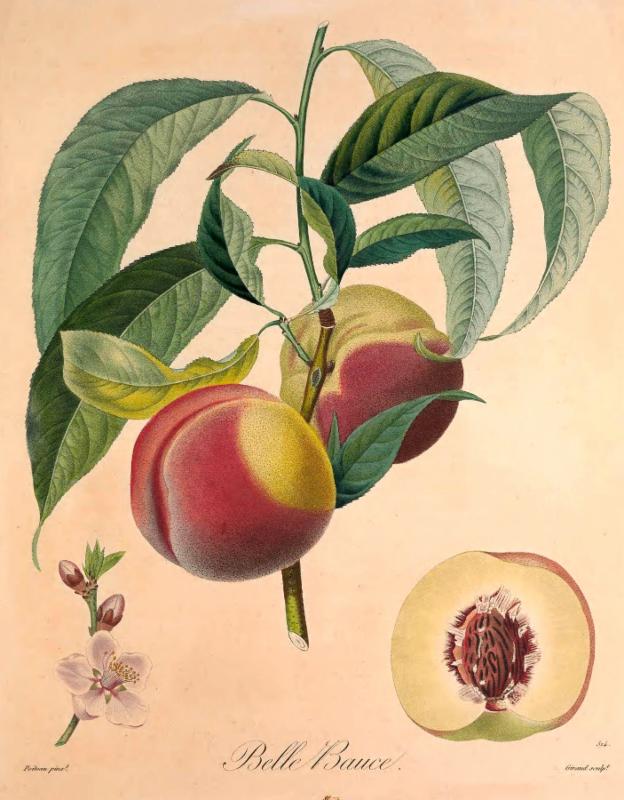
Botanical illustration of peaches. 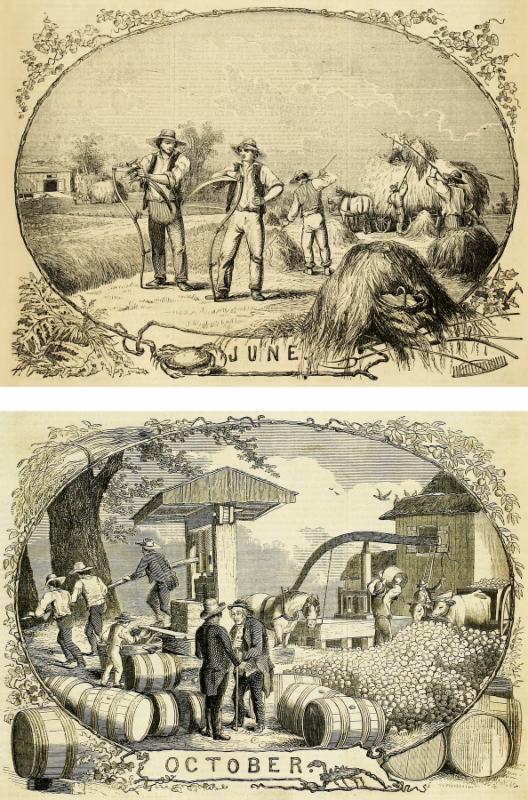
Illustrations from the front pages of the Boston magazine Gleason’s Pictorial, 1854.
Snapshots from our recent basket making workshop . . . We held our first basket making workshop on August 6. Each student made a sturdy basket with Shaker tape handles, using processed reed. We look forward to future workshops that will use basket materials – such as willow and brown ash – that can be grown, harvested, and processed right here on the farm. 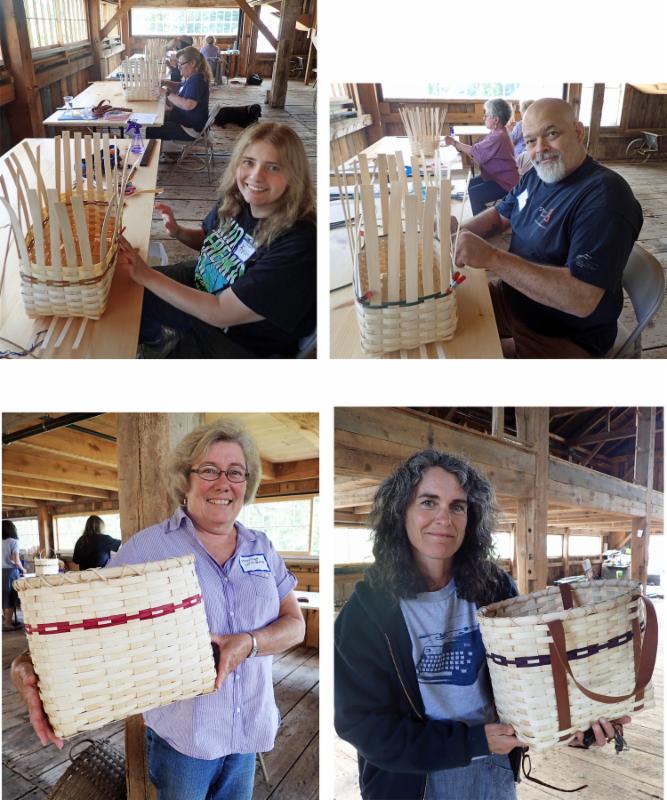
Clockwise top left: Kristina Kohl, Richard Hayes, Marilyn Williams, and Cynthia Kern.
Photographs for this eNews: Damascus steel letter opener courtesy of Garry Kalajian, Ararat Forge. Historic images of calendars & peaches courtesy of the Library of Congress Digital Collection.
All other images by Lynn Martin Graton.
Skiving a clapboard with a drawknife.
Skived clapboards.
Painting the ends of a modern clapboard.
Carpenter Emma Woodward placing clapboards on the new Carriage Barn.
Garry Kalajian (right) & Jim Allen shaping a forge welded piece on a swage block.
Little Giant power hammer.
Ray Ramsey with Bow & Arrow.
Botanical illustration of peaches.
Illustrations from the front pages of the Boston magazine Gleason’s Pictorial, 1854.
Sanborn Mills Inc. | 603-435-7314 |
A traditional New Hampshire farm and nonprofit organization dedicated to sustainability, creativity, and preserving folklife skills and agricultural knowledge so that the best of the past can help shape our future.
Skiving a clapboard with a drawknife.
Skived clapboards.
Painting the ends of a modern clapboard.
Carpenter Emma Woodward placing clapboards on the new Carriage Barn.
Garry Kalajian (right) & Jim Allen shaping a forge welded piece on a swage block.
Little Giant power hammer.
Ray Ramsey with Bow & Arrow.
Botanical illustration of peaches.
Illustrations from the front pages of the Boston magazine Gleason’s Pictorial, 1854.
STAY CONNECTED: 


Skiving a clapboard with a drawknife.
Skived clapboards.
Painting the ends of a modern clapboard.
Carpenter Emma Woodward placing clapboards on the new Carriage Barn.
Garry Kalajian (right) & Jim Allen shaping a forge welded piece on a swage block.
Little Giant power hammer.
Ray Ramsey with Bow & Arrow.
Botanical illustration of peaches.
Illustrations from the front pages of the Boston magazine Gleason’s Pictorial, 1854.
|
|