
SHARE:

Farm Pickings
News and Updates from Sanborn Mills Farm
— July 3, 2024 —
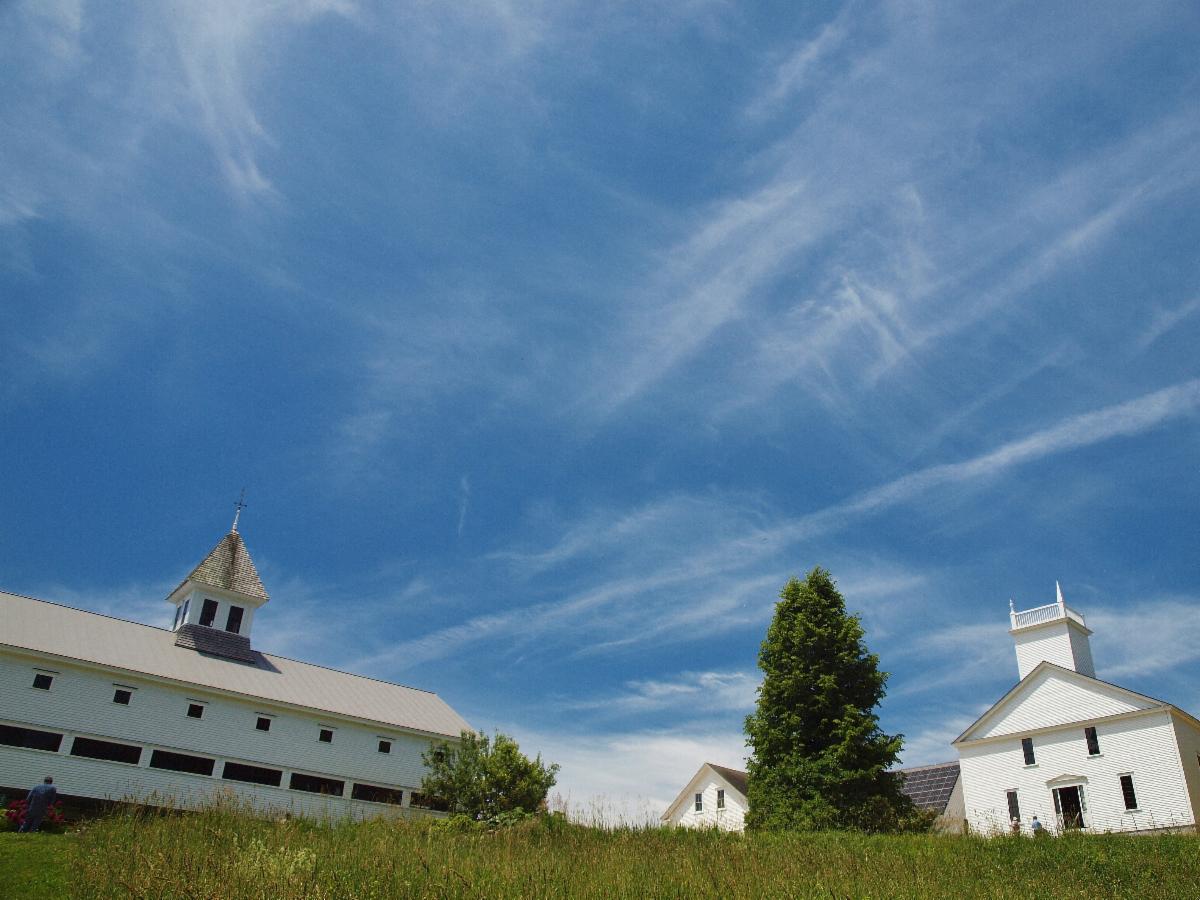
Summer afternoon—
to me, those have always been the two most beautiful words
in the English language.
— Henry James

The Sanborn Farm Three-Holer has Been Purloined!
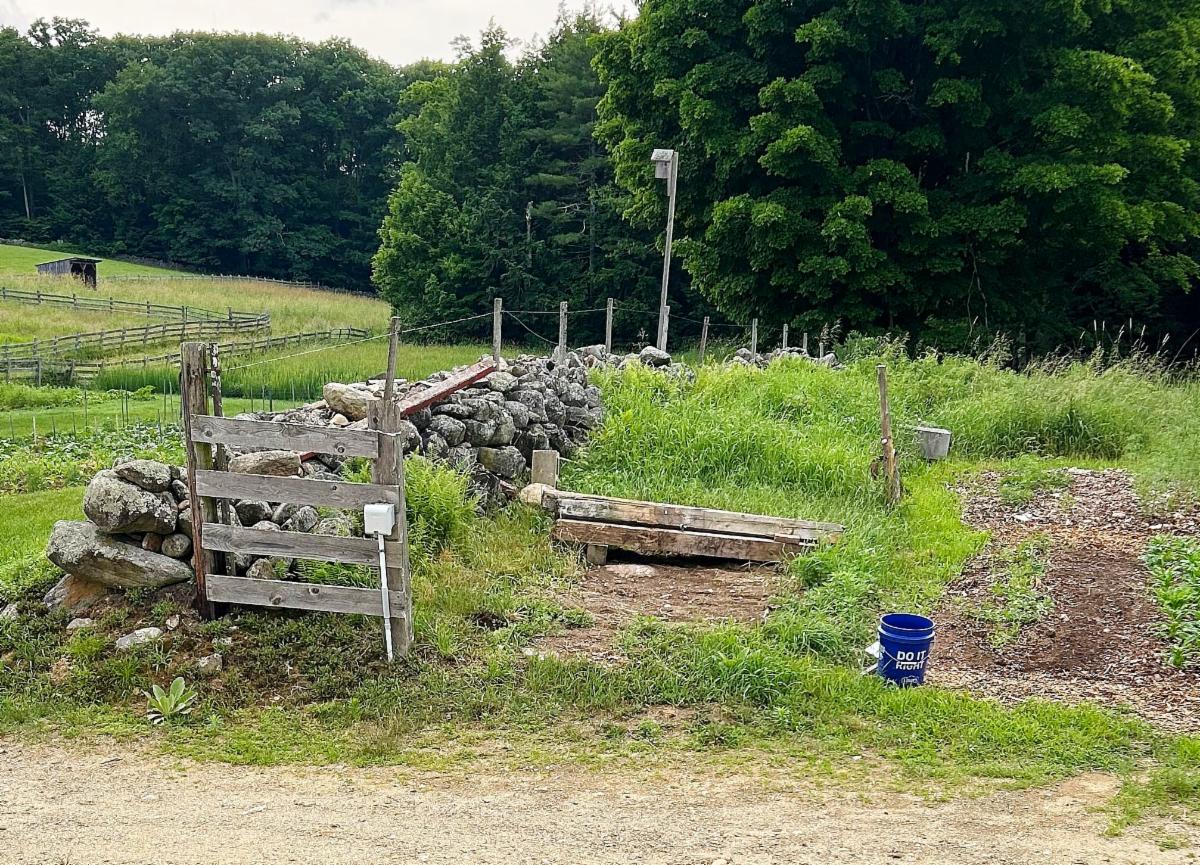
X marks the spot where the privy previously stood.
Usually, old buildings come to new life at Sanborn Mills Farm. Very seldom does it work the other way around. But this week with no discernable warning a venerable building has disappeared without a trace.
The story begins many years ago when the Cabots acquired the Farm. The very first building to be worked on other than the main house was the Old Carriage Barn. Steve Fifield masterminded its resurrection, which involved a good bit of jacking and excavating to open up a lot of drains that had silted in over time. The Old Carriage Barn was connected to the milking parlor in the Sanborn Barn at the ground level and from the corn chamber in the attic up a rickety flight of stairs to the old tie-up floor in the big barn above the milking parlor (now the dining room). The actual connection was a two-story shed with doors and windows that could be accessed from each level. At the end of the shed was a narrow room with a bench on the right facing the wall on the left and with a window at the far end so occupants of the room could look out the window while sitting on one of the three holes in the bench. The whole ensemble was painted in classic blue milk paint. Since it had long been disused, the room had been overtaken by the need to store various accoutrements involved in the process of milling cows.
Much to the Cabots’ chagrin, when planning for the new Carriage Barn (including providing ADA compliant access to both levels) called for an elevator and a fire stair exit at the connector end of the building, they regretfully agreed to the elimination of the former place of elimination. The shed was removed from the building in one piece and stored for several years next to the horse run-in shed behind the Barden Barn, where it became an active eyesore and an auditory nightmare during rough weather.
Fast forward to the spring of this year (2024) when the Dye Garden was expanded to be closer to the Natural Dye Studio in the basement of the Grange, and the decision was made to move the eyesore to a less visually and auditorally abrasive site. (One of the doors banged whenever there was a wind from the northeast.) The question was: where? None of the staff or visitors could come up with a logical, functional, or even aesthetic reason to keep the building with the three holes and three hinged boards covering them.
(Colin was reminded of a sketch featuring Peter Cook using a similar facility to which was attached a sheet of paper on which was written: GENTLEMEN, PLEASE LIFT THE SEAT. This admonishment made him wonder if he was being encouraged to commit upper class larceny. But enough of spurious digressions.)
The Sanborn Farm three-holer, which has for so long evoked the memory of so many things, is now (like darling Clementine in the song) gone and lost forever… Not wanted to let the passing of this important bit of history go undocumented, Colin offers the following bit of doggerel.
The three holer stood a long long time
So long in fact ’twasn’t worth a dime,
But some people wanted to remember
It as a hot coal not an ember.
So it stood neglected these many years
Encroaching on spaces like several bad ears
Of corn that had escaped the husking
While others danced amidst the busking.
Several people thought it a tiresome eyesore
Considering what it was originally used for
And thought it should be banished from the scene,
That dye garden plants should be planted where it’d been.
Then one June evening clothed in fog mysterious
There came a crew bent on something serious
They were bent on liberating the old device
To set it up with honor somewhere nice.
And true to plan they stole it away
To a place that’s secret (so they say)
Where no longer will it be made fun of
As an unnecessary necessary pile of
Old boards and window sashes
That was meant to cover people’s ashes
(I hope you know what I mean,
I’m not wanting too vulgar to seem).
Now I imagine seeing it up in the sky
Riding the wide open heavens on high
Looking for its new home on earth
Where it will be appreciated for what it’s worth.
 |
 |
Binding Demo
at July 12
Farm to Table Lunch
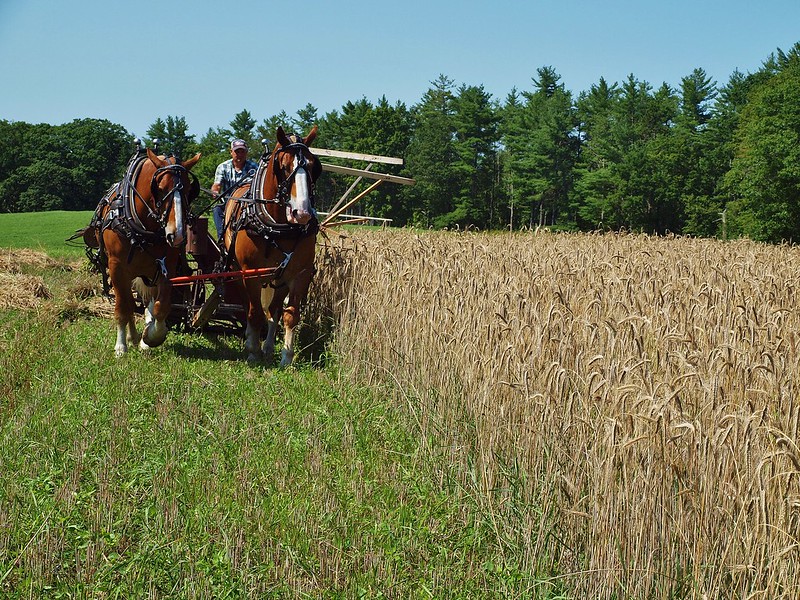
Prior to the next Farm to Table Lunch at the Farm on Friday, July 12, Farm Manager Ray Ramsey will demonstrate our draft-animal driven binder. Such binders were used for decades as part of the process to harvest grains, flax, and other crops. Our Farm to Table lunches are popular, especially when a demonstration is included, so don’t hesitate to sign up for one of our lunch dates. Click here for more information and to register.
Upcoming Workshops of Interest
Sanborn Mills Farm’s 2024 Workshop Program is now underway, but it’s never too early to register for a favorite workshop later in the schedule. Many of our workshops fill quickly, so if there’s a workshop or two that catches your interest, make a point to register soon. The full schedule of 2024 workshops is posted on our website here.
Here are three upcoming workshops that may be of particular interest to you. Click on the workshop title for more information and to register.
 |
|
July 17-21
Instructor: Gasali Adeyemo
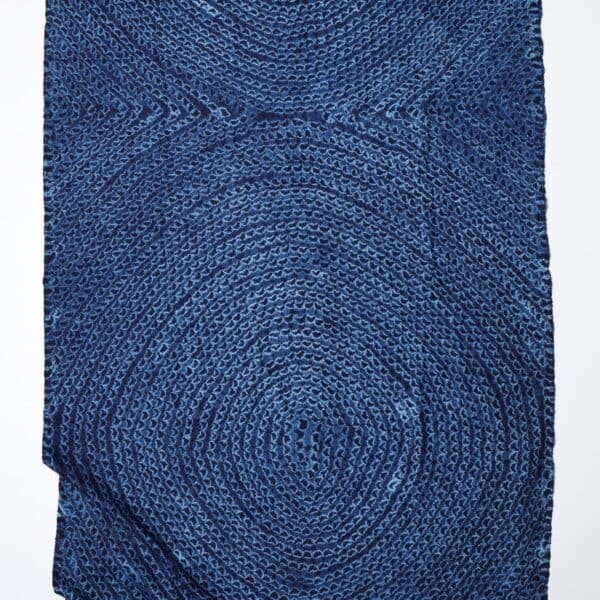
Adire Eleko, a traditional Yoruba technique from Nigeria, is the process of creating designs using cassava paste (also called yucca), a small broom, and a chicken feather. Participants will learn how to prepare the paste so they can do it themselves at home. There are two techniques in Adire, the first is to use a stencil, and the second is to create the patterns by hand. Both methods will be taught. Participants will also learn how to prepare indigo and use it to dye their work. The process of removing cassava from their work will be covered as the final step.Tie-Dye is the process of using raffia to tie fabric and then dying the fabric. There are a few different tie-dye techniques; the first is called stitch resist where the design is made using a needle to stitch the raffia into the fabric. The other method is done by hand using raffia to create designs. Participants will learn both Tie-Dye techniques.
| |
 |
July 19-21
Instructor: Amy Krone
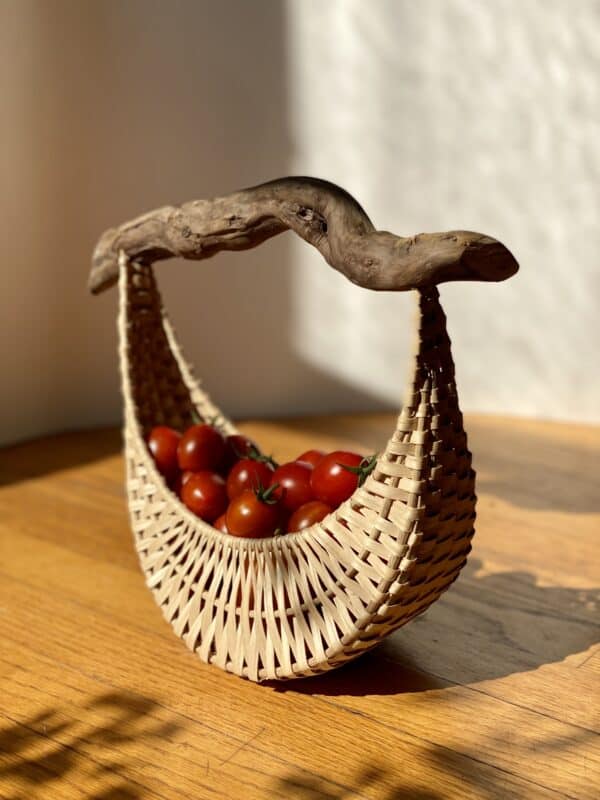
Participants in this three-day workshop will learn the traditional methods of hand-split white oak ribbed basketry in the Appalachian tradition, and will then apply these techniques to create a stunning crescent shaped basket. Each participant will be provided all tools and materials needed to weave their basket, including a 12” driftwood handle and pre-split unprocessed raw white oak with which to cut and whittle into the frame of their basket. We will then weave in your hand-whittled frame with white ash weavers. You will leave this workshop with an understanding of how to choose and fell a white oak tree for basketry as well as how to split and process a log into workable material. There will be extensive hands-on experience processing white oak splits for frame basketry as well as step-by-step instruction on how to construct a modern Appalachian frame basket. At the workshop’s conclusion you will go home with a unique 12” hand carved white oak and ash Crescent Basket. This course is suitable for all skill levels but does require a good amount of hand strength. Please inquire if you have any concerns.
 |
|
Felt: Depth of Surface/ Depth of Field
July 31-August 4
Instructor: Lisa Klakulak
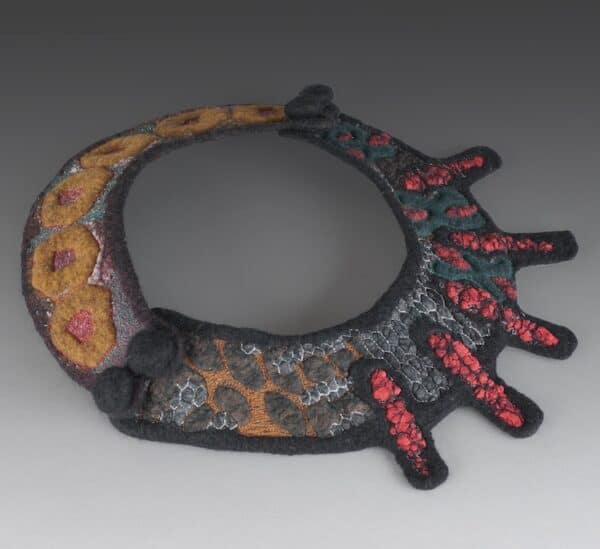
Explore thickness of layout and densities of partially felted sheets of wool for patterning effects, texture resists, and edging techniques when fusing wool through fabrics. Incorporate surprising substrates and a handful to be used to trap found objects under and in fabric pockets to add strategic weight, defined shape, dimension, and color. Free-motion embroidery will be applied to offer finer detailing and to compress remaining airspace in the felt, creating an embossed effect. These studies/samples of intensive techniques are suggested as a focal point in a larger field of felt, for example: a jacket cuff, a shirt collar, a bag flap, an aspect of a wall hanging, and/or a jewelry component. This workshop is not for novice felters. Intermediate and advanced participants who are looking to develop new aesthetics through structural play of felt, fabric, and stitch will enjoy this workshop. NOTE: Felting is a physically demanding process. Participants should be comfortable standing; have shoulder, arm and hand strength/mobility; be comfortable with having their hands in wet/soapy conditions for hours; and being exposed to hot and cold water.
Photo Credits
Top photo and Binding photo by Steve Bjerklie.
Three-Holer site photo by Colin Cabot.
Workshop photos courtesy the instructors.
Sanborn Mills Inc. | (603) 435-7314 | info@sanbornmills.org | www.sanbornmills.org
Hands-on education in traditional craft and farming: Inspiring the future with tools from the past.
Sanborn Mills Farm | 7097 Sanborn Road | Loudon, NH 03307 US