
SHARE:

Farm Pickings
News and Updates from Sanborn Mills Farm
— May 22, 2024 —

May is the month of expectation,
the month of wishes,
the month of hope.
— Emily Brontë

 |
 |
Unique Water-Powered Sawdust Conveyor Now in Operation at the Farm
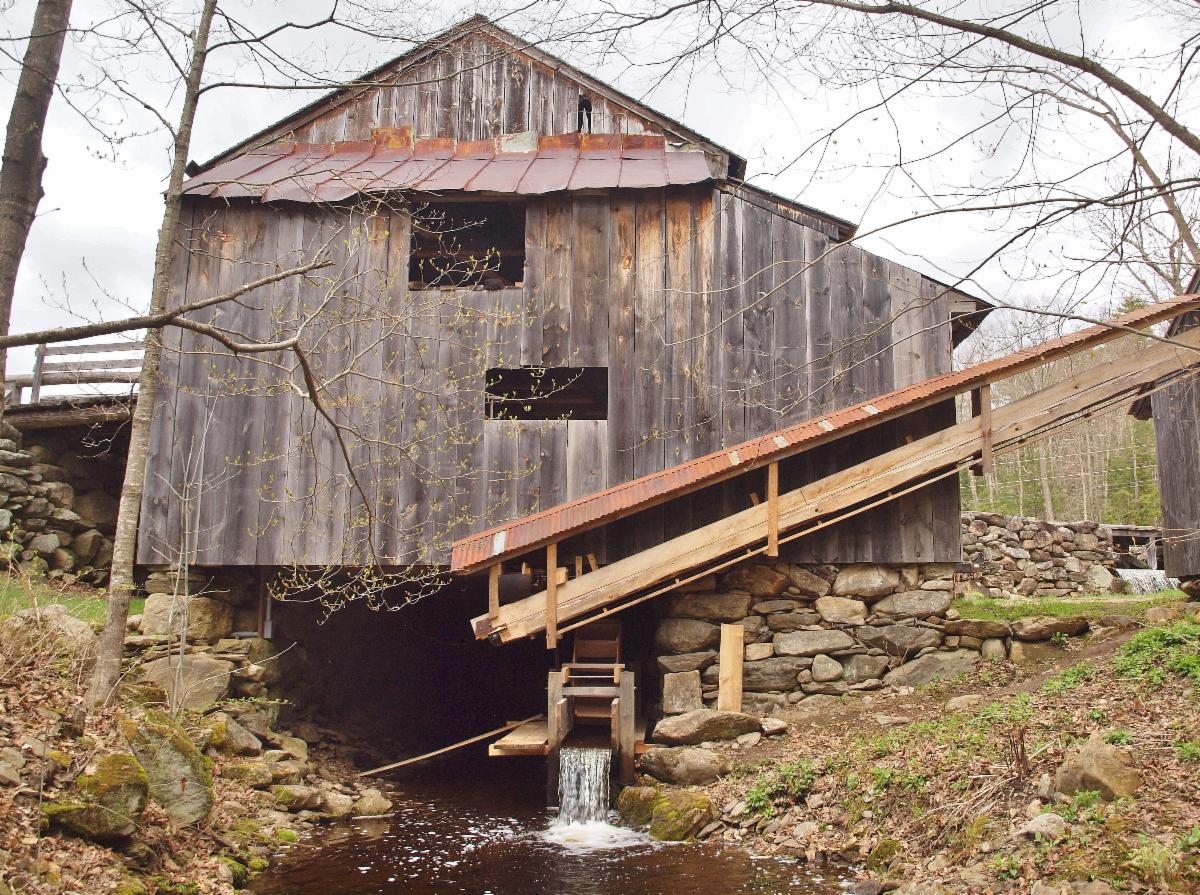
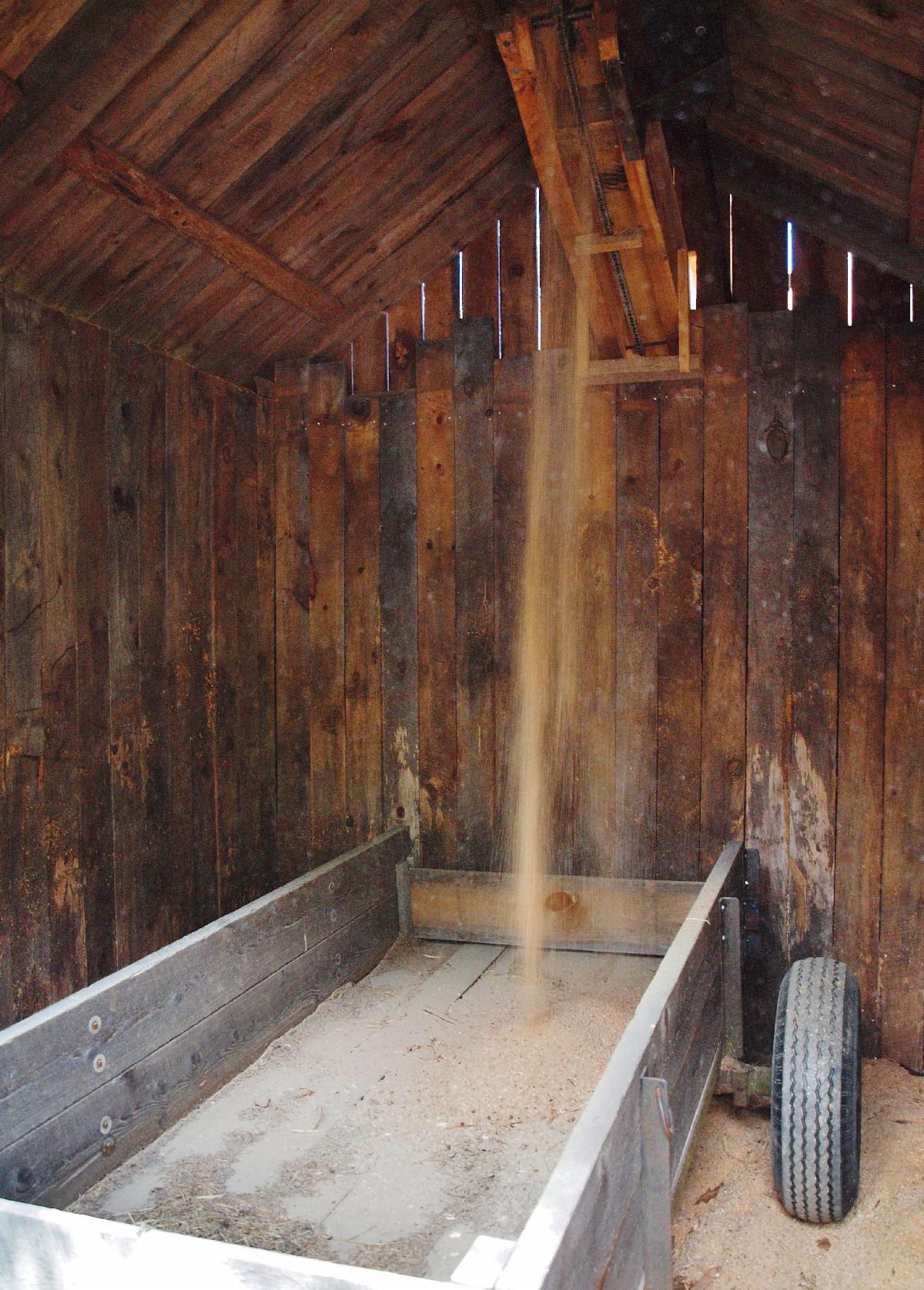
Before they knew better, sawmillers used to let the sawdust generated by their work fall into the tail race of the mill and be carried away by the water. This had a deleterious effect on the aquatic habitat below the mill. But sawdust also can be used as bedding for animals, as mulch, in compost, and to improve soil acidity, which can benefit plants such as mushrooms, potatoes, and tomatoes. At Sanborn Mills Farm, sawdust is also used for curing ox yokes when they are carved out of large cants of wood that need to dry out slowly so they won’t check or crack. So for as long as we’ve been running the sawmill at the Farm since rebuilding the mill, we’ve been shoveling big heaps of sawdust into dump carts or trailers to be carried to the barns on the property for storage and use. In 2008 two carpentry interns working at the Farm built a sawdust shed on a line perpendicular to the mill about two feet beyond the end of the mill. The plan was to build an elevator that could carry sawdust from the saw blade down a chute to a conveyor under the floor of the lower level of the mill and then dump the sawdust to another conveyor mounted at right angles to the first to carry the sawdust up through the top of the sawdust shed and into a waiting truck or cart.
The project waited years to come to fruition, however, because Brian Clough, our sawyer, thought he wasn’t getting enough power to run the saw alone due to the way the dam had been re-engineered, which reduced the “head” of the water supply. Just an extra few inches of water in the mill pond can add additional horsepower to the saw.
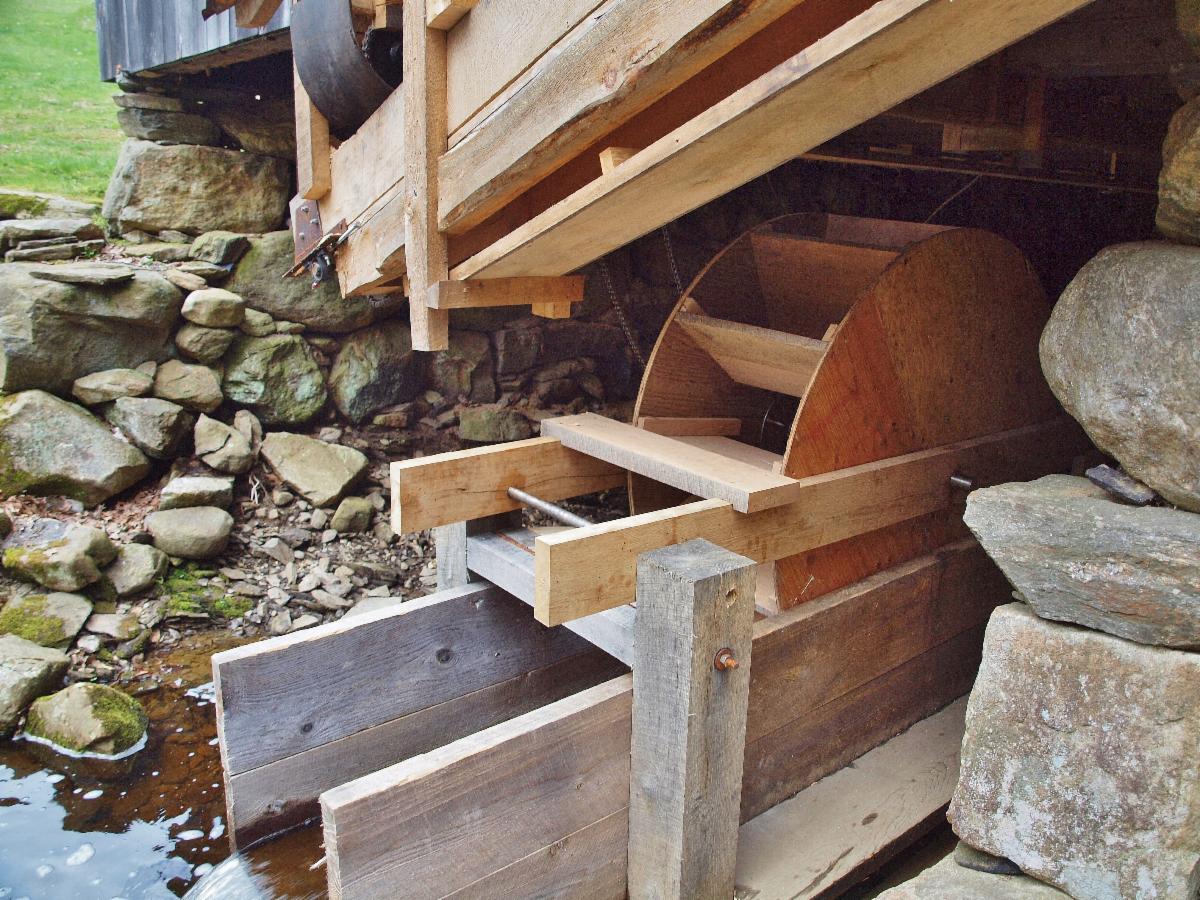
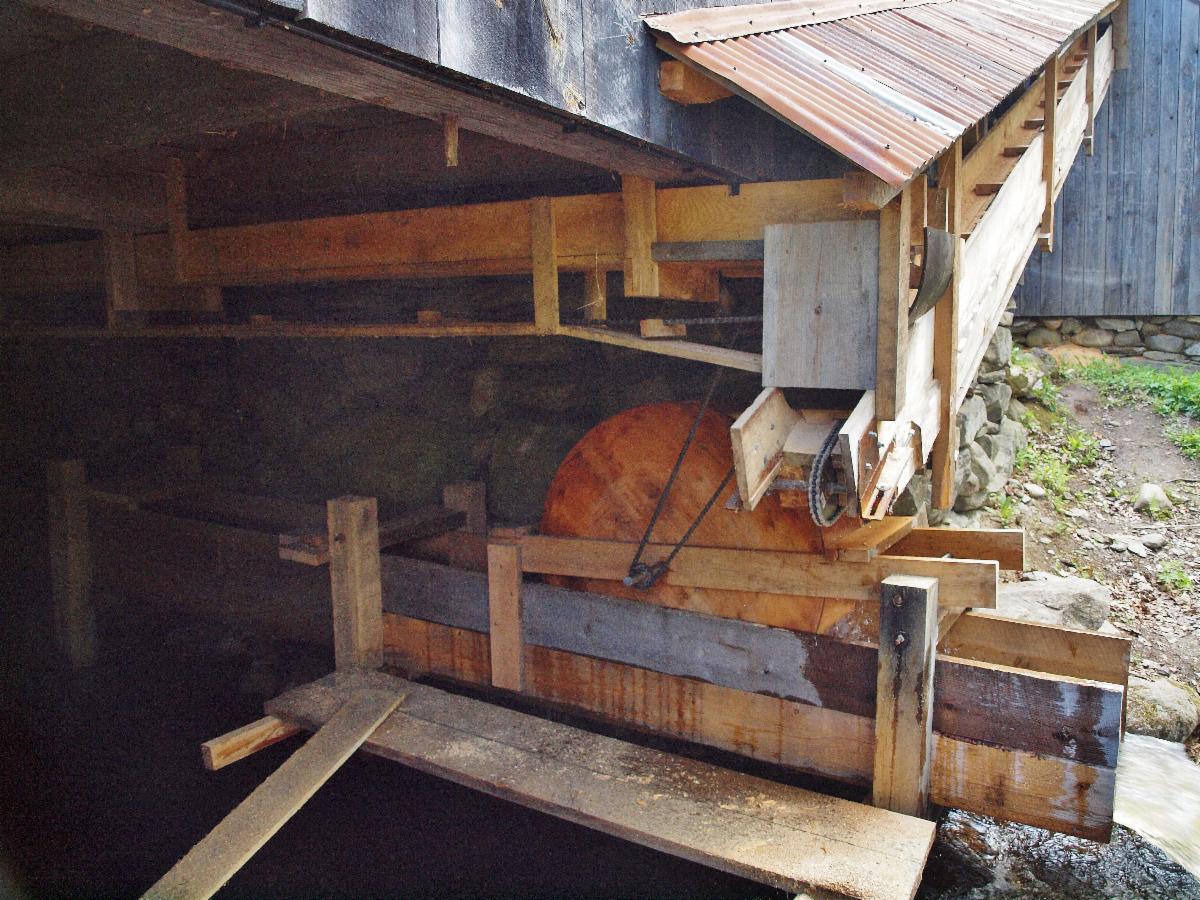
On a visit to the Garland Mill in Lancaster, N.H., one of the very few water-powered mills in New England still running commercially, Brian noticed a sawdust conveyor (similar to a gutter cleaner in a cow barn) that was powered by electricity. For a period of time we considered a similar system. The mill dam has two openings (penstocks) that can let water through. One is used to run the turbine and the other is a bypass to drain the pond for the winter and keep things from freezing. Brian realized that opening the bypass a little didn’t have any effect on the other penstock providing power to the saw. And by building a little paddle wheel (undershot) that sits in the bypass channel, he could power the sawdust conveyor without robbing power from the saw.
Estimating the size of the paddle wheel that was needed was a bit of a guessing game. “There was a certain amount of winging it,” Brian admits. The system now is working and though it took a while to get it over the finish line, the sawmillers no longer have to stop sawing and shovel sawdust before they can continue being productive. The project was “pretty labor intensive,” says Brian, “and there are still some adjustments to make, but overall it has worked out pretty well.”
For for information about our sawmill, which may be the only water-powered sawmill in the United States with an operating up-and-down saw as well as a circular saw, click here.
| |

| |
 |
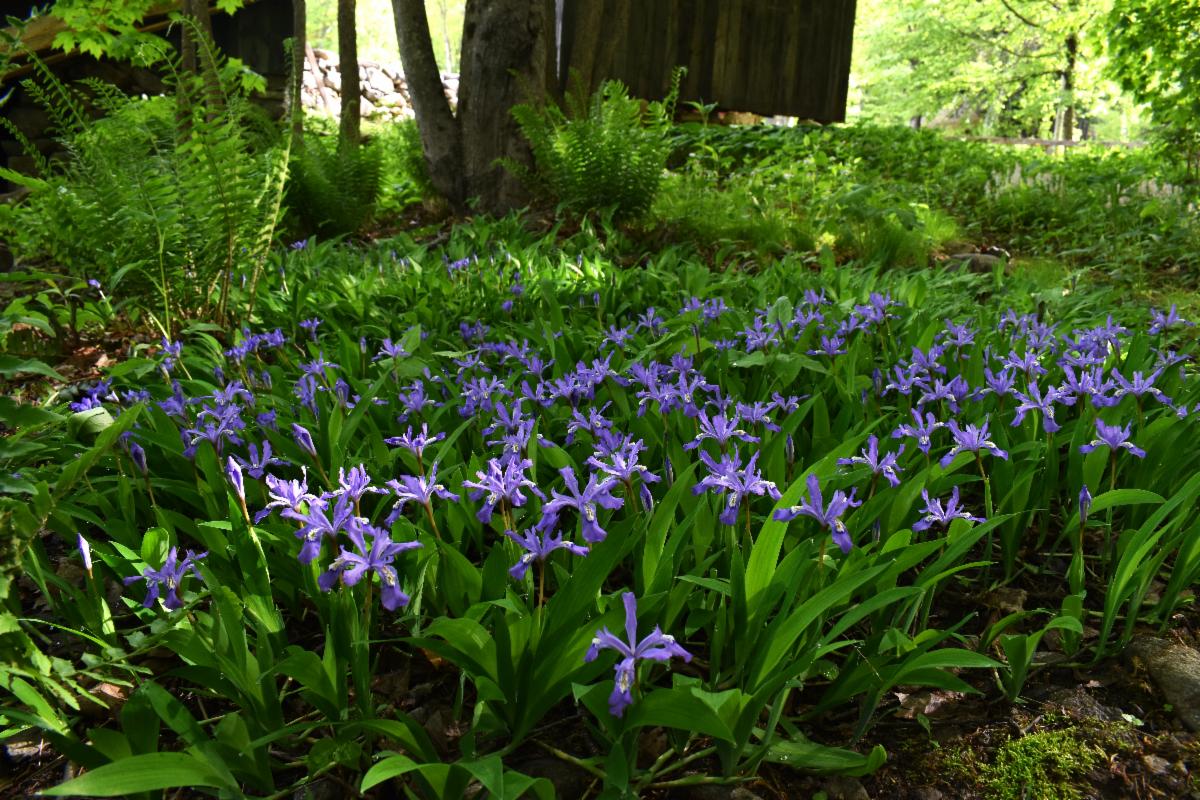
The Stream Garden Is In Full Bloom
Our Stream Garden — such a cool and refreshing spot on warm late-spring afternoons — is bursting with blooms right now. Iris, Phlox, and other shade-loving plants are showing their full glory. Next time you’re visiting the Farm, whether for a Farm to Table Lunch (see below) or enjoying a tour or visiting on Open Farm Day (June 16), walk down beside the tail race below the sawmill and wander among the flowers in this special place.
More information about the Stream Garden can be found here on our website.
 |
|
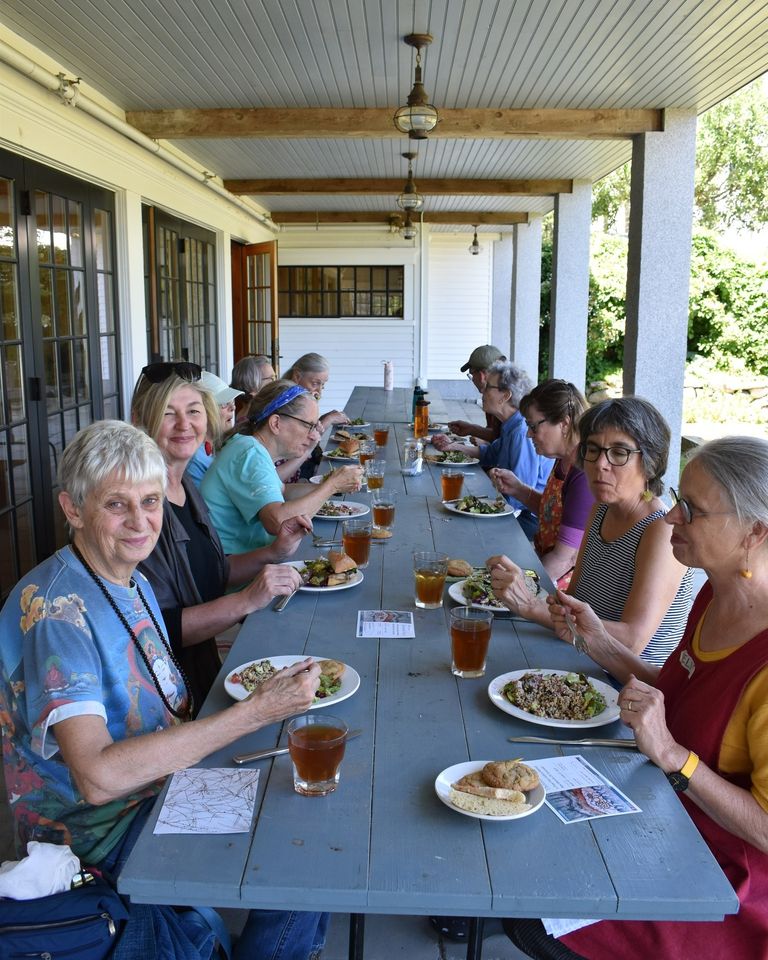
Farm to Table Lunches In May, June
Our May and June schedule for our popular Farm to Table Lunches is now set. Enjoy a delicious meal made by our Head Chef Kelly Fahey with fresh ingredients grown here at the Farm. Some of the lunches include demonstrations of traditional skills and equipment we use at Sanborn Mills Farm.
The Lunches are on Thursday, and the May and June dates include May 16 and 30 and June 6, 13, 20, amd 27. More information and a link for registration is here on our website.,
| |
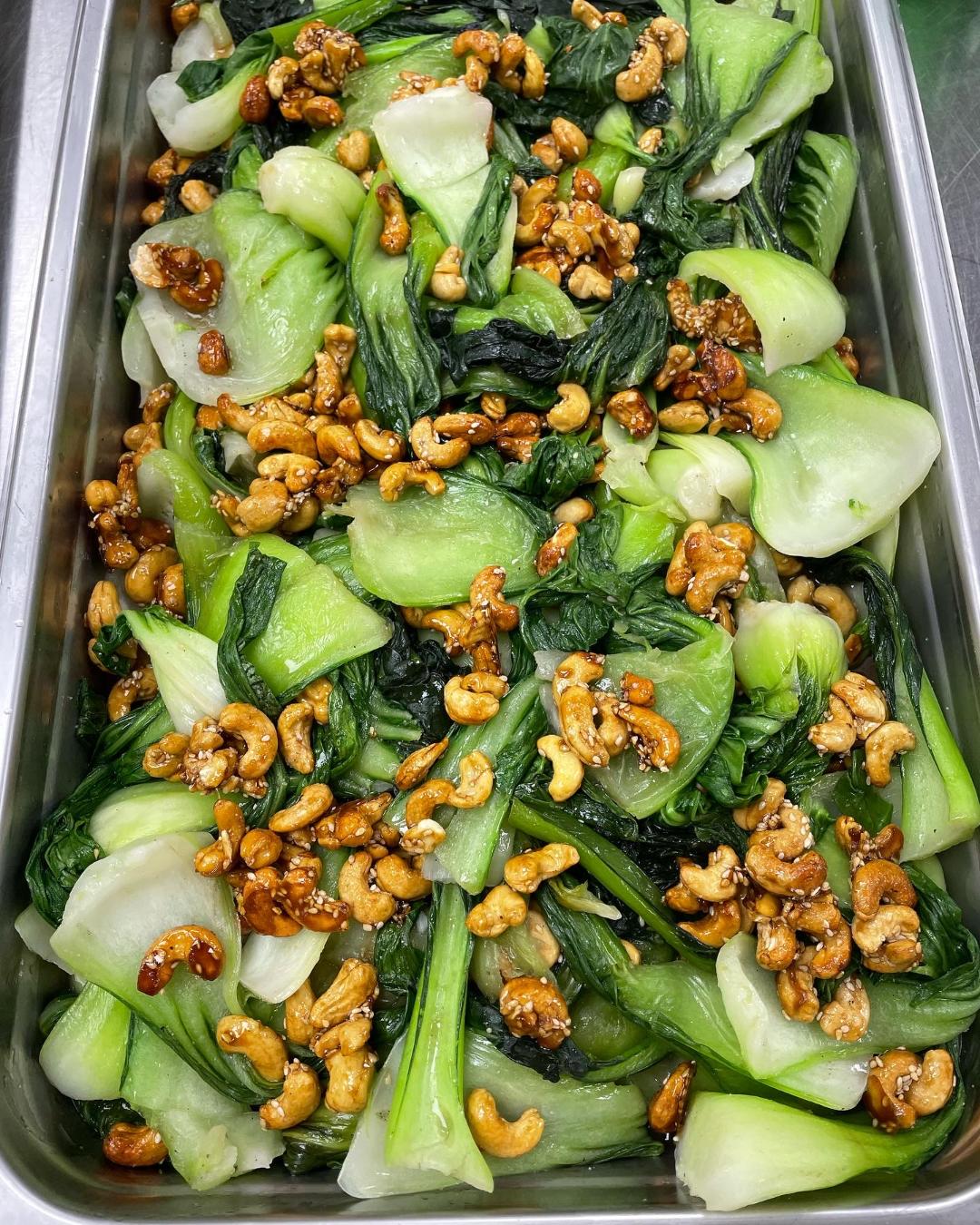 |
From Kelly’s Kitchen: Bok Choy with Sweet & Spicy Sesame Cashews
Head Chef Kelly Fahey offers a delicious spring recipe featuring early Bok choy.
With spring blooming here at the Farm, lots of yummy green spring vegetables are beginning to appear in our gardens. One
of the earliest ones is Bok choy. If you are unfamiliar with this cruciferous vegetable, it is a type of Chinese cabbage. With a crispy bulbous bottom and spinach-like green blades, it is a beautiful addition to soups or stir-fry as well as wonderful on its own. Try the recipe below for a delicious warm weather dish. -Chef Kelly
Bok Choy w/ Sweet & Spicy Sesame Cashews
What you’ll need…
4 heads – Bok choy
1 cup- coconut amino or soy sauce
¼ cup-brown sugar or coconut sugar
3 cloves garlic crushed
Juice and zest of one orange
3 tablespoons- sesame oil
White pepper & salt (optional) to taste
For the cashews:
3 cups – cashews
3 tablespoons- sesame oil
3 table spoons- spicy honey
1 table spoon- brown sugar
2 table spoons- sesame seeds
Salt & pepper to taste
Preparation...
Preheat oven to 350 degrees F. Toss cashews with all the ingredients listed and spread on a parchment-lined sheet pan. Roast in oven until golden brown and the sugar has caramelized, about 10-15 minutes. Check and mix every 5 minutes. Once roasted, set aside to cool a bit.
Separate the Bok choy into individual leaves, or just cut in half, depending on the size. Next, blanch Bok choy in water for 3 minutes, then shock in an ice water bath, strain, salt (optional) and set aside on towel or paper towel.
Heat sesame oil in a wok or sauté pan and add the garlic. Let cook for a minute or so, add coconut amino, sugar, orange juice and zest, and white pepper. Cook on med/high heat and let the flavors come together. Let the mixture slightly reduce/thicken. Add Bok choy and toss until coated and cook to your liking. Transfer to a serving dish and top with roasted cashews. Enjoy!
Upcoming Workshops of Interest
Sanborn Mills Farm’s 2024 Workshop Program is now underway, but it’s never too early to register for a favorite workshop later in the schedule. Many of our workshops fill quickly, so if there’s a workshop or two that catches your interest, make a point to register soon. The full schedule of 2024 workshops is posted on our website here.
Here are three upcoming workshops that may be of particular interest to you. Click on the workshop title for more information and to register.
 |
|
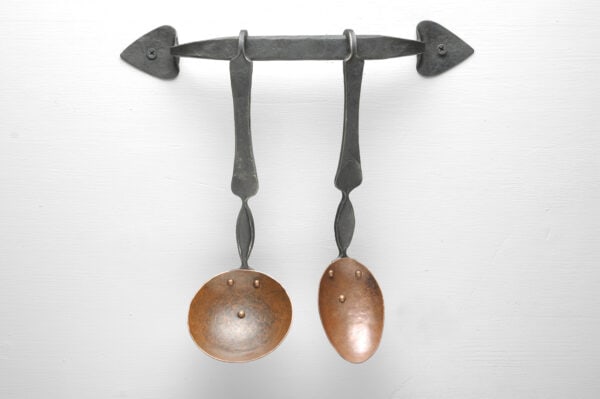
Creating in Copper, Brass and Iron
June 14-15
Instructor: Garry Kalajian
Participants in this workshop will learn how to cut, shape, then anneal copper and brass sheets, then sink and raise to form a spoon, ladle, or drip pan, then forge the iron parts to go with them: candle holder arms, bases, and candle cups to make candle holders or handles for serving utensils. Round out the set with a rack or fork if time permits. Beginners and experienced smiths are invited to try their hands on basic and more demanding designs.
| |
 |
Shibori: Variations and Surprises Using Natural Dyes
June 19-23
Instructor: Ana Lisa Hedstrom
Learn the techniques and concepts of traditional Japanese Shibori, then go beyond the basics to learn new processes and patterns. For Arashi Shibori, manipulation of fabric before and after wrapping the cloth on a pole will be demonstrated using indigo as the primary dye, but also persimmon tannin. For Itajime folding and clamping, workshop participants will resist-scour silk organza scarves using natural dyes and iron modifier to create complex layers. For Katano sewing machine resist, participants will make a silk wool scarf and various modular pieces suitable for art textiles, wearables, and quilts.
 |
|
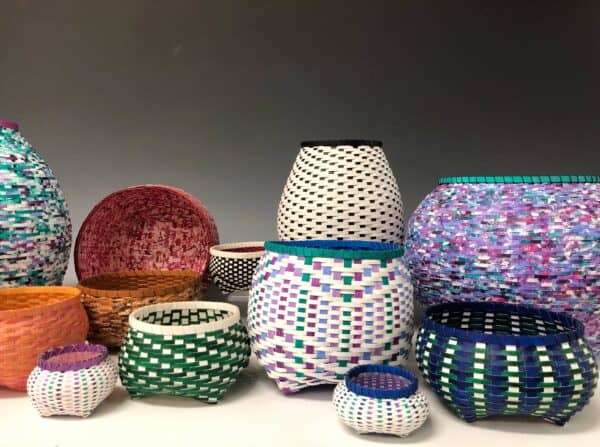
Weave Beautiful Baskets with Paper
June 22-23
Instructor: Ruth Boland
In this workshop, baskets will be woven from 140-pound water-color paper, rough press. Participants will paint their own materials using acrylic paint and will cut the material into stakes and weavers using a pasta maker. Every participant will make two baskets choosing their own colors. The first will be a small cathead where techniques associated with working with paper, as well as basic basket-making techniques, will be learned. The second basket can be more involved as time and skills allow. This class is appropriate for beginning weavers as well as those with advanced skills.
Photo Credits
Top photo by Craig Mabie.
Sawmill conveyor photos by Steve Bjerklie.
Stream Garden photos by Helen Westergren.
Farm to Table Lunch photo by Lea Rossignol.
Bok choy recipe photo by Kelly Fahey.
Workshop photos courtesy the instructors.
Sanborn Mills Inc. | (603) 435-7314 | info@sanbornmills.org | www.sanbornmills.org
Hands-on education in traditional craft and farming: Inspiring the future with tools from the past.
Sanborn Mills Farm | 7097 Sanborn Road, Loudon, NH 03307
Unsubscribe info@sanbornmills.org
Sent by
steve@sanbornmillsfarm.ccsend.com
powered by
Try email marketing for free today!