SHARE:

The Farmhand
High Summer 2021
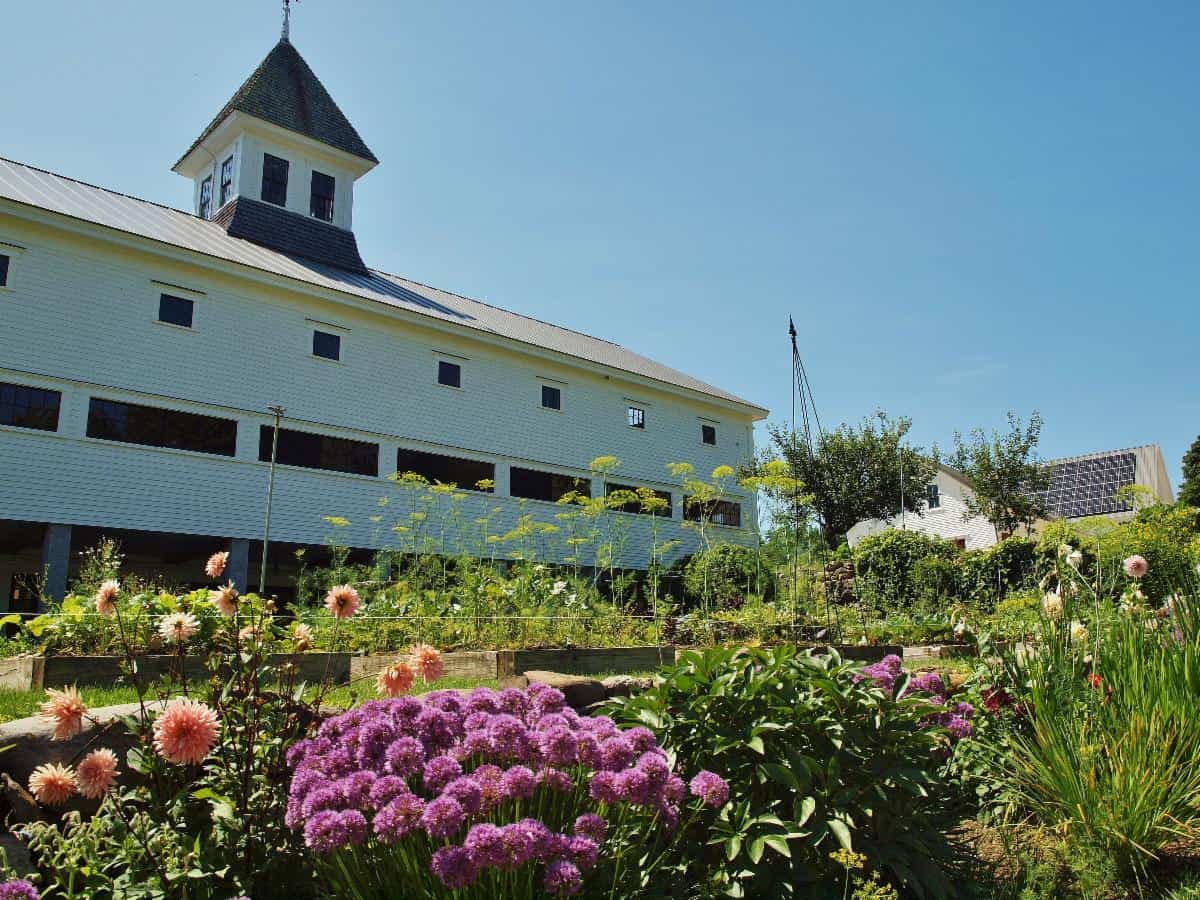

Exciting Sawmill News!
The Sawmill at Sanborn Mills Farm now has a working water-powered Up and Down Saw in addition to our water-powered Circular Saw. This is not just exciting, but unique: We believe our Sawmill is the only water-powered sawmill in the United States with both types of saw in operation. Click here to take a look at a video of the Up and Down Saw in action.
Up and down saws were the standard saw used to cut logs into lumber in American sawmills from the mid-17th century until the late 19th century, when more efficient circular saws, which were first patented in 1804 but did not come into wide use until later in the century, became popular. The first water-powered sawmill in what were then still the Colonies, built in Berwick, Maine, in 1634, featured an up and down saw. By 1840, there were more than 5,500 sawmills in New England, including the sawmill at Sanborn Mills Farm, and almost all of them used up and down sash saws.
Putting together the Up and Down Saw at the Farm was a 10-year labor of love. Missing parts needed to be found or, in some cases, made from scratch. Restoring the saw required the work of a skilled millwright. The job of millwright involves many disciplines. First knowing how water works, then designing and building the various boxes, chutes, and gates that maximize the energy provided by the water, then creating all the moving parts: shafts, belts, pulleys, bearings, carriages, guides, cogs, gears, and several control mechanisms to hold things in place as the machines do their work. We are very lucky to have caught the interest of Brian Clough, as he has a gift for dealing with wooden water-powered machines and well as having the metal-working, carpentry, timber framing, and rigging skills essential for assembling his creations. Without his dedication and skill, neither the Farm’s grist mill or sawmill would be operating at the level they are now.
On August 27, 2021, the first log, a pine, passed through our Up and Down Saw, guided by Brian, and our sawmill once again sang with the rhythmic chant of the vertical blade as it had nearly two centuries earlier.
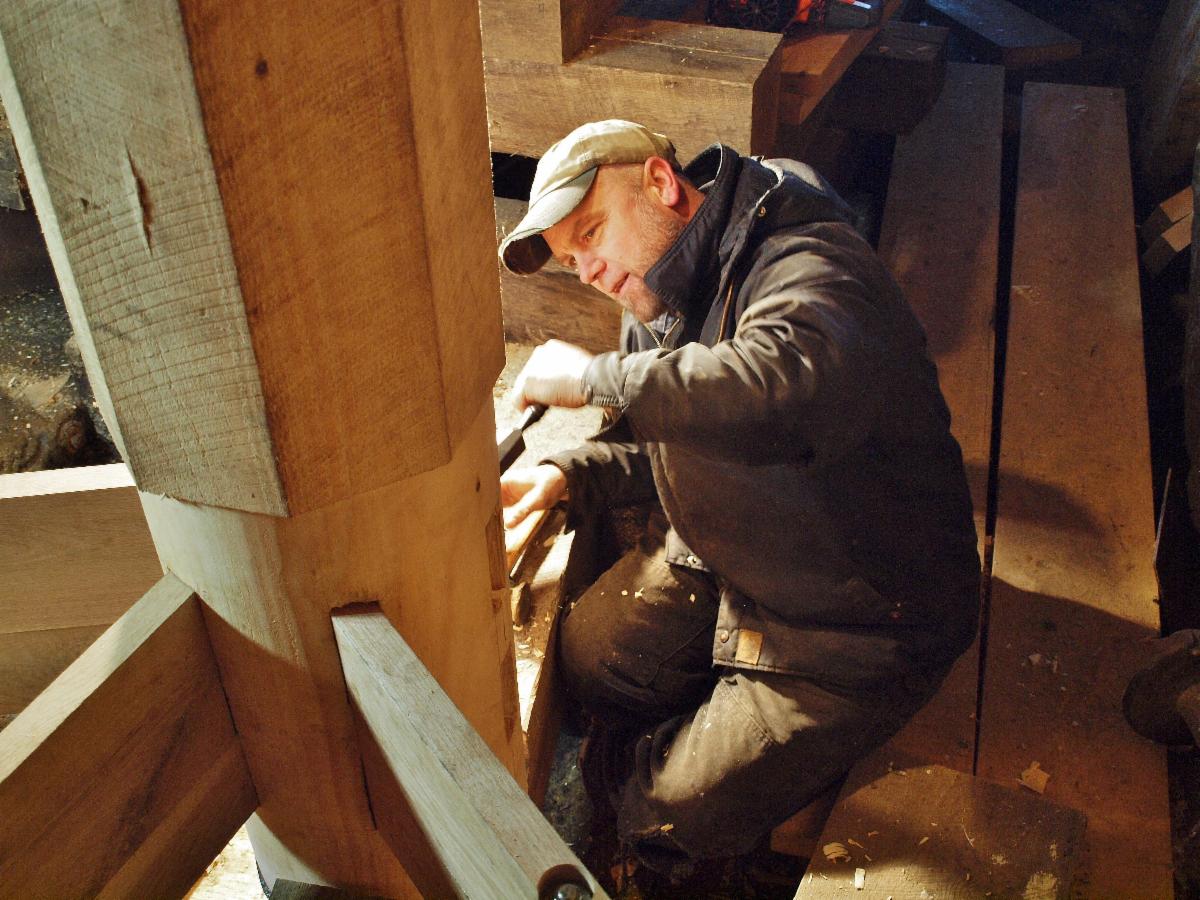
Brian Clough, our highly skilled millwright, works on the tub wheel of the receder shaft of the water-powered Up and Down Saw.

|
|
|
|
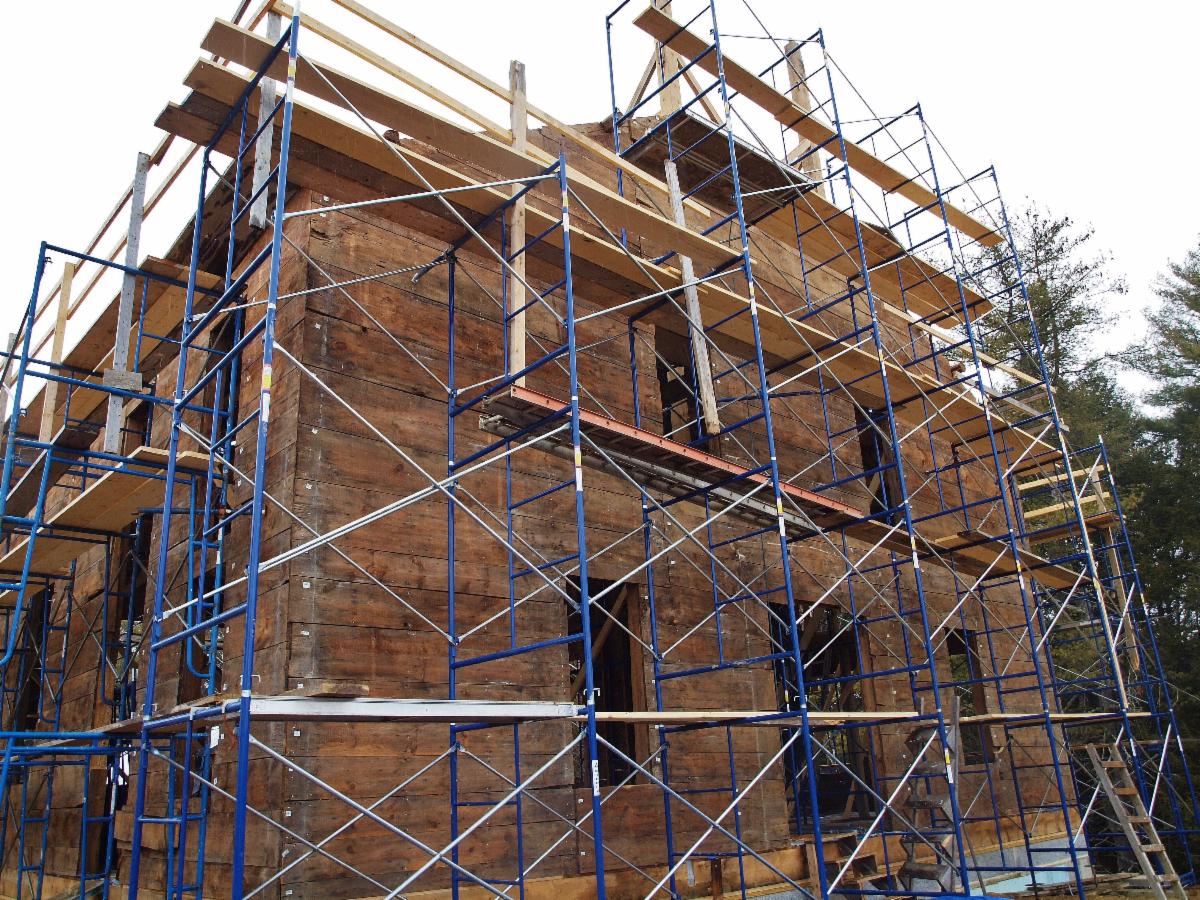
The Grange at Sanborn Mills Farm on March 18, 2021.
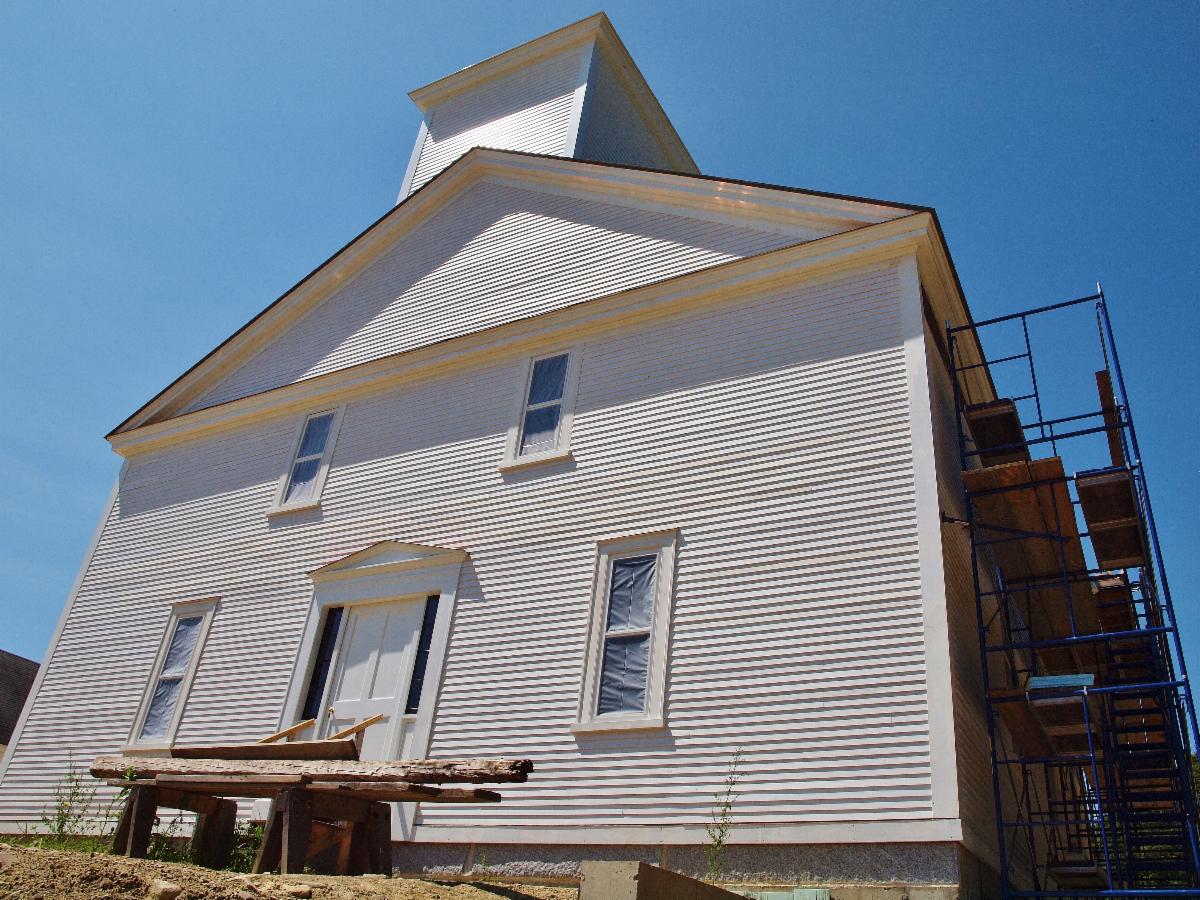
The Grange on August 13, 2021.
Grange Construction Continues
Reconstruction at the Farm of the historic Loudon Grange has continued through the summer. Framing was completed in the late spring, and now all the siding and some windows are in place. Downstairs, walls have been framed for what will be the Farm’s natural dye studio.
When it was located in Loudon Village, across from the village store, the Grange was a center of community activity: social events, concerts, theater productions, church services, weddings, and dances were all held in the Grange for decades. At the Farm, we will use the Grange for our events, demonstrations, performances, exhibits, etc., and a new studio in the basement of the building will have everything needed to produce and process natural dyes from materials grown on the Farm. The studio will be the site for upcoming dye-making workshops.
For more than 100 years, the Grange was a place for community events in Loudon. When our reconstruction is complete, it will be such a place again. By the way, we are still collecting stories from Loudon residents and natives who participated in activities in the Grange when it was still located in Loudon. If you’ve got a Grange story to tell, we’d love to hear it! Contact Colin Cabot at colin@sanbornmills.org.
Harvesting Rye with Horses
|
|
|
|
|
|
On a beautiful summer day in late July, farm manager Ray Ramsey and teamster Lars Prillaman, as well as several friends of the Farm, including the Granite State Draft and Pony Club, hitched up teams to harvest our rye crop. The horses pulled our early 20th century combine-binder through the field of rye. After the bundles (sheaves) left the machine, they were stacked upright in the field to dry in stooks for later threshing.
Our grain crop is sold to nearby Cold Garden Spirits, which combines the rye with grains into a mash for distilling into locally made whiskey. In turn, the distillery brings the spent mash back to the Farm, where it feeds our cattle and other livestock and thus completes a sustainable circle
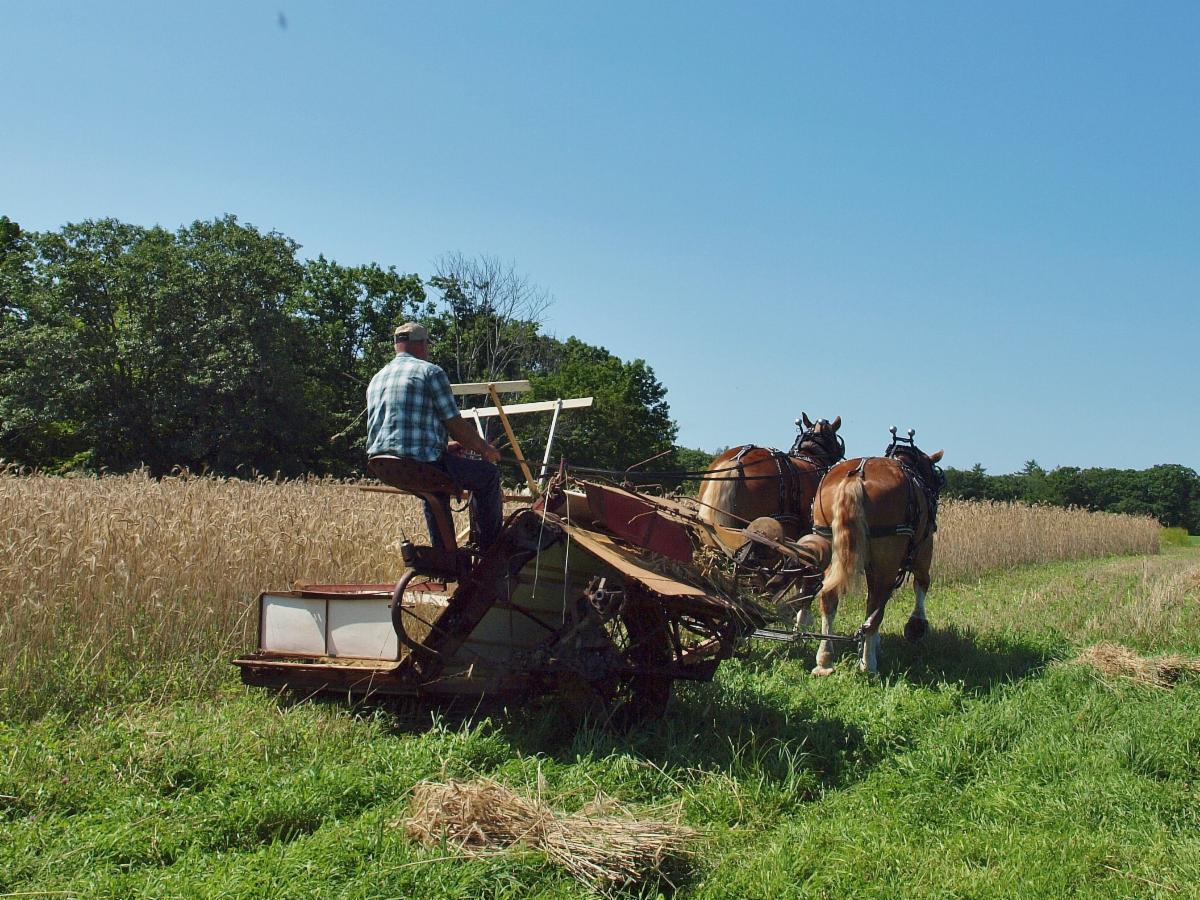
Photo Credits:
Photosby Steve Bjerklie.