
SHARE:

 |
At Sanborn Mills Farm, preserving the past and planning for the future go hand in hand. The Farmhand News from Sanborn Mills Farm September 2020 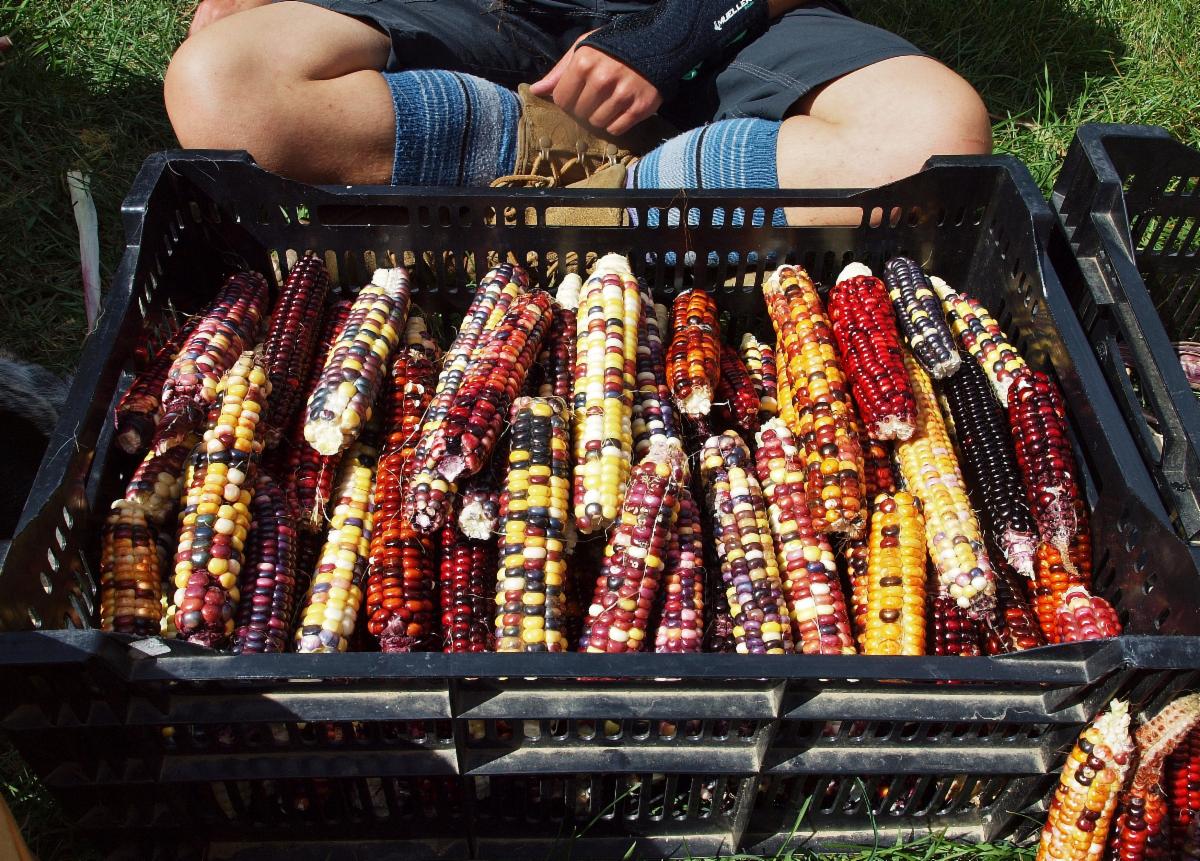 Volunteer Dominica Pechan settles in to sort through a crate of “Painted Mountain” corn, grown this year at Sanborn Mills Farm from seed saved in 2018. A beautiful corn often used for decorative purposes, Painted Mountain can also be ground into corn flour and meal for baking. Dye Days!
Last spring, farm manager Ray Ramsey and gardener Michelle Smith planted a dye garden at Sanborn Mills Farm with an eye toward incorporating natural plant dyes into the Farm’s textile programming. Self-sufficiency is an important goal at the Farm, and that means growing as many of the materials as possible that are used in workshops, including growing plants to make natural dyes. Plants raised this year in the dye garden include Japanese indigo (Persicaria tingtoria), marigolds (Tagetes), weld (Reseda luteola), and madder (Rubia tinctoria) — all plants that have been used for centuries to make traditional natural dyes. A few weeks ago, fiber arts instructor Sara Goodman and program director Molly Bolick led a staff harvest of flowers and leaves in the garden to make Sanborn Mills Farm’s first batches of traditional dyes.
Sara points out that almost every indigenous culture in the world developed techniques for making dyes from plants. Creating these processes must’ve involved a lot of trial and error. The bright green leaves of Japanese indigo, for example, which look a bit like sweet basil (Ocimum basilicum), give no hint they contain the elements to make a blue dye. After harvest, the fresh indigo leaves are soaked in tepid water for two to three hours, then the leaves are separated from the turquoise-tinted liquid. The liquid is alkalized and then oxygenated to activate the enzyme that activates the pigment that had been present in the leaves. When the pigment begins to flocculate (create small masses), the liquid is ready to strain. The pigment becomes a kind of pudding. Once the dye is made, fabric is dipped in the dye once, twice, or several times, again depending on the richness of the desired final color.
The dye garden is, like so much else at Sanborn Mills Farm, a team effort. Sara and Molly helped guide Ray and Michelle in creating the garden, and some of the plants were shipped to New Hampshire by Jay Rich, a dye artist Sara knows who is based in Omaha, Neb. Staff helped with the harvest and setting up tents and tables for Dye Days processing. Learning to make traditional plant-based dyes and dyeing fabric with traditional methods will be a featured educational offering at Sanborn Mills Farm when in-person programming resumes (in 2021, we hope). The Farm will have a new facility for dye classes, too. Under construction right now adjacent to the Sanborn Barn is the Grange, which will have a complete dye-making facility in the basement. 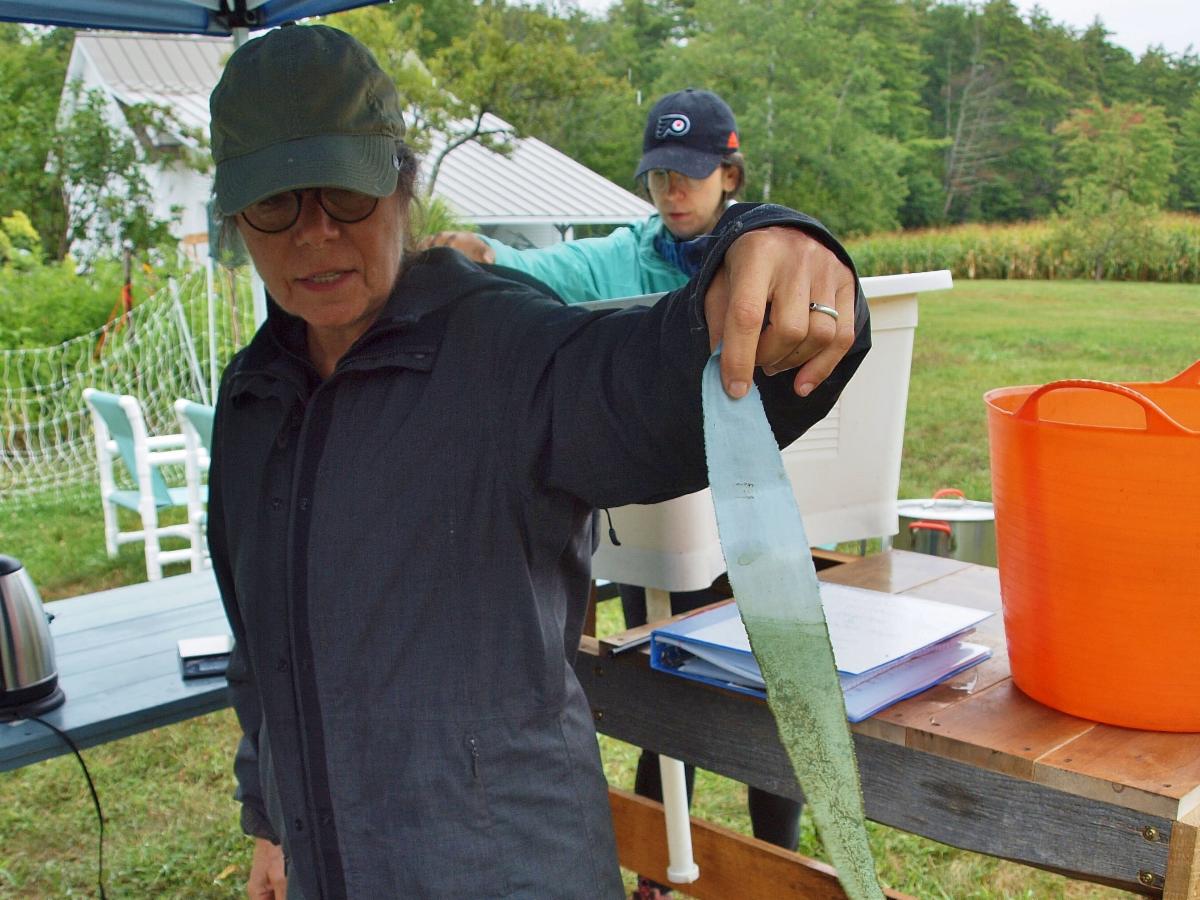 A strip of fabric after one dip in the dye. The greenish color changes to blue with exposure to air; the residue is washed off.
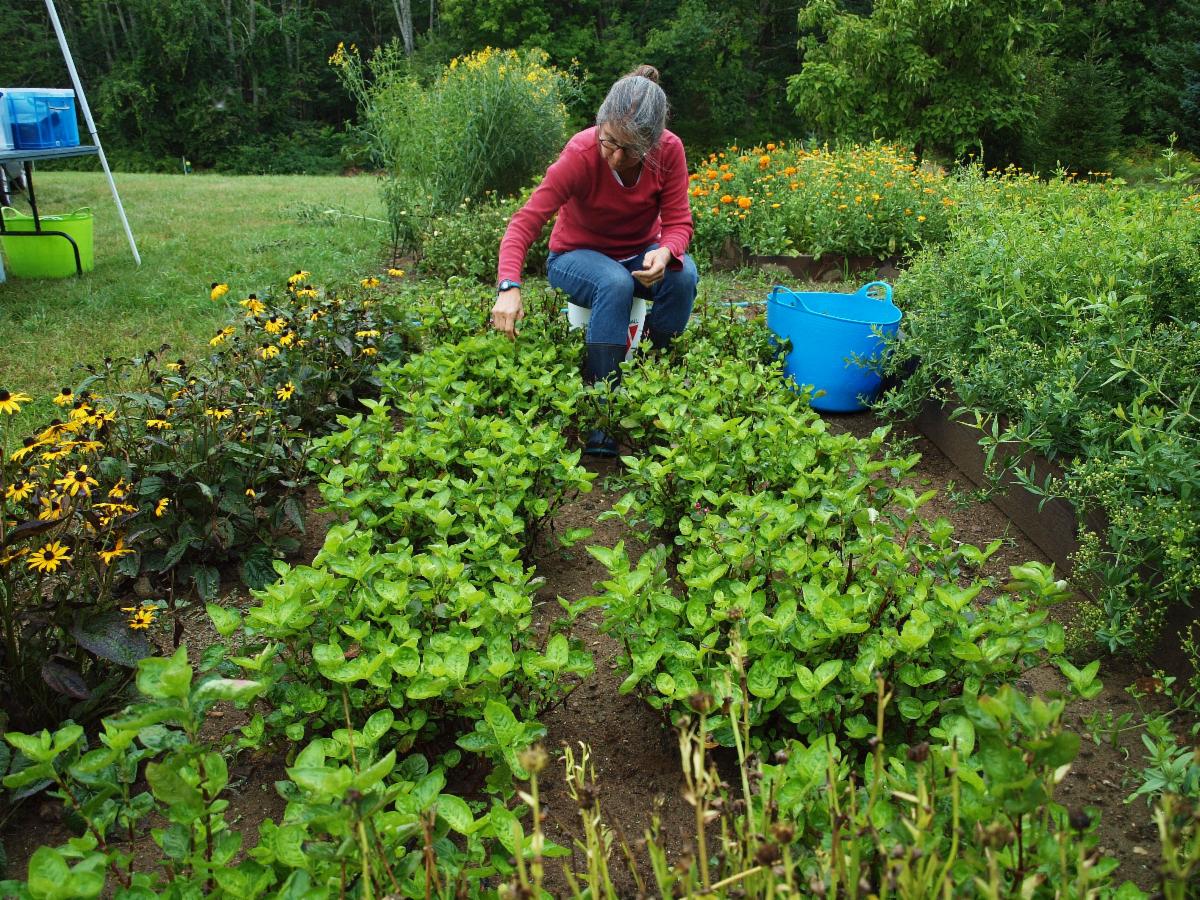
Sara Goodman harvests indigo leaves in the Dye Garden. 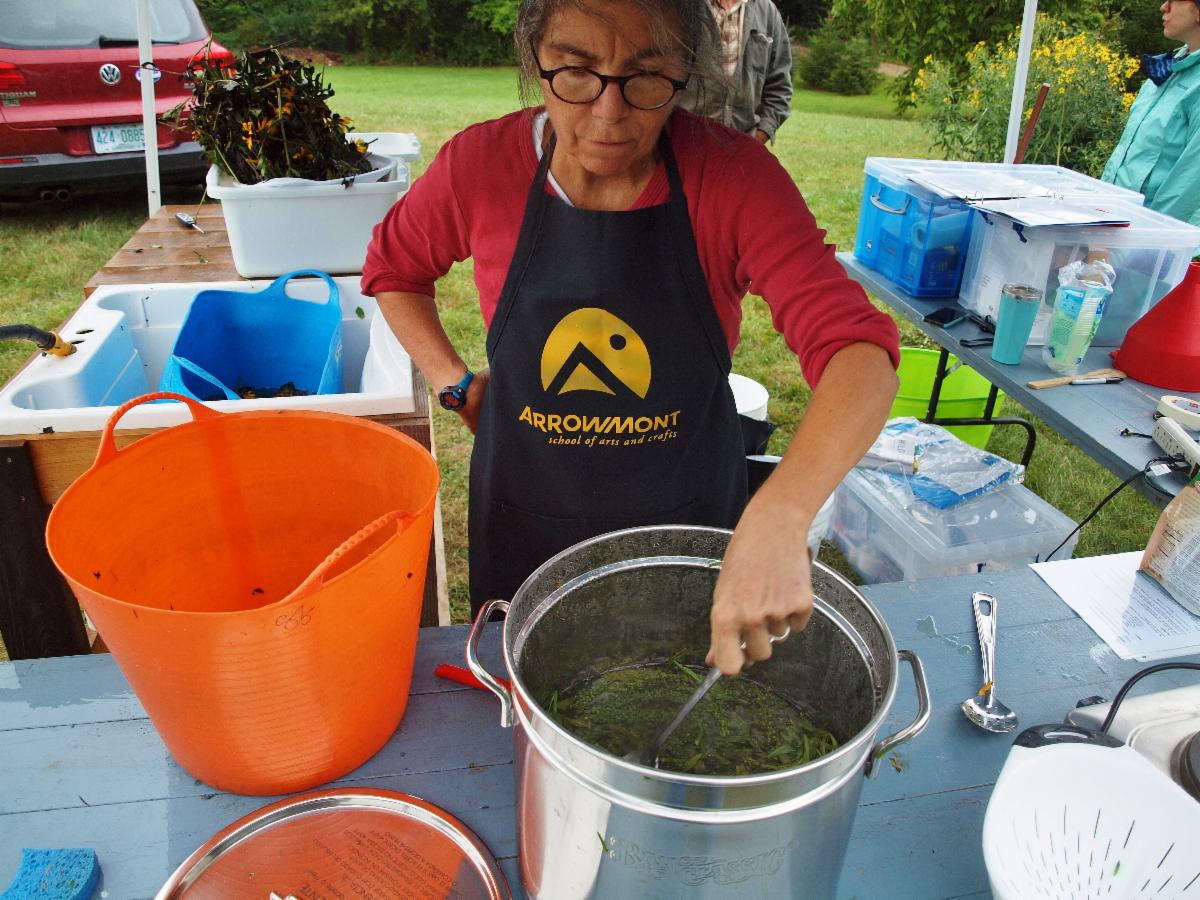
Sara stirs indigo leaves in water to extract the blue pigment embedded in each leaf.
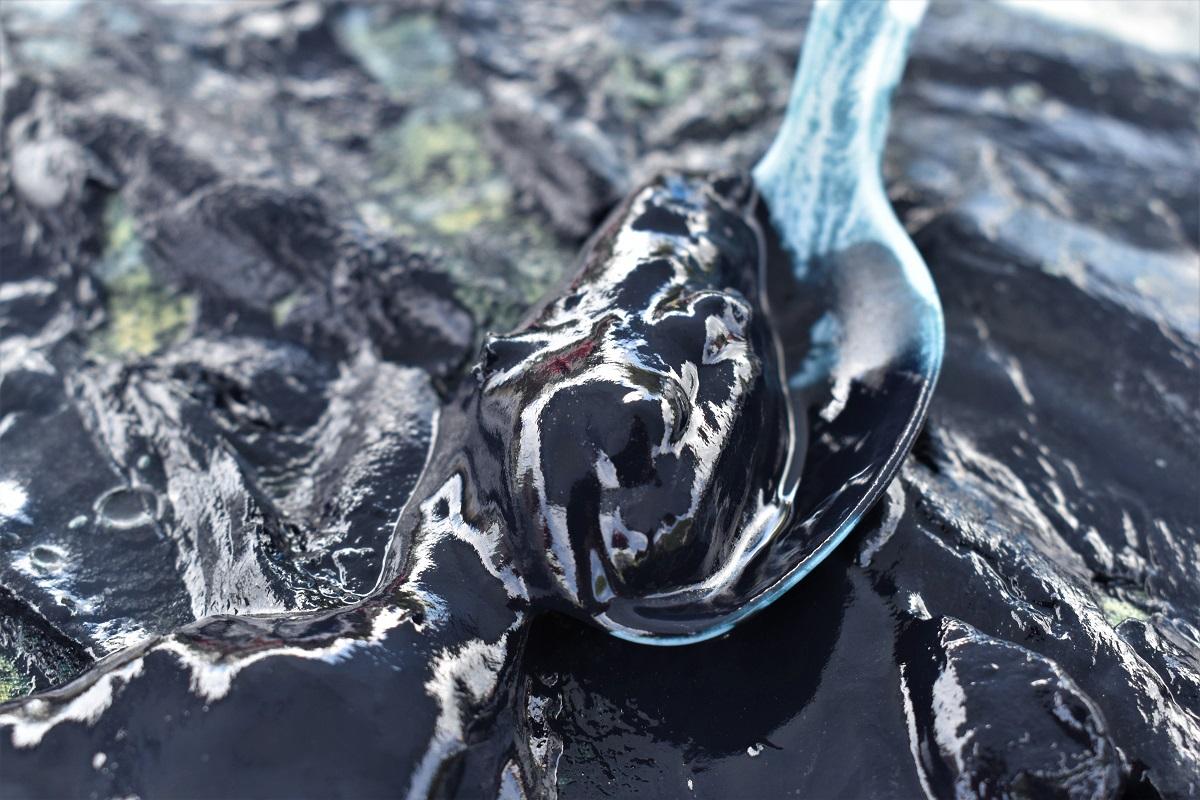
Indigo dye “pudding.”
Harvest Time Even as drought affected farming in much of New Hampshire, including at Sanborn Mills Farm, the Farm’s vegetable and flower gardens performed well across the summer. According to farm manager Ray Ramsey, a total 3,000 pounds of vegetables have been harvested so far, with some tomatoes and cabbages still waiting to be picked. The bounty included several kinds of squash, kale, spinach, cucumbers, peppers, root vegetables, tomatoes, cabbage, and much else.
Many of these vegetables were available to the public at the nearby Little Red Hen farm stand in Pittsfield through a partnership with Sanborn Mills Farm. 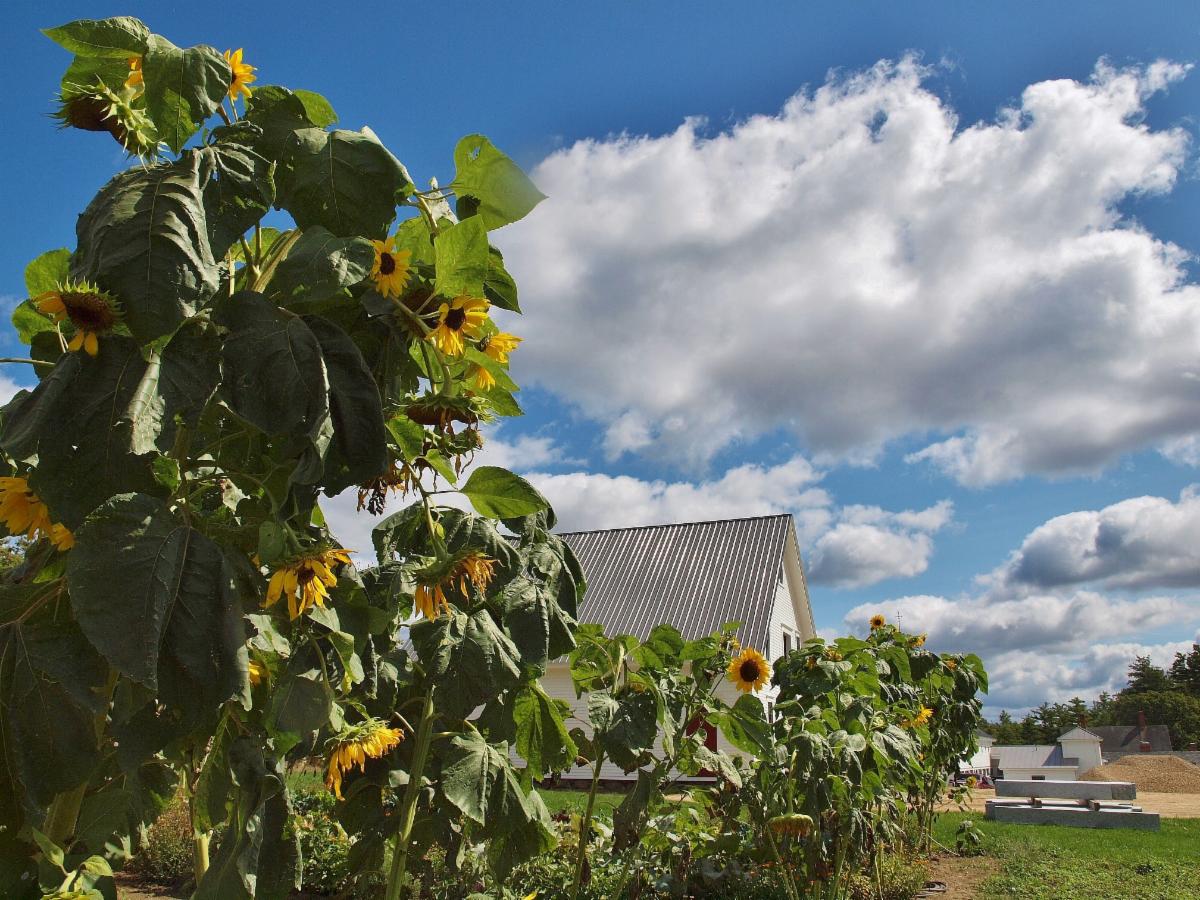 Sunflowers in the Teaching Garden.
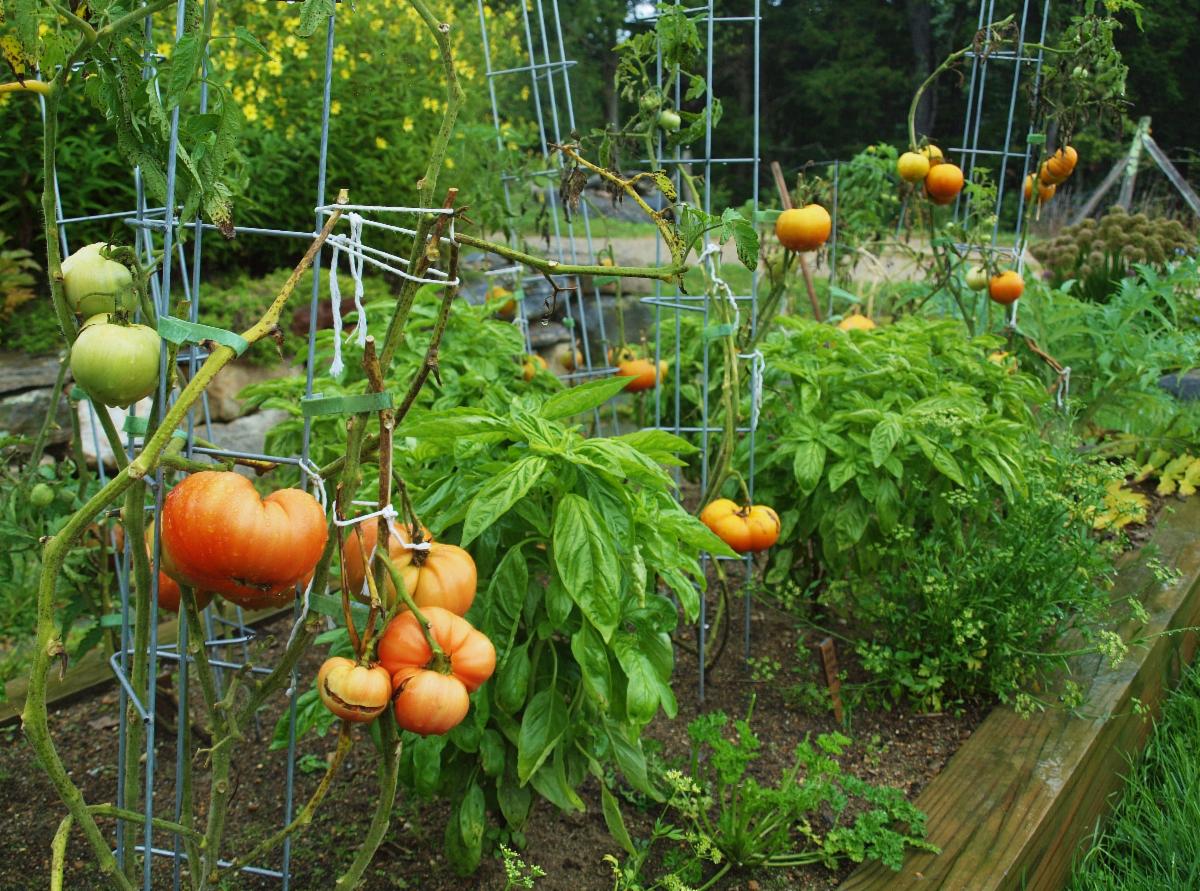
Tomatoes and basil. 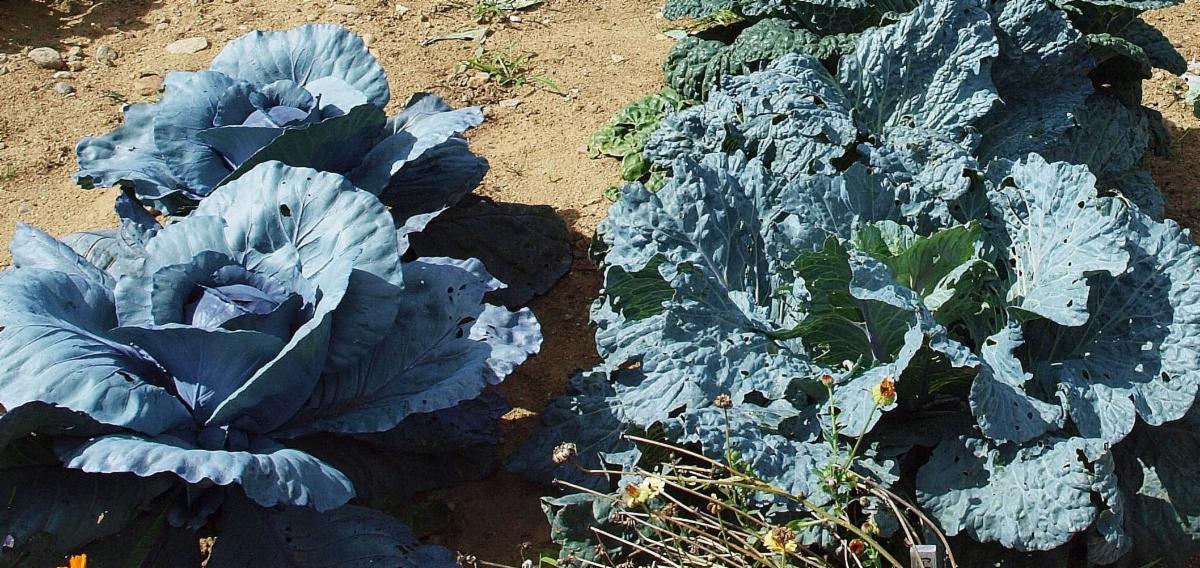
Red and green cabbage at the Merrill Farm on Upper Sanborn Mills Farm.
Help Us Plan Our Future Programming by Taking Our Online Survey Sanborn Mills Farm invites you to participate in an online survey regarding future programming at the Farm, including online programming. Please take a few minutes to let us know what you think — your thoughts are important to us as we develop programs for an eventual post-pandemic environment. Click here for the survey — and thanks!
Photo Credits Indigo “pudding” photo by Molly Bolick. All other photos by Steve Bjerklie.
Red and green cabbage at the Merrill Farm on Upper Sanborn Mills Farm.
Sanborn Mills Inc. | 603-435-7314 | info@sanbornmills.org | www.sanbornmills.org A traditional New Hampshire farm and nonprofit organization dedicated to sustainability, creativity, and preserving folklife skills and agricultural knowledge so that the best of the past can help shape our future.
Red and green cabbage at the Merrill Farm on Upper Sanborn Mills Farm.
STAY CONNECTED:    
Red and green cabbage at the Merrill Farm on Upper Sanborn Mills Farm.
|
|