SHARE:

 |
At Sanborn Mills Farm, preserving the past and planning for the future go hand in hand. The Farmhand News from Sanborn Mills Farm February-March 2020
This Month’s Featured Workshops
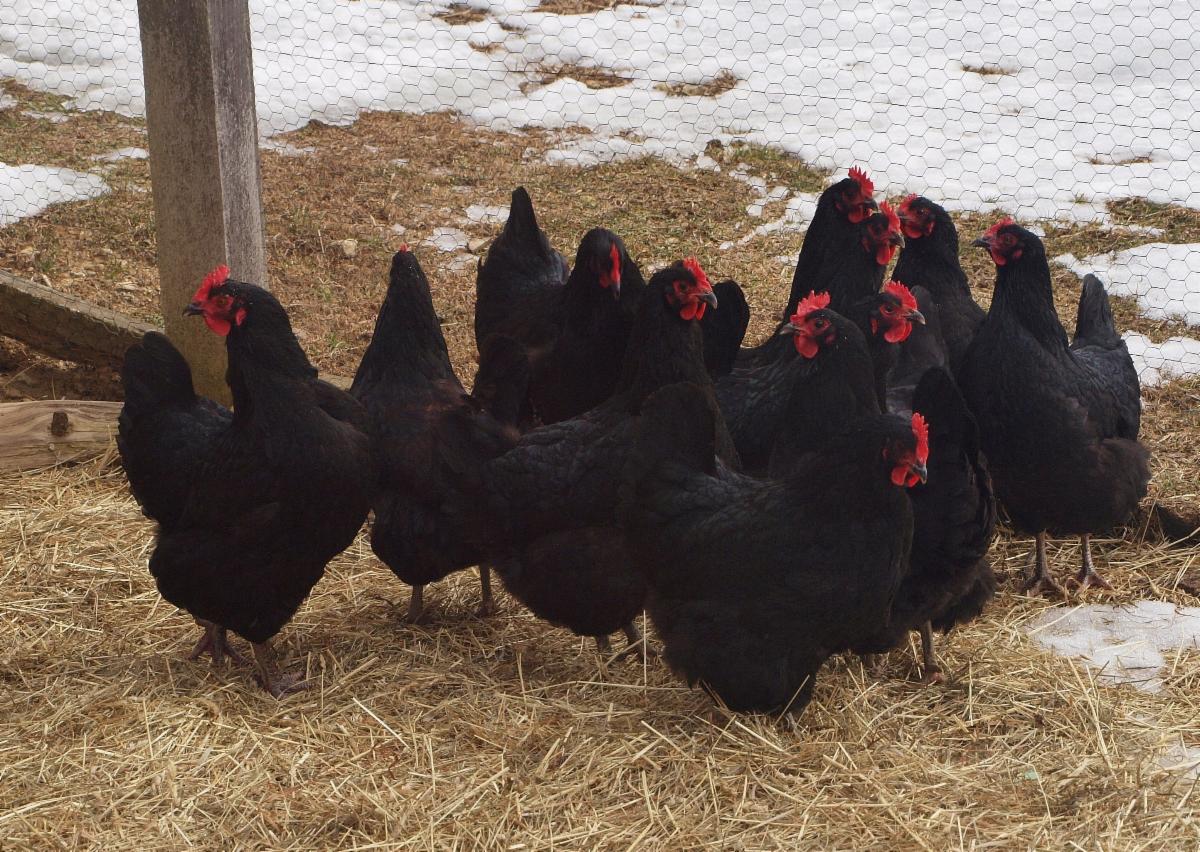
Program Manager Molly Bolick reminds friends of Sanborn Mills Farm that there’s space available in some upcoming spring Blacksmith workshops. Click on the links below to register:
Blacksmithing is one of our most popular educational educational programs. These classes help students master the skills of blacksmithing, including how to maintain a coal fire and basic metallurgy. In the Exploring Process and Product class, students learn the process of forge welding and apply welding technique to create advanced pieces. In Tool Making, students learn how to craft tools for blacksmithing, including tongs, forge poker, and flux spoon. The Beyond Basics class is for students wanting to improve their hammer technique and to learn more about drawing out, bending, slitting and drifting, and forge welding.
Instructor for these classes: Garry Kalajian
Seed Storage at Sanborn Mills Farm 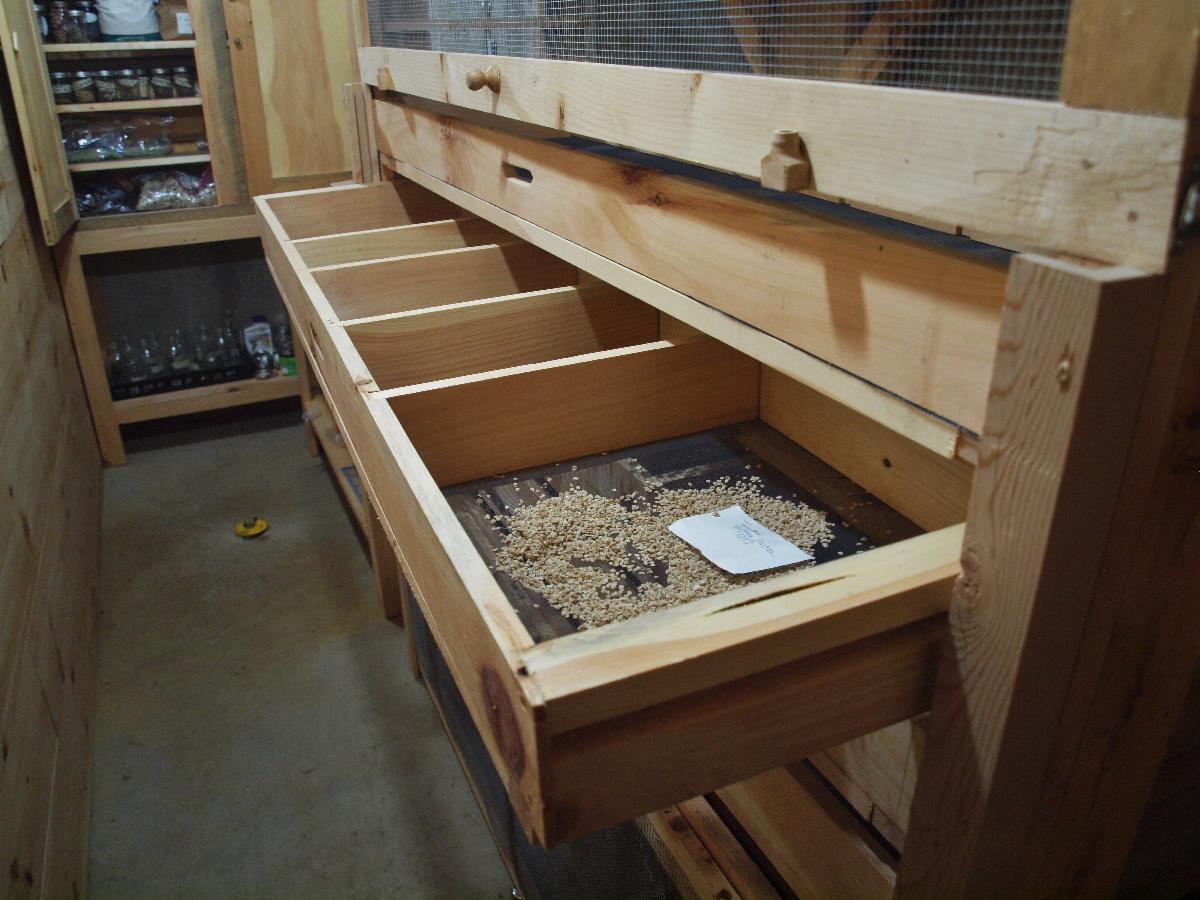
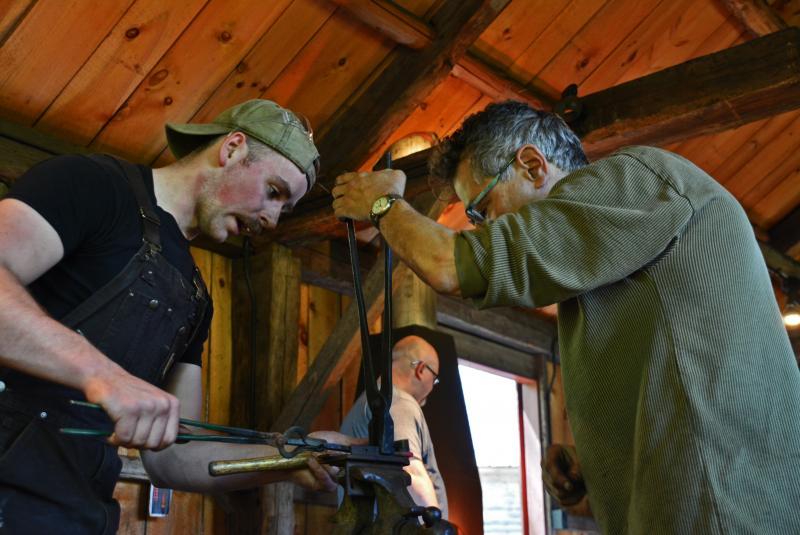
An elemental part of the farm-to-table ethos at the Farm is saving and storing our own seeds from our gardens and the farming operations. Through research, study, and more than a bit of trial-and-error experimentation, we are learning which plants, and which specific members of families of plants, grow best in particular locations in the vegetable and display gardens and out in the fields.
Beneath the Red House on the upper part of the Sanborn Mills Farm campus is our seed storage room, which was custom-built to keep a large variety of se eds under optimum storage conditions over winter (or, in some cases, several winters). The room includes screen-bottomed trays to keep humidity-sensitive seeds dry and cabinets for other seeds that are best stored in glass jars. Each fall, we collect and prepare our seeds for storage. It’s not always just a matter of removing seeds and putting them away, explains farm manager Ray Ramsey. Seeds from pulpy vegetables — tomatoes, for example, and peppers — must be fermented prior to storage and must be absolutely dry when stored. Other kinds of seeds are simpler to store: peas only need to be removed from their pods and dried before storage. “Good air circulation is important for storing seeds,” Ray says. “If the environment is properly controlled, you can save seeds a long time.” Indeed, archeological digs have found viable seeds that are tens of thousands of years old. We don’t plan to keep seeds at Sanborn Mills Farm that long (on the other hand, why not?), but our seed storage room certainly provides us with flexibility and the opportunity to grow our most successful crops year after year. 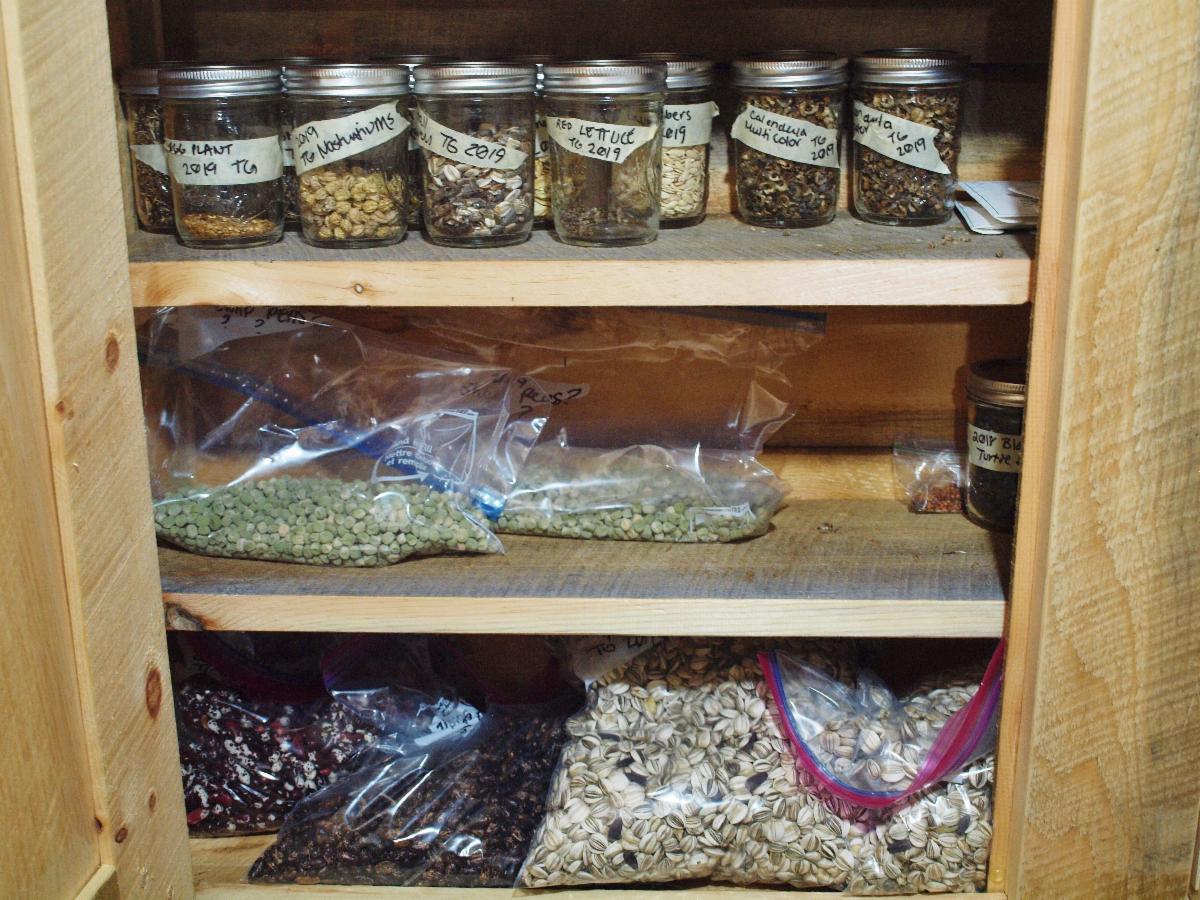
These jars and bags include stored nasturtium, lettuce, egg plant, and sunflower seeds among other seed kinds.
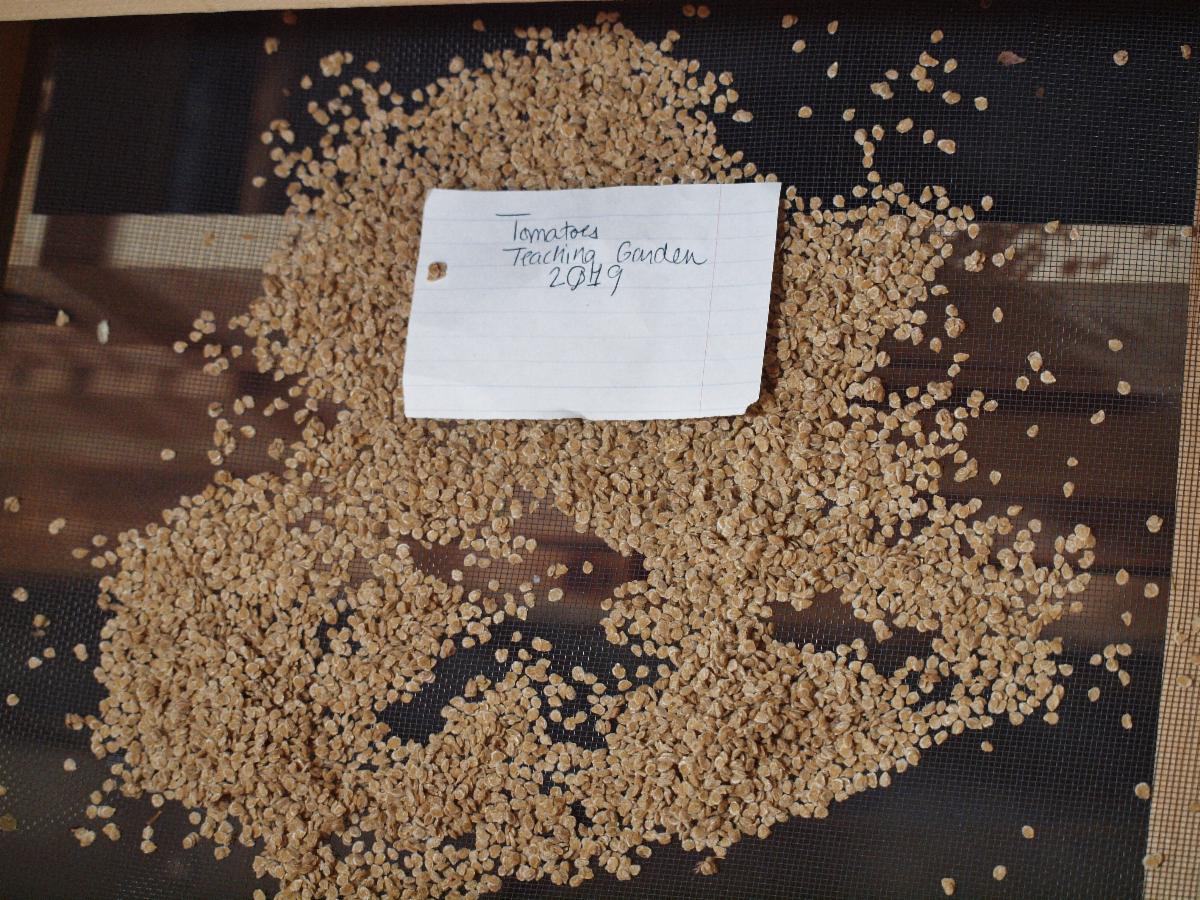
After fermenting and drying, tomato seeds are stored in screen-bottomed trays to promote air circulation and protect the seeds from humidity.
Let’s Build a Greenhouse!
Friends and neighbors of Sanborn Mills Farm often ask us how they can become involved in what we do. Participating in our wide variety of classes and workshops is certainly one way. But how would you like your name added to something a bit more permanent? An opportunity too good to turn down has been presented to Sanborn Mills Farm by a generous friend of the Farm. A classic hundred-year-old Lord & Burnham Greenhouse (18 x 32 with curved glass eaves and rack and pinion vent openers) was delivered in pieces to the Farm a year ago. But the budget and schedule for the renovation of the Sanborn Barn complex — including the studio spaces in the big barn, the new dining room and kitchen in the barn cellar, the new carriage barn meeting and weaving space we call Fifield Hall, and the seven bedrooms and three bathrooms above it — is tight and has resulted in overruns largely caused by the unforeseen expense of a fire suppression system that serves 17,000 square feet of space. Therefore we, for the first time, are asking for help in the form of a Gofundme campaign to raise the money needed to finish the Greenhouse now that its foundation is ready, water and electricity have been piped to the site, and the parts are ready to re-assemble. Please join us in helping the Farm move towards its goal of increased sustainability. The Greenhouse will provide shelter and warmth for starting plants during the cold months, extending our New England growing season. The building has been sited carefully to take advantage of winter sunlight and solar power. So much so that we can look forward to fresh vegetables -carrots, spinach, lettuce, herbs, broccoli, etc. — in mid-winter. Your contribution will be used to propagate seedlings and vegetables for farm’s many gardens, and will be an important link in our full circle farm-to-table agriculture. The Greenhouse will be sited at the top of our ornamental gardens, a focal point as you enter farm which will add to the historic aesthetic we have long striven to restore and preserve. By contributing to our Greenhouse Fund, you become part of the Sanborn Mills Farm community of neighbors, friends, and staff dedicated to our mission of preserving and teaching traditional New England craft and farming skills through hands-on education. Donors of $100 or more will be recognized on a plaque at the greenhouse for family friends and all who visit the Farm to see and admire.
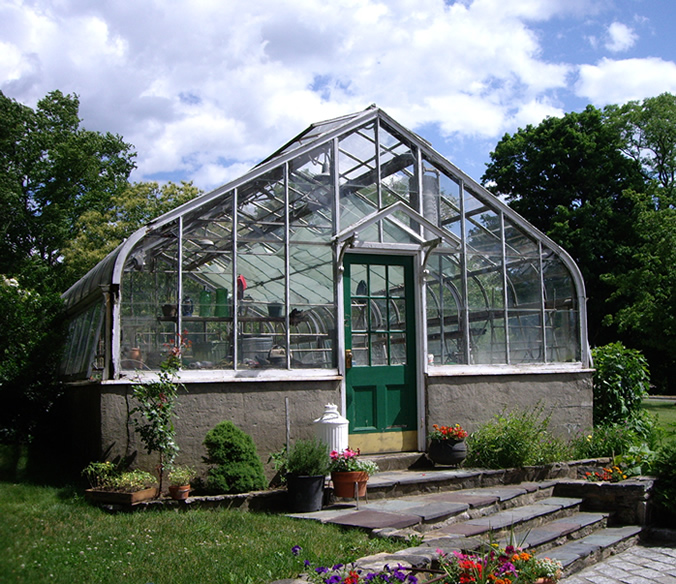
The Lord & Burnham Greenhouse at Sanborn Mills Farm will look much like this greenhouse, except the facing will be brick.
Photo Credits Blacksmithing photo by Lynn Martin. Greenhouse photo courtesy Lord & Burnham. All other photos by Steve Bjerklie.
Sanborn Mills Inc. | 603-435-7314 |
A traditional New Hampshire farm and nonprofit organization dedicated to sustainability, creativity, and preserving folklife skills and agricultural knowledge so that the best of the past can help shape our future.
STAY CONNECTED: 


|
|