
SHARE:

 |
At Sanborn Mills Farm, preserving the past and planning for the future go hand in hand. The Farmhand News from Sanborn Mills Farm
September
This Month’s Featured Workshop
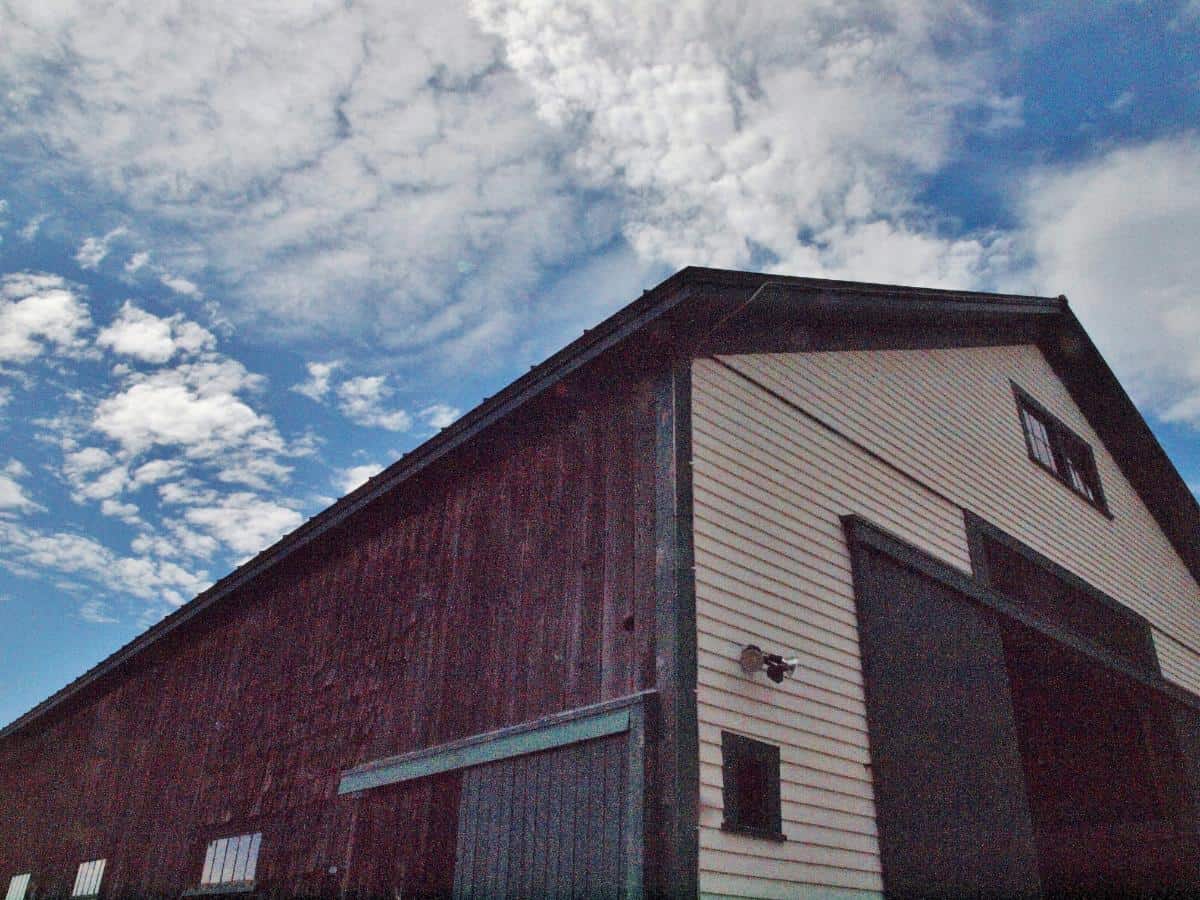
Program Manager Molly Bolick reminds friends of Sanborn Mills Farm that there’s space available in a few Fall workshops, including September’s featured workshop:
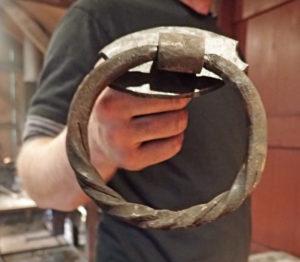
This three-day workshop focuses on handmade hardware for doors and cabinets. Like all our blacksmithing workshops, this one will begin with a discussion about how to maintain a good coal fire. There will also be a discussion of basic metallurgy and its application in door hardware. Instructor: Garry Kalajian Click on the link above for more information and to register.
100-Year-Old Thresher Put to Work 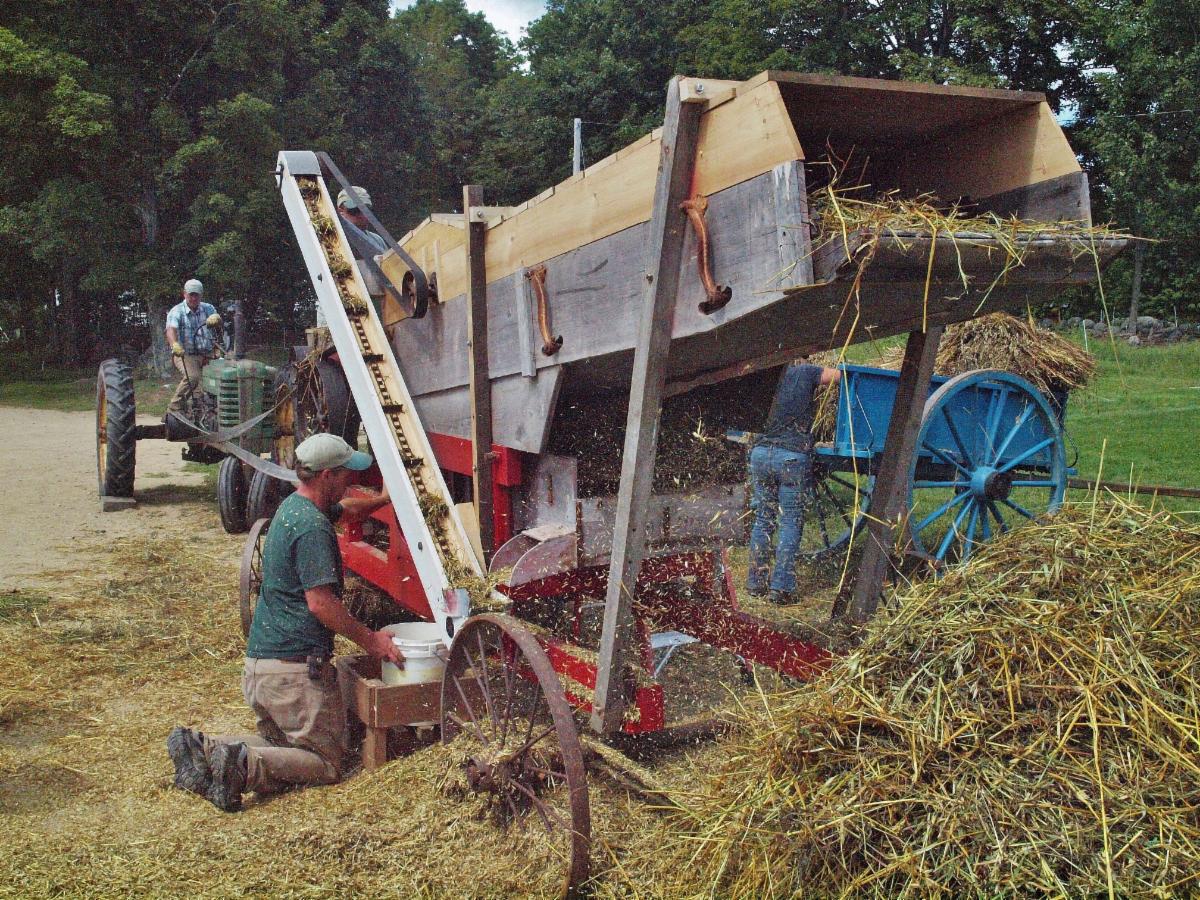
On a bright sunny afternoon in late August, Farm Manager Ray Ramsey and members of Sanborn Mills Farm’s staff — Tyler Allen, Brian Clough, and Jennifer Merrill — hooked up a 1948 John Deere tractor to the 1919 Model No. 26 Sterling Thresher that Ray had recently restored. The old machine shook and shuddered,
pulleys turned, levers wiggled, conveyors climbed, dust from oat stalks flew — and in a few minutes threshed oats poured out of a spout into a bucket held by Tyler. Oats like this would, on a traditional farm such as Sanborn, eventually be ground into flour or livestock feed. This type of threshing machine, which was donated to Sanborn Mills Farm by the New Hampshire Farm Museum in Milton, N.H., was once common in New England; the machine removes wheat berries from wheat stalks and oat kernels from oat stalks. Such threshers revolutionized grain farming in the United States: they saved farmers hours, days, even weeks of laborious, back-breaking hand-threshing. The modern combine, which is more efficient and can harvest and thresh while moving through a field, eventually pushed out old-style threshers like the Model 26, although threshers continued to be used in New England long after combines took over on large western wheat farms. The Model 26 was designed to be pulled into place by draft animals and run, via belt pulley, from a small power source called a “one lunger” or “hit and miss” engine, which was an early internal-combustion-type engine. These engines weren’t powerful — horsepower was usually in the single digits — but they got the job done and didn’t consume a lot of fuel, which was an important consideration for rural farmers. By comparison, the 1948 John Deere tractor was almost too powerful for the Model 26, and as Brian took sheaves of oats from Jennifer and fed them into the thresher, Ray had to constantly adjust the revolutions from the Deere’s flat belt pulley. The next step for the oats will be grinding in the Farm’s grist mill, managed by Brian. Eventually, oats like this as well as Farm-grown wheat will be threshed and then ground into flour for use in the Farm’s kitchen. 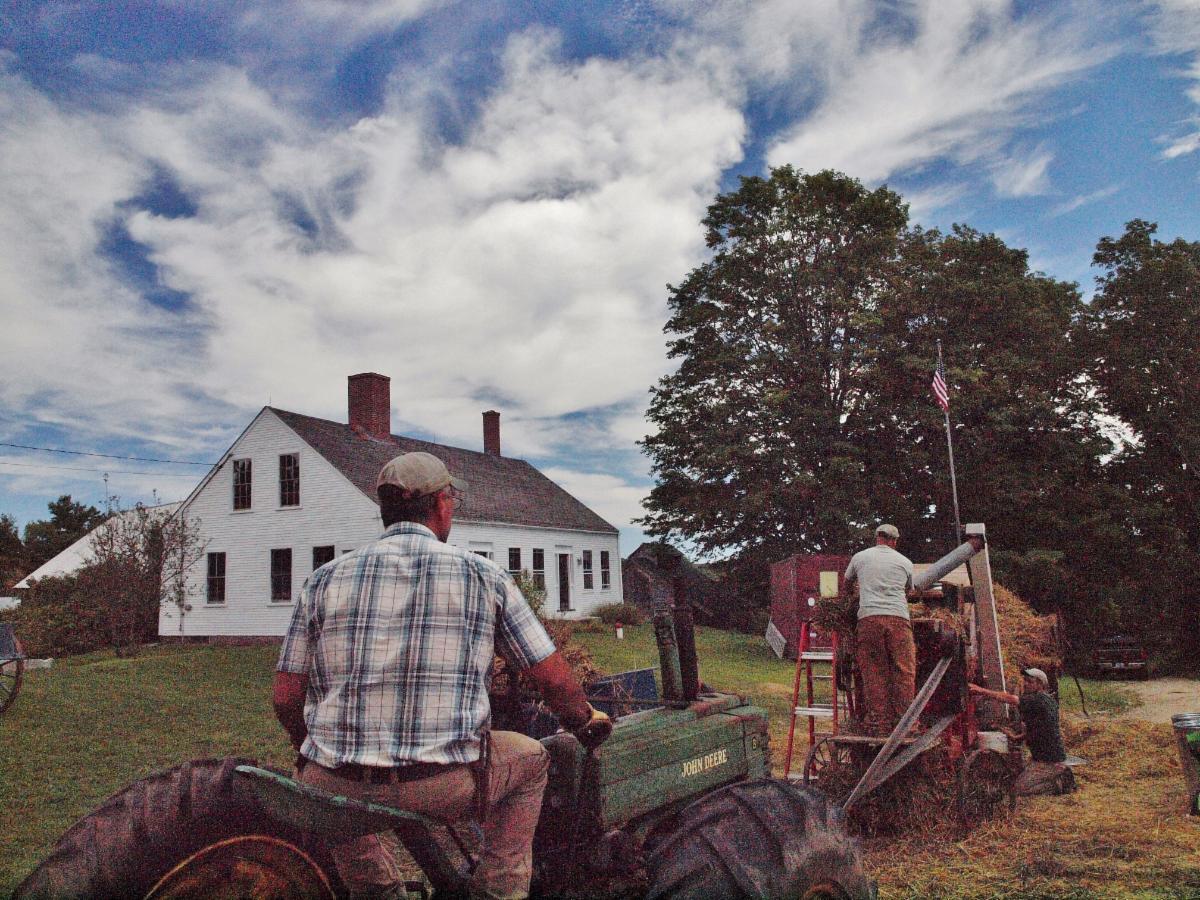
Ray carefully controls the speed of the Deere tractor’s power take-off to keep the RPMs of the belt pulley within the Model 26 Thresher’s tolerance.
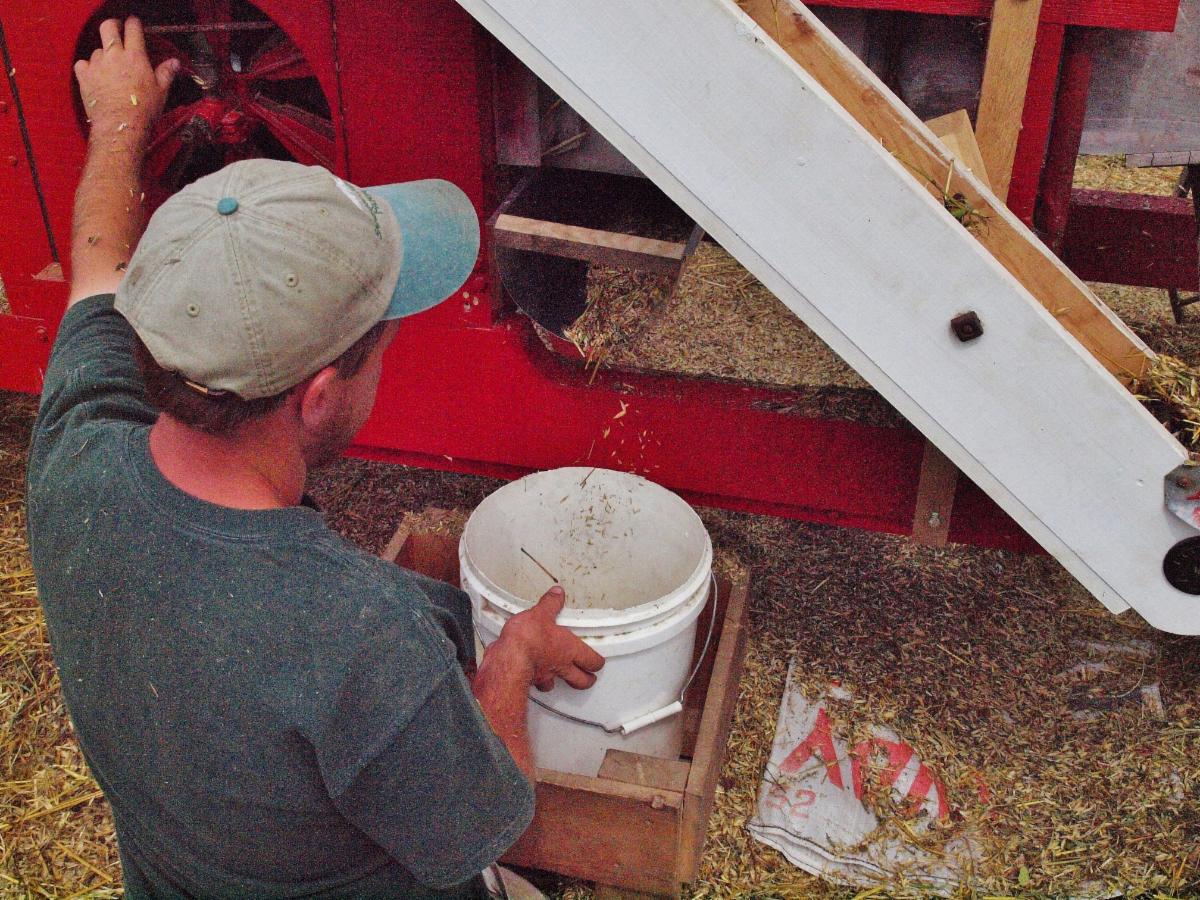
Tyler Allen captures the result of the thresher’s work: threshed oats.
Space Available in These Upcoming Workshops
Space is still available in several upcoming late Summer and Fall workshops, including:
Click on any of the workshop titles for more information and to register.
Photo Credits Door knocker photo by Lynn Graton Martin. All other photos by Steve Bjerklie.
Sanborn Mills Inc. | 603-435-7314 |
A traditional New Hampshire farm and nonprofit organization dedicated to sustainability, creativity, and preserving folklife skills and agricultural knowledge so that the best of the past can help shape our future.
STAY CONNECTED: 


|
|