
SHARE:

 |
At Sanborn Mills Farm, preserving the past and planning for the future go hand in hand!
March 2018 eNews
Maple March . . .
The end of March signals the wrap up of maple season for most producers in New Hampshire. The season typically starts in February when temperatures rise above freezing during the day and go back below freezing at night. The starch that maple trees store during winter months gets converted to sugar and dissolves in the tree sap. During the day the sap rises to nurture the limbs and new leaf growth. Boiling the sap down evaporates most of the water, leaving behind the syrup. Maple syrup was first collected by Native Americans. Early European settlers adopted the tradition and gradually refined production methods. Improvements in the 1970s further refined syrup processing and more innovations are being developed all the time.
Maple producers collect the sap by drilling small holes and “tapping” into the trees. These days, many sugar producers use plastic lines connected from tree to tree, that drain into a larger collection tank.
At Sanborn Mills Farm, we partner with Marty and Anne Boisvert of Journey’s End Maple Farm to get the most out of our maple trees – also referred to as a “sugar bush.” Marty reports that he has 717 taps at Sanborn Mills Farm. Though the tallies are not in yet for the 2018 season, last year he collected 18,000 gallons of sap from our trees that rendered down to around 450 gallons of syrup. If you are doing your math along with Marty, it takes an average of 40 gallons of sap to produce one gallon of delicious maple syrup!
Marty utilizes reverse osmosis equipment that runs the sap through two membranes under high pressure to “squeeze out” some of the water. This makes his production more efficient, allowing him to boil 10 gallons of concentrated sap to produce one gallon of syrup. Recent improvements to Marty and Anne’s efforts include a new high vacuum collection system that went into the sugar house at the end of Sanborn Road.
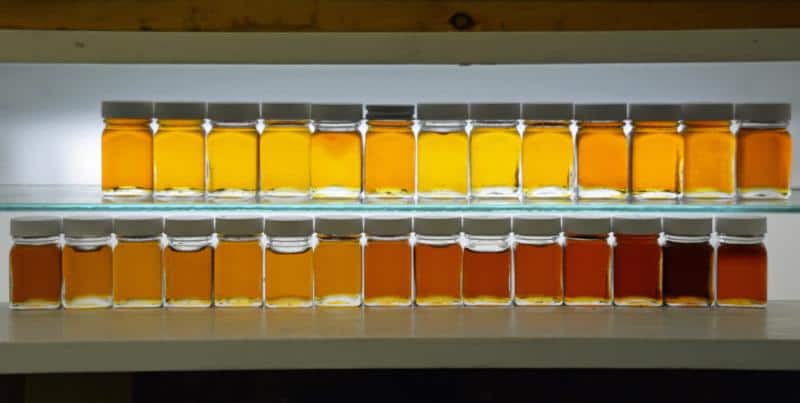
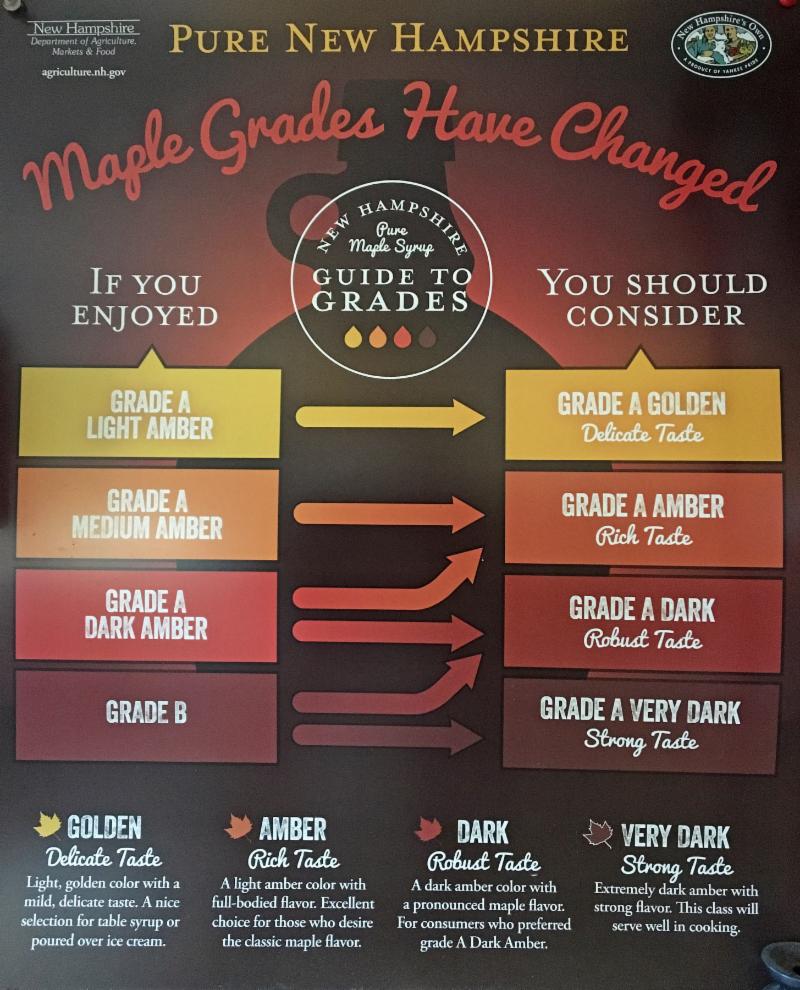
Our maple friends report that the new grading classificiation established by the International Maple Syrup Institute is falling into place. This system allows maple producers in Canada and across the United States to classify syrup consistently.
Previous grade A light, medium, dark, and grade B have been combined into Grade A, which is now divided into four color classes with added flavor descriptors intended to help consumers:
The conclusion of sugaring season is often celebrated with gatherings and special treats like “Sugar on Snow” (syrup boiled to taffy consistency and drizzled on snow), maple frappes, and maple frosted donuts.
Check out this YouTube video of the traditional song “Maple Sweet” sung by Dudley Laufman at the North Family Farm in Canterbury:
https://www.youtube.com/watch?v=KhG2He4ONFU
And here’s a recipe for Sugar on Snow: http://www.cooks.com/recipe/i79yz1nd/sugar-on-snow.html
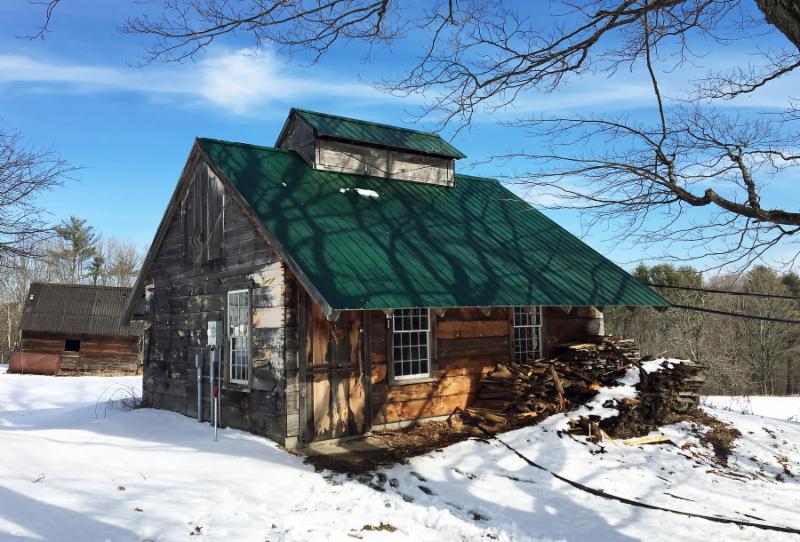
Sanborn Mills Farm’s sap house. 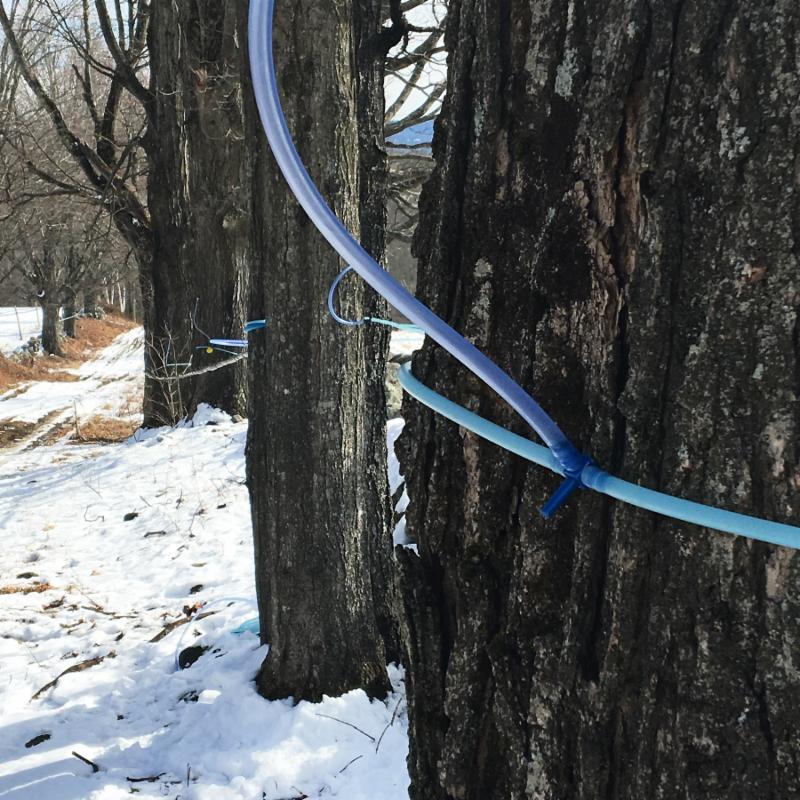
.
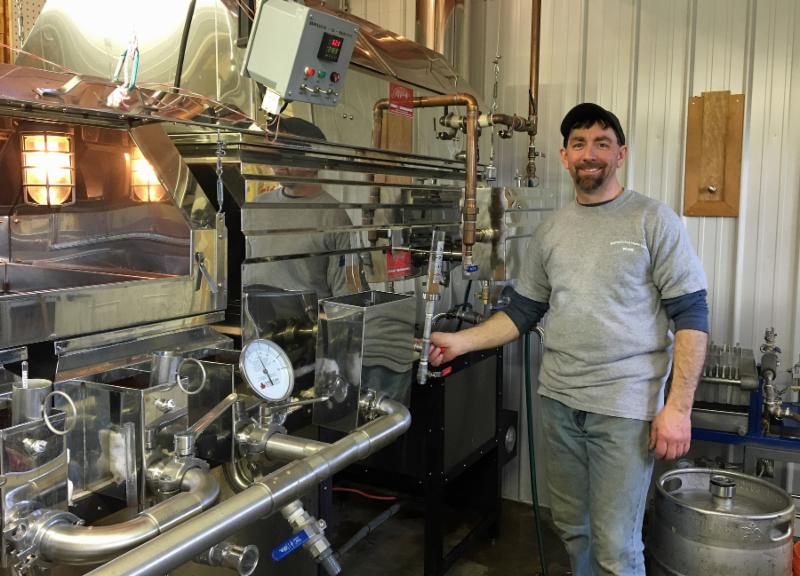
Marty at his evaporator. 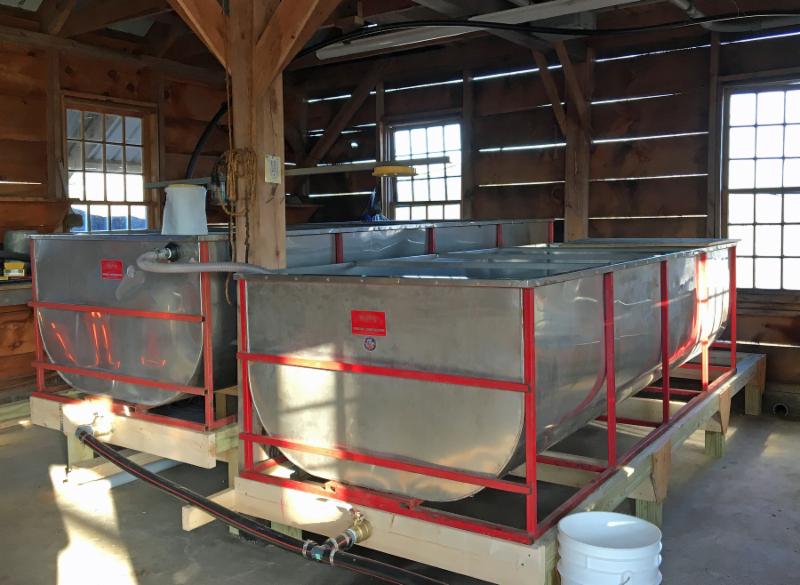
The new collection tanks.
Sugar on snow.
Winter work continues on farm equipment . . .
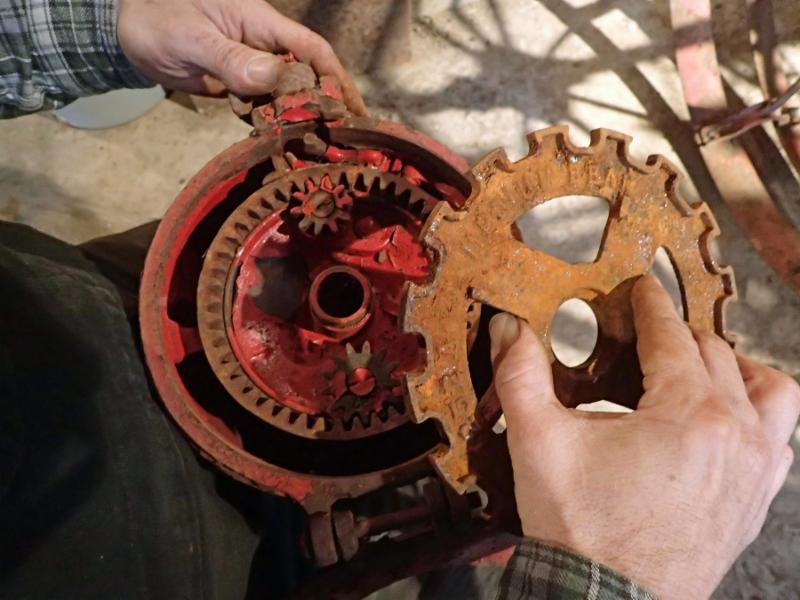
Farm Educator Ray Ramsey has been working on tuning up our early 1900s corn planter. The equipment has a wide range of functions that allow for spacing out the rows and the distance between planting the corn kernels.
We’ll keep you posted as he finishes up repairs and it goes out into the fields pulled by our draft horses.
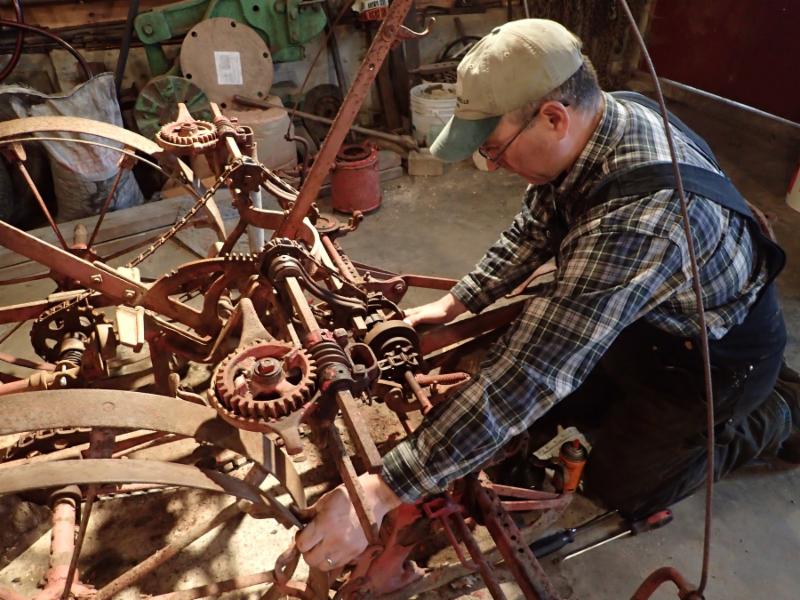
Ray working on the gearing for the corn planter.
What’s new at the Grist Mill?
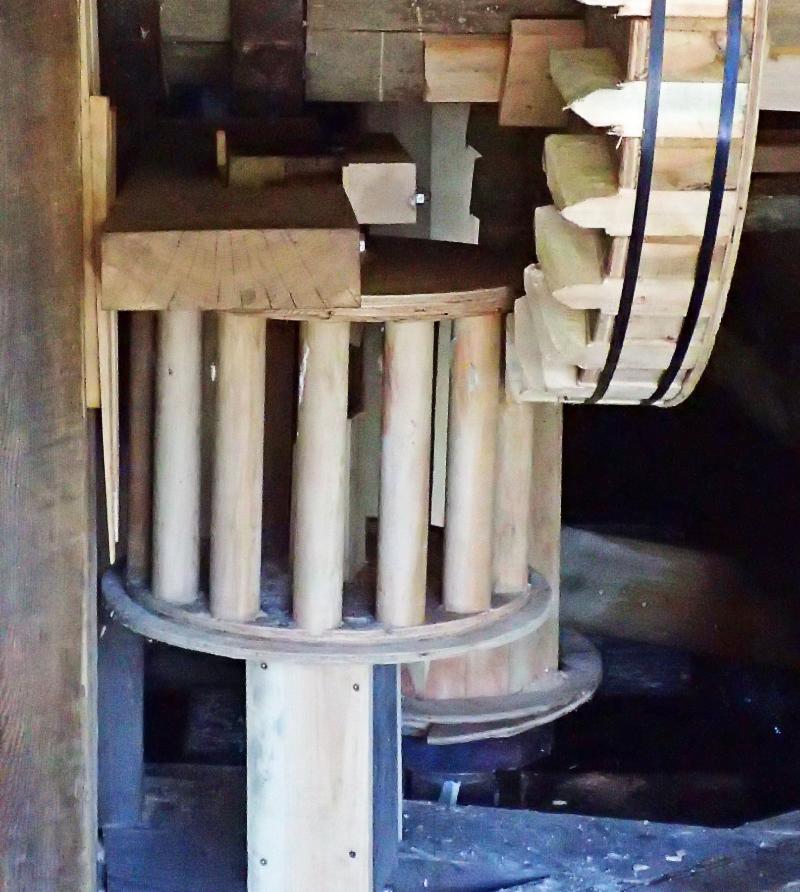
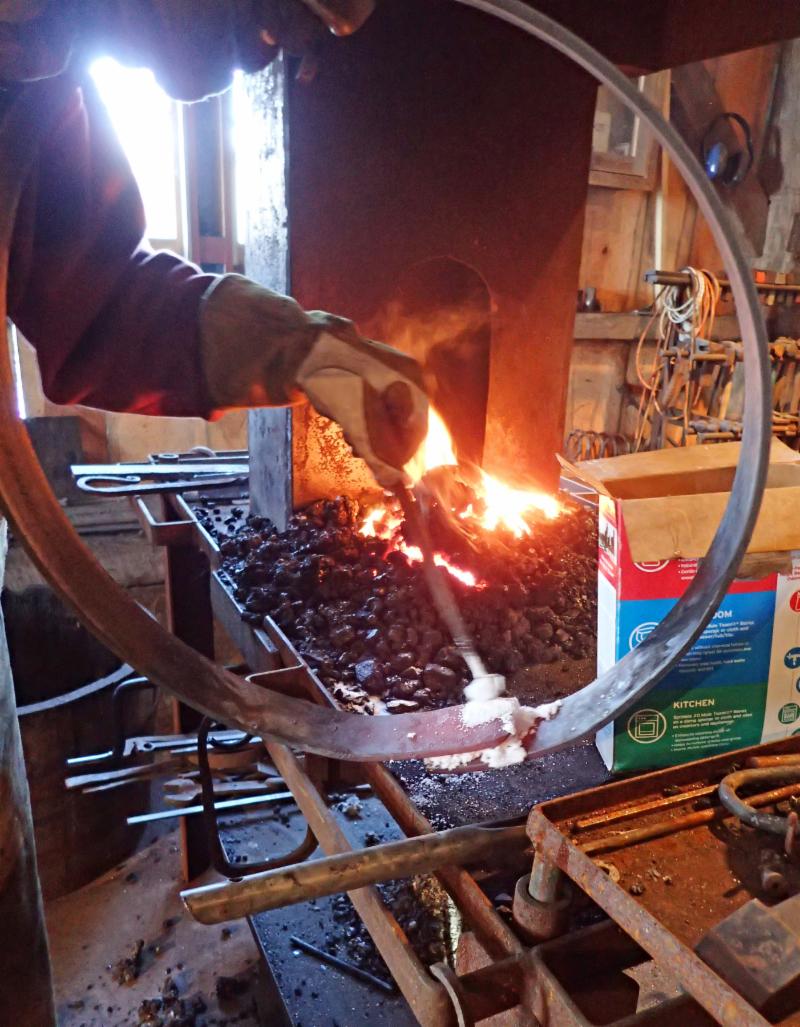
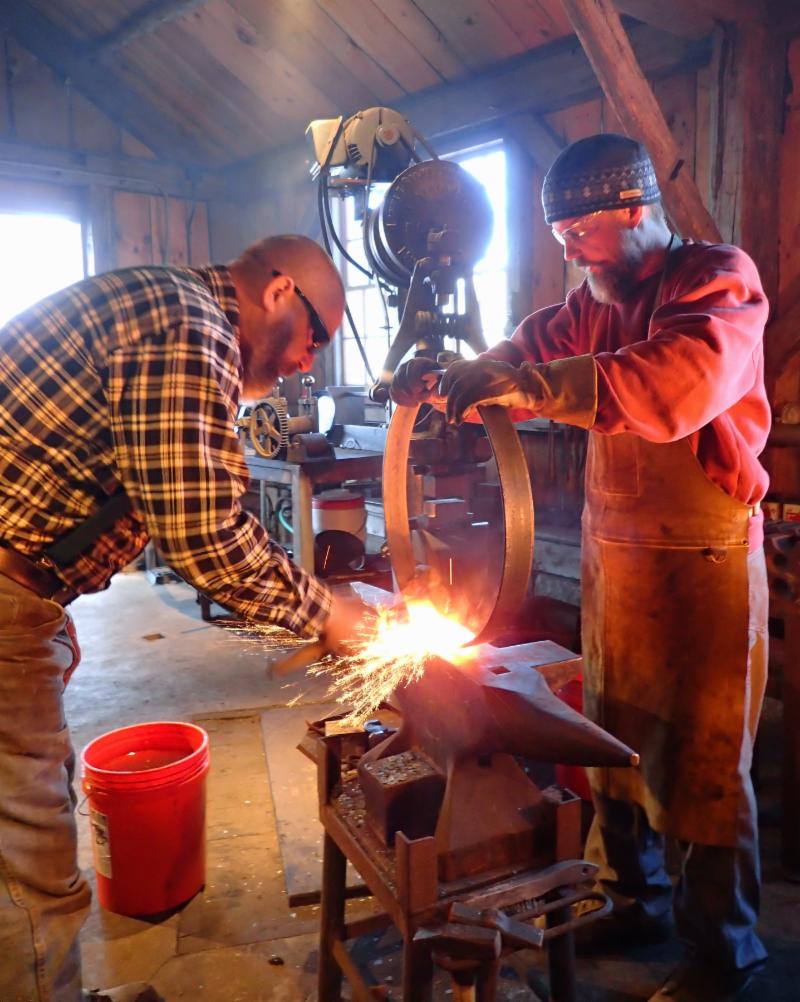
Millwright Brian Clough has been spending time with master blacksmith Joel Tripp of Saco, Maine.They’ve been working on a permanent lantern or “wallower” gear that will run the cob crusher for the grist mill.
The lantern gear receives the teeth of the “face” gear. The wooden disc that holds the vertical rounds of the gear needs to be encased in a sturdy metal band to keep the rounds from tearing out when they are under the intense pressure exerted when the gear is fully engaged. Check out the process of making the band. It involves tapering the two ends of a long piece of steel, bending it with a tire bender to fit the circular wooden piece and then forge welding the metal band to make a permanent bond. Joel is teaching three workshops for us this summer. One on garden tools, one on making a camp frying pan and open fire trivet and another on woodworking tools. For more infomation on Joel, visit his website at https://www.tripphammer.com/
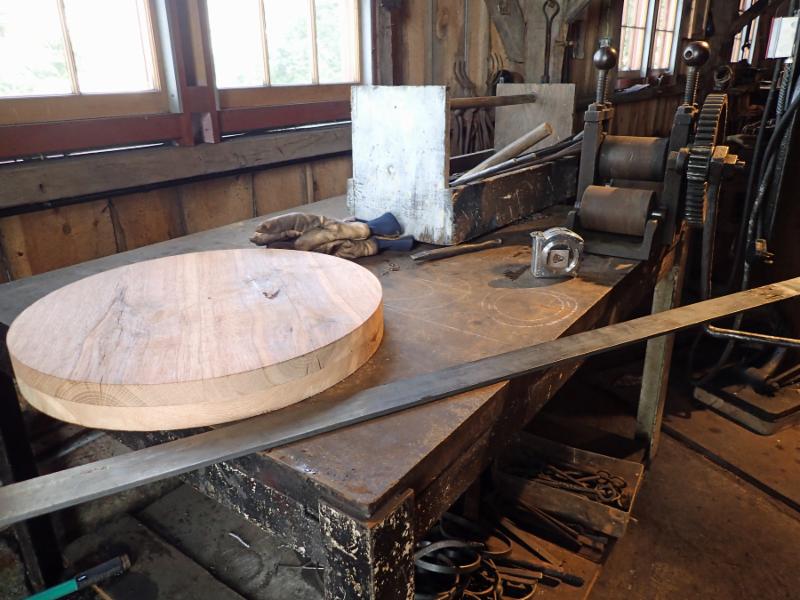
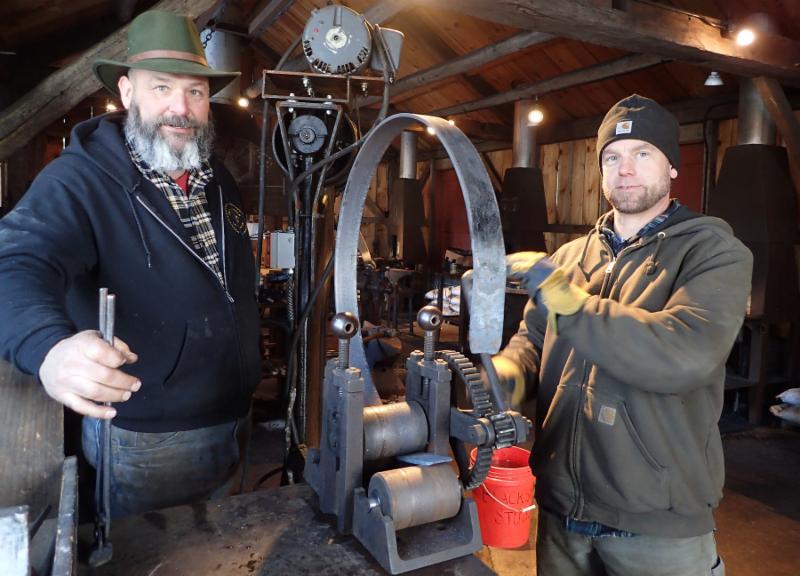
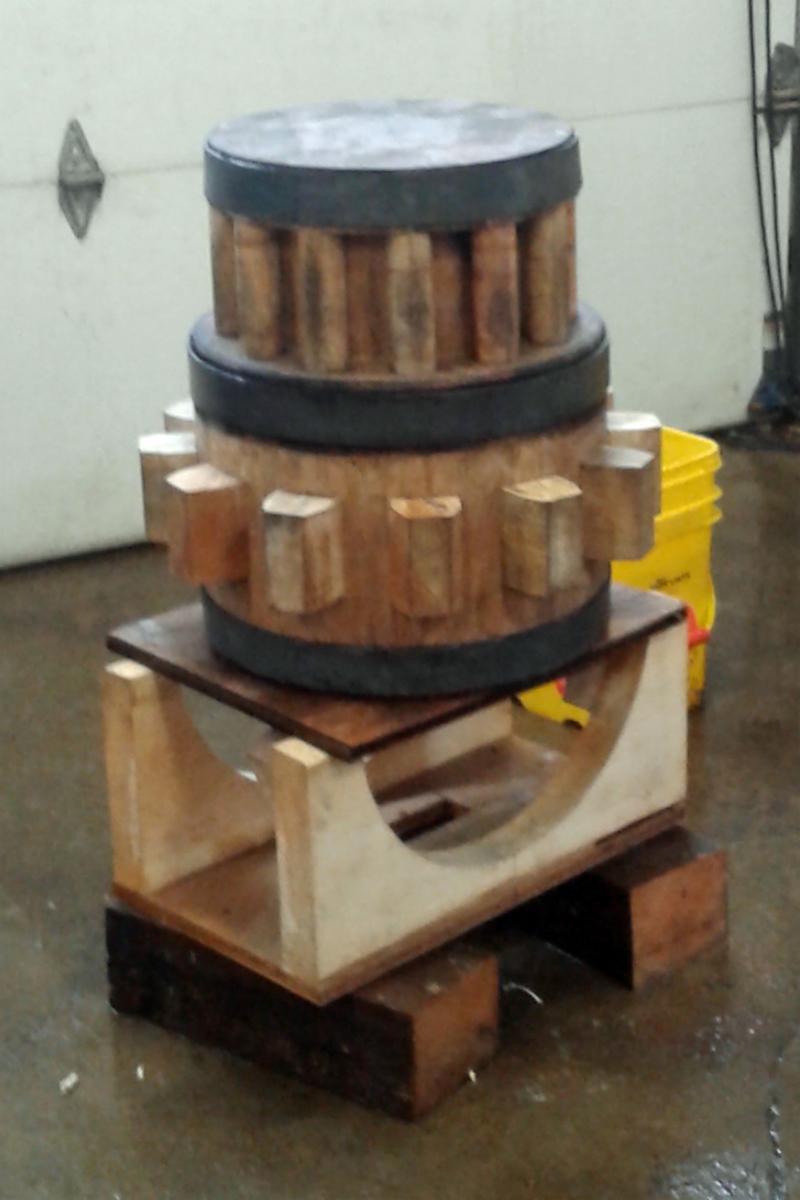
Completed gear for the grist mill.
Private training for working with oxen . . .
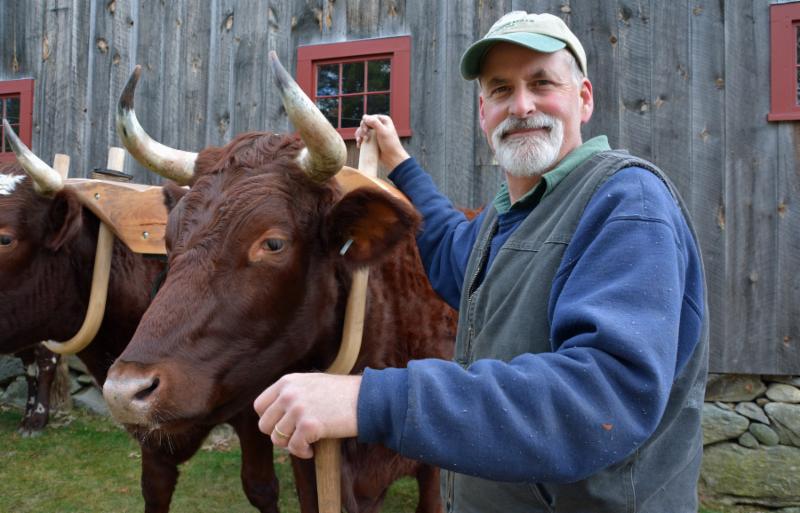
Contact our Farm Manager Tim Huppe for more information on timing and costs:
How to visit the farm . . .
Though we are not open for visitors on a daily basis, group tours can be scheduled from spring to fall.
The best time to see the farm is during the annual
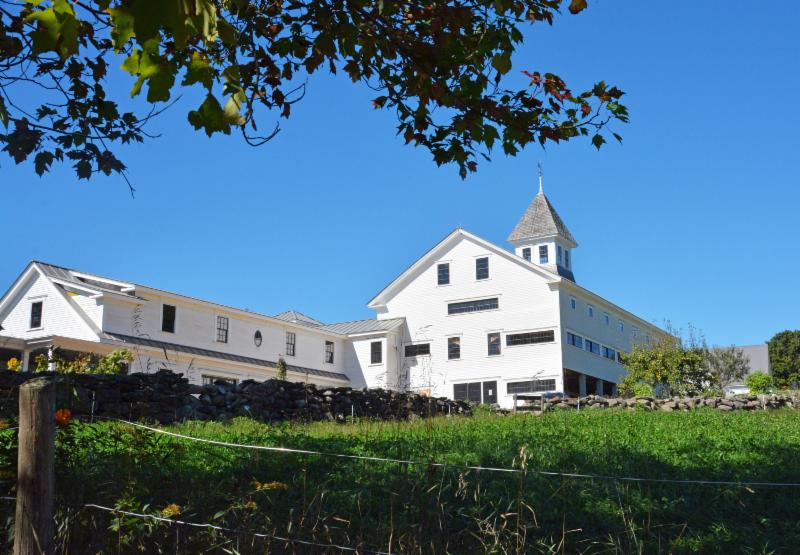
Image Credits:
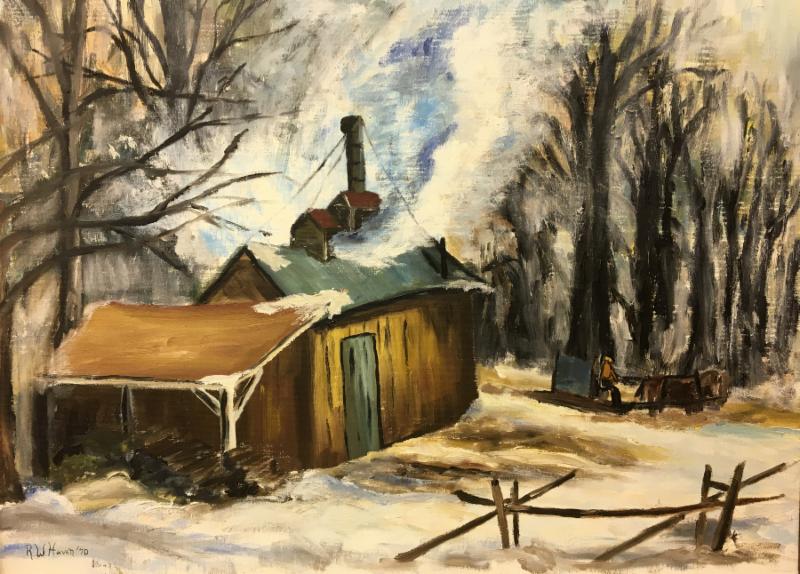
Sugar on Snow photo courtesy of Photo of completed gear for the grist mill by Brian Clough. All other photos by Lynn Martin Graton. Painting of Sugar House to the right by R.W. Haven courtesy of Marty & Anne Boisvert, 1970. YouTube video of “Maple Sweet” at North Family Farm Canterbury, New Hampshire copyright NH State Council on the Arts.
Sanborn Mills Farm’s sap house.
Marty at his evaporator.
The new collection tanks.
Sugar on snow.
Ray working on the gearing for the corn planter.
Sanborn Mills Inc. | 603-435-7314 |
A traditional New Hampshire farm and nonprofit organization dedicated to sustainability, creativity, and preserving folklife skills and agricultural knowledge so that the best of the past can help shape our future.
Sanborn Mills Farm’s sap house.
Marty at his evaporator.
The new collection tanks.
Sugar on snow.
Ray working on the gearing for the corn planter.
STAY CONNECTED: 


Sanborn Mills Farm’s sap house.
Marty at his evaporator.
The new collection tanks.
Sugar on snow.
Ray working on the gearing for the corn planter.
|
|