
SHARE:


News and Updates from Sanborn Mills Farm
Haying Season is Upon Us!
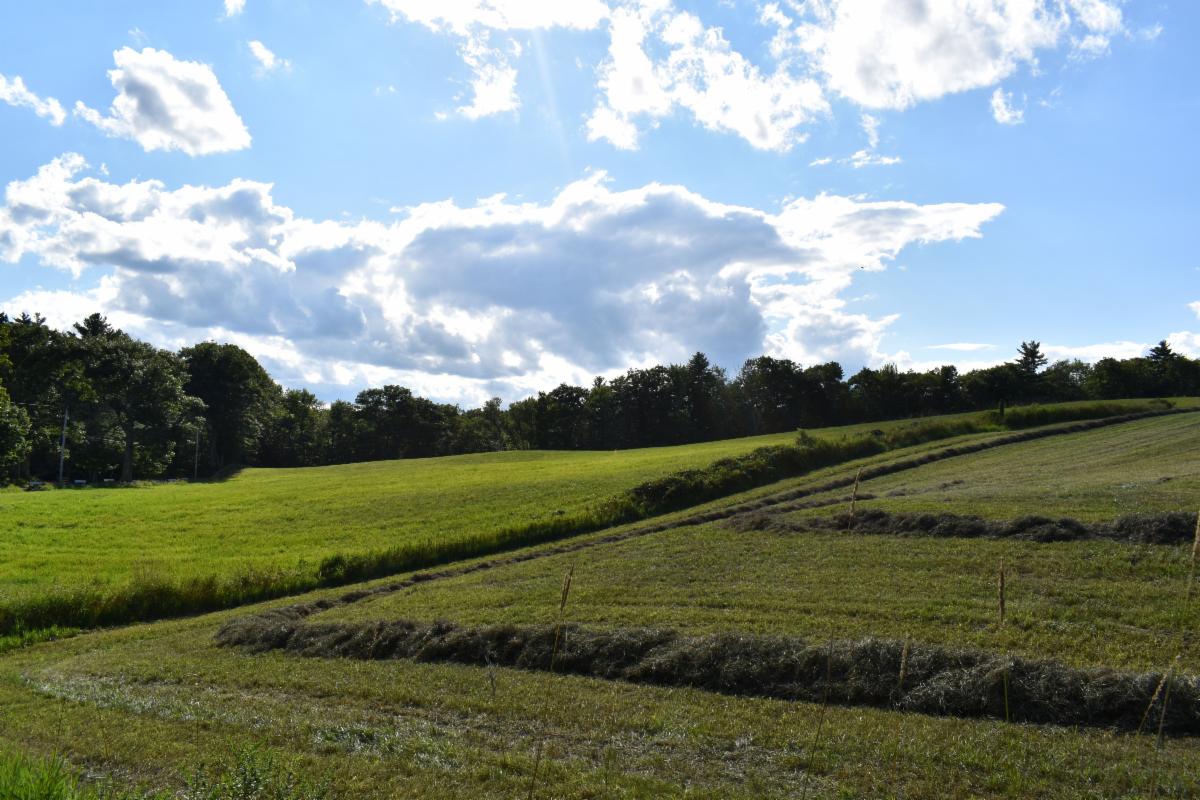
As summer settles in, haying season is in full swing at the farm—a critical time when the long days are filled with the scent of fresh-cut grass and the steady rhythm of tractors and teamsters working side by side. Between the main farm complex and the nearby Merrill property, about 65 acres of hay fields are mowed, tedded, raked, and baled each season to support the farm’s livestock.
Each year, the farm typically brings in two full crops of hay, with a third cutting possible on select fields depending on weather and growing conditions. The fields produce a nutritious and diverse blend of orchard grass, clover, timothy, and reed canary grass—the latter thriving in the farm’s wetter, low-lying areas. Most of the hay is used to feed the farm’s animals throughout the year, but a portion is also sold, contributing to the sustainability of operations.
While tractors do the bulk of the work these days, haying at the farm still honors traditional practices. Sam Locke and her team of draft horses incorporate draft animal power into the process, using a team to ted and rake the hay—a throwback to an earlier time when horsepower referred only to hooves, not engines.
Haying, in fact, has long been central to farm life. The act of cutting, drying, and storing grasses as animal feed dates back centuries, when farmers first sought to preserve forage to sustain livestock through the winter. Before the invention of mechanical equipment, hay was cut with scythes and gathered by hand or with the help of oxen and horses. The 19th century brought horse-drawn mowers, rakes, and balers, and by the 20th century, gasoline-powered tractors had transformed the process yet again. Despite these advances, haying remains a task deeply rooted in season, weather, and experience.
At the farm today, haying is not just about machines and muscle—it’s also about timing, planning, and resilience. Grass must be cut at the right stage of maturity to ensure nutritional value, and the drying process—called curing—is especially weather-sensitive. Rain at the wrong moment can spoil a crop, while dry, sunny days help turn green fields into sweet-smelling windrows ready to be baled and stored. All the while, the farm balances the needs of its animals, the demands of the land, and the realities of daily life—including the occasional surprise visit from the vet.
When the barns are full and the fields have been cleared and cared for, there’s a quiet satisfaction in knowing the animals will be well-fed and the land well-stewarded—until next season rolls around.

Open Farm Day
Weaving & Blacksmithing Basics
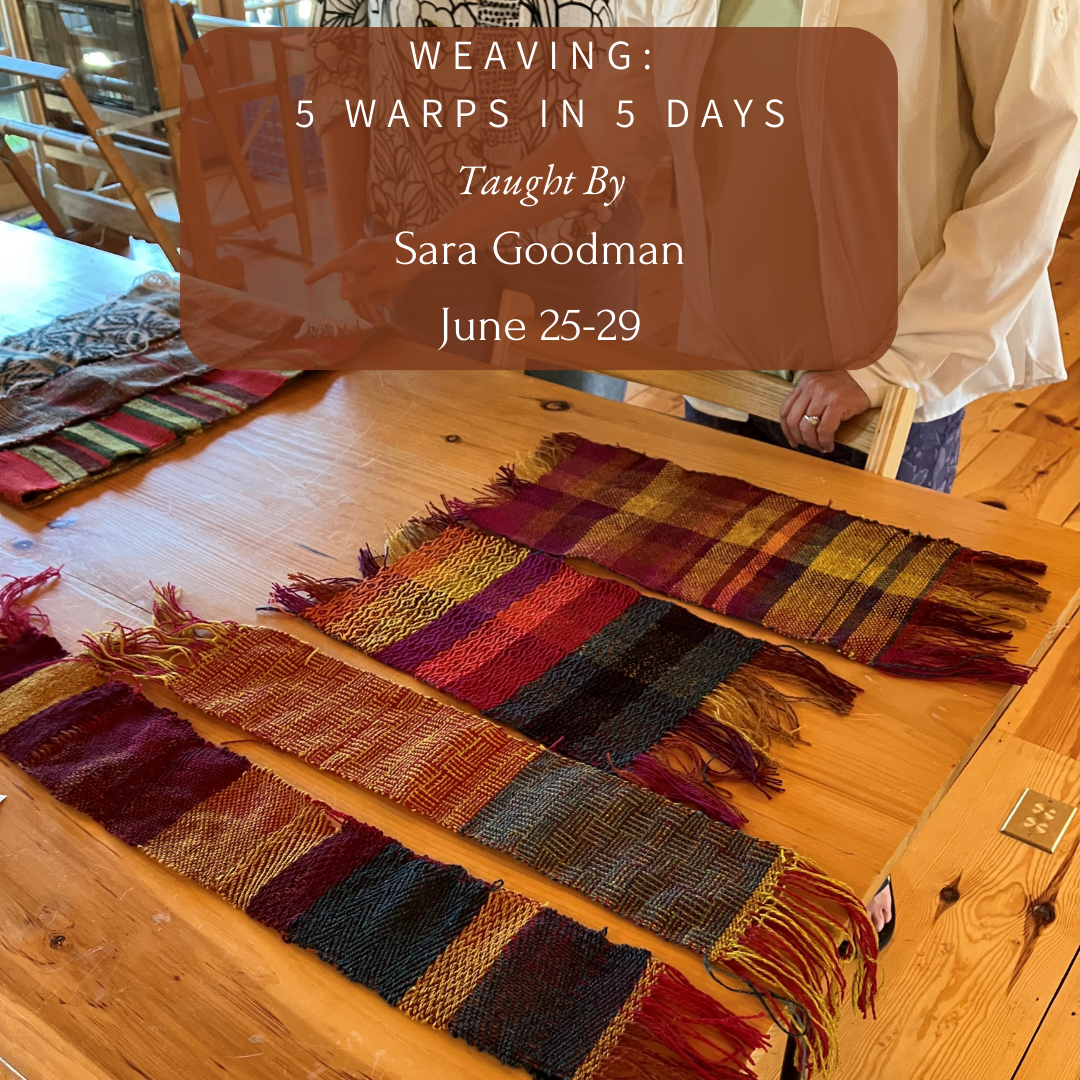
Discover the joy of weaving in this five-day intensive, where beginners to advanced students will explore a variety of weave structures on four- or eight-harness floor looms with hands-on guidance tailored to their experience level.
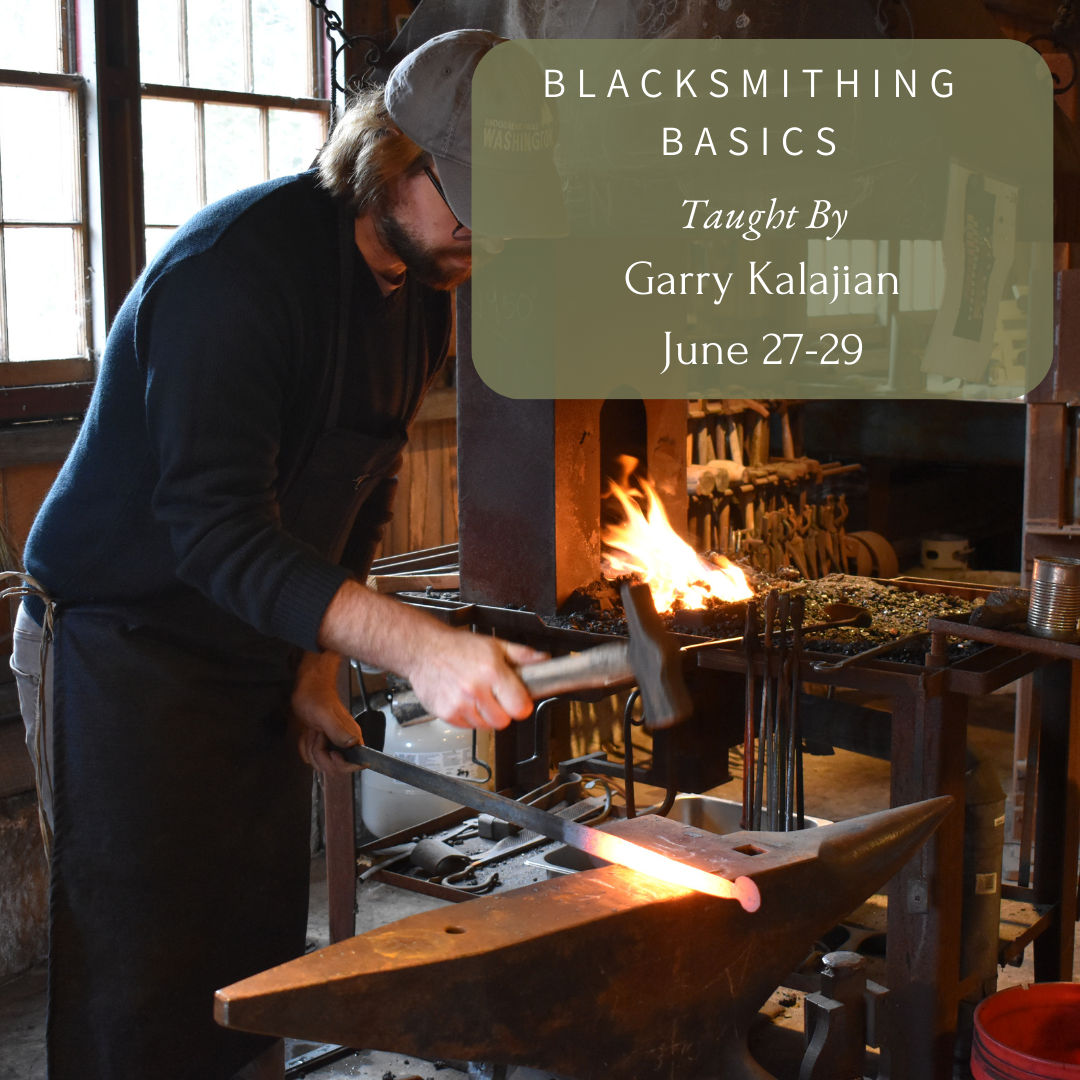
Perfect for beginners and those looking to sharpen their skills, this hands-on workshop covers essential techniques, from forging hooks and scrolls to heat treating tools and trying your hand at forge welding. Only one spot left!
Sanborn Mills Farm | www.sanbornmills.org



Sanborn Mills Farm | 7097 Sanborn Road | Loudon, NH 03307 US