SHARE:

 |
At Sanborn Mills Farm, preserving the past and planning for the future go hand in hand! 
October 2016 eNews
How’s the sawmill coming along?
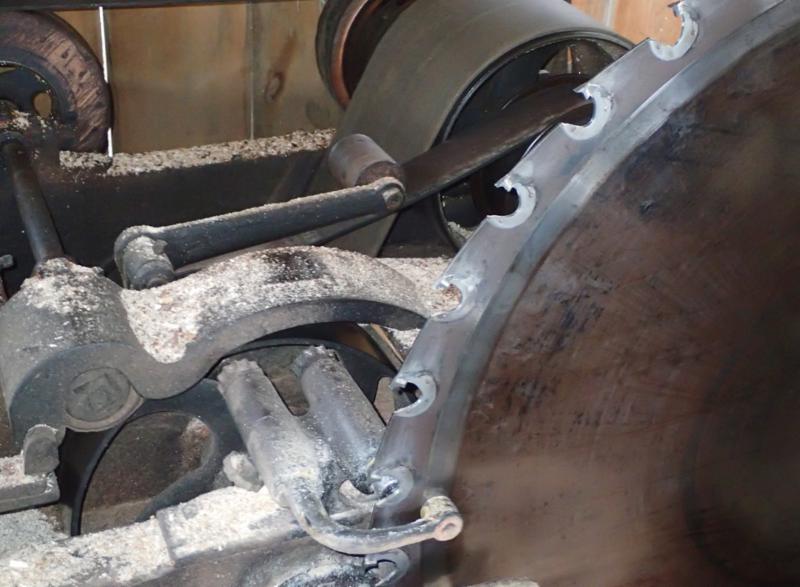
Every piece of equipment with moving parts needs regular maintenance and we are learning that the tolerances that allow bearings, shafts, and turbines to spin freely and a saw to run evenly are particularly demanding. In the case of our 1875 Lane saw blade, we discovered that the extra movement in the saw arbor (the shaft that powers the saw blade) was due to Babbitt bearings that were just plain worn out. For those who are wondering . . . a Babbitt bearing is made up of a mixture of lead, tin, and antimonium. It creates a soft wear surface between the shaft and the heavy cast of the outer shell. Under optimal conditions, the clearance between the shaft and the bearing should be around 5,000 to 6,000ths of an inch, but with the wear, ours had grown to approximately 40,000ths of an inch.
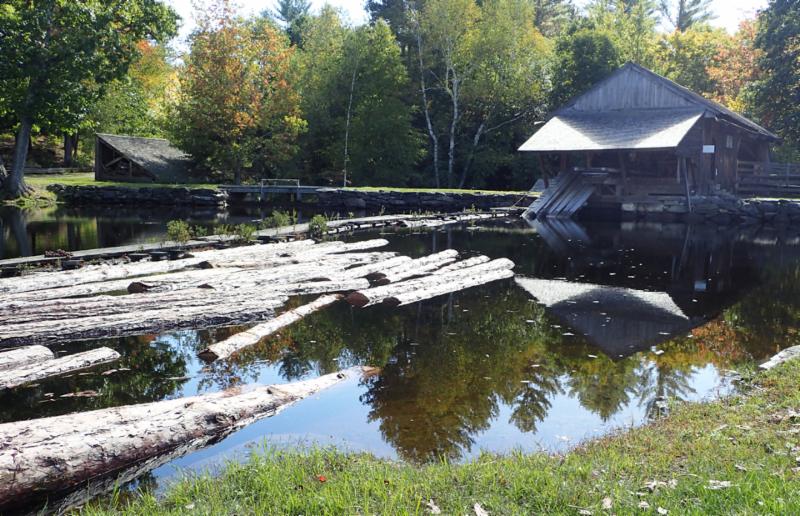
Thanks to the skill and determination of our millwright Brian Clough and master blacksmith Ralph Sproul of Bear Hill Blacksmith in Webster, new Babbitt bearings have been cast and installed. Brian is busy putting the arbor back together and we expect to be sawing out these red pine logs in the spring.
A good fit matters . . .
According to ox teamster Drew Conroy “
While around the world, head yokes and withers yokes are used, in New England the neck yoke is the way to direct the power of an ox comfortably and effectively.
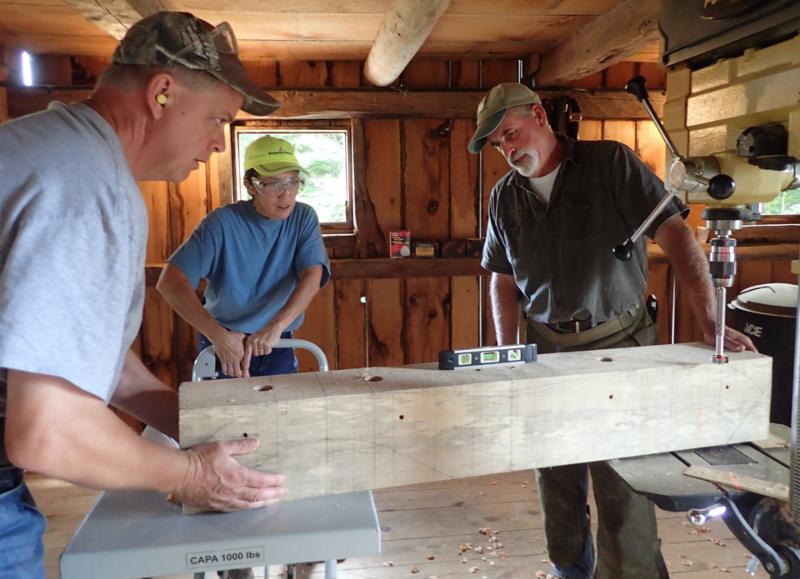
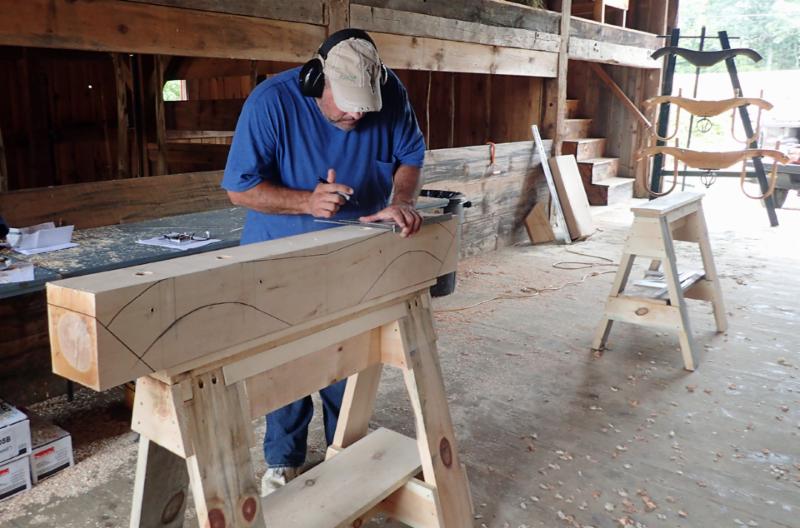
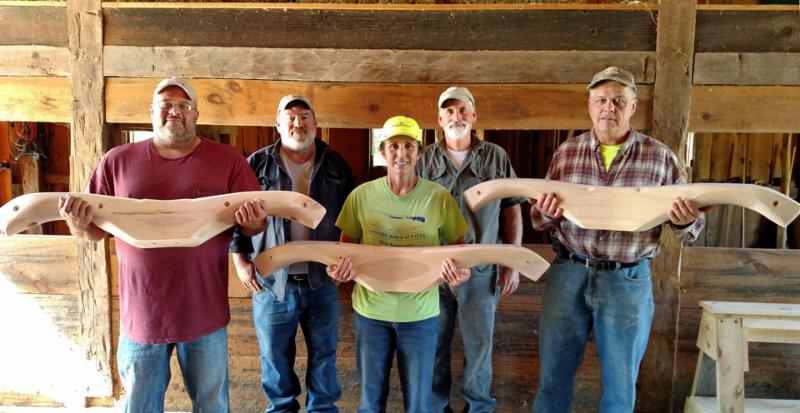
In September, we held our first ox yoke making workshop. Instructor Tim Huppe, with the help of Greg Wright, carefully took three eager students step-by-step through the process of making a double yoke, each one measured to fit a specific team.
For more information on ox yokes, check out “Ox Yokes: Culture, Comfort and Animal Welfare” (2005) by Dr Drew Conroy,
Heirlooms come in all shapes & sizes . . .
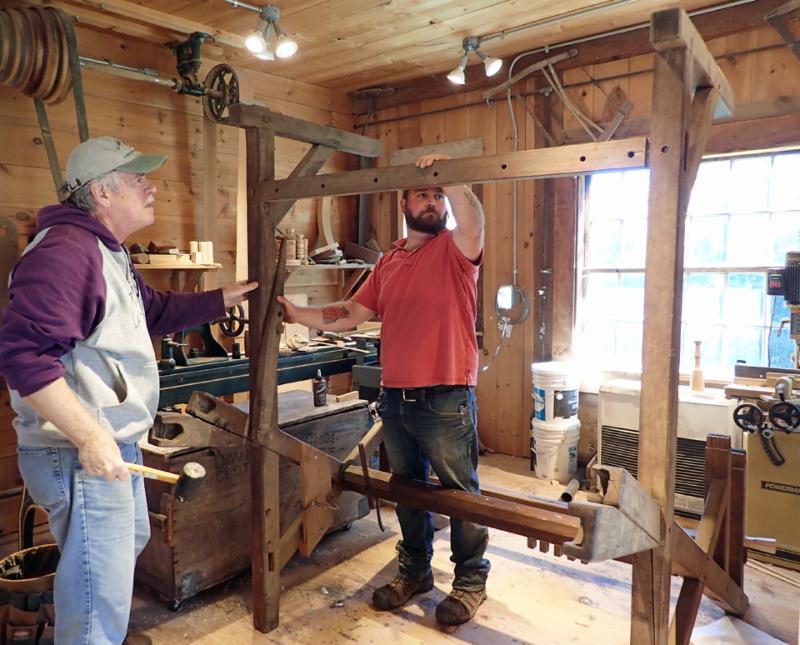
Through the mid 1800s, many families in rural New Hampshire wove their own linen and wool cloth on barn frame looms, so named because they were built with the same mortise & tenon joinery used to build houses and barns. Few of these old looms have survived, but thanks to our neighbor Bruce Yeaton, a This winter master weaver and loom specialist Craig Evans of Brookfield, N.H. will be working with our carpenter Kevin Schurman Jr. to restore this late 1700’s loom so it can once again be used to weave heirlooms. We’ll keep you informed on its progress.
Where will a workshop take you?
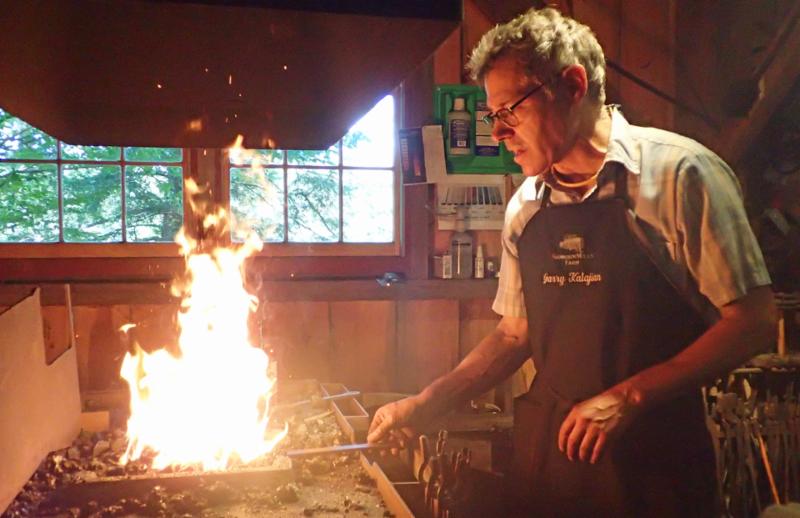
Congratulations to blacksmithing instructor Garry Kalajian who recently received a Traditional Arts Apprenticeship Grant from the New Hampshire State Council on the Arts. Garry’s apprentice Sam Durfee just happened to start his journey with blacksmithing by taking a workshop right here at Sanborn Mills Farm. Garry and Sam will be working on their apprenticeship in Garry’s Ararat Forge studio in Bradford.
Traditional Arts Apprenticeship grants are offered annually by the NH arts council. They help support the preservation of traditional crafts, musical forms, and dances that make up the mosaic of our state’s heritage. The grant covers fees for a master traditional artist to teach an experienced apprentice in one-to-one sessions over a 6 to 10 month period as well as travel & supply costs essential to the Apprenticeship. Click here for more information on this grant opportunity.
Stay tuned for our 2017 Workshop line up . . .
It seems we are always looking ahead in New England, especially in Autumn as we put up garden produce and fire wood for the coming winter. For our part, Sanborn Mills Farm is looking even farther ahead and mapping out the 2017 workshops that will begin next spring. The full line up will be posted to our website by mid-November. We will send you an update when they are ready for you to explore. Is it too soon to start thinking of a unique Christmas gift?
Sanborn Mills Inc. | 603-435-7314 |
A traditional New Hampshire farm and nonprofit organization dedicated to sustainability, creativity, and preserving folklife skills and agricultural knowledge so that the best of the past can help shape our future.
STAY CONNECTED: 


|
|